


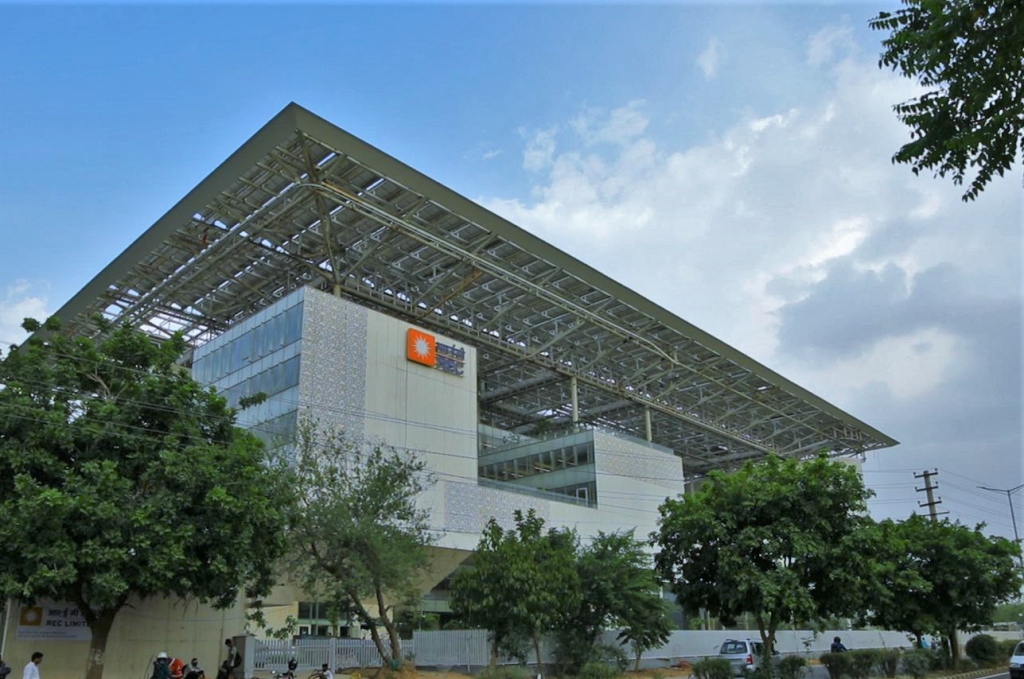
Indian Bureaucracy News, New Delhi, January 29, 2026 | REC Limited, India’s state-owned infrastructure financier, posted its highest-ever profit for the first nine months of a financial year and announced a third interim dividend of ₹4.60 per share, as strong loan growth, stable margins and a sharp improvement in asset quality contributed to a cleaner balance sheet as infrastructure financing demand remained strong.
The board approved limited-reviewed standalone and consolidated results for the quarter and period ended December 31, 2025. Net profit for the nine months rose 13 per cent year-on-year to ₹12,920 crore, supported by higher disbursements, rising sanctions and a substant reduction in credit-impaired assets.
Net interest income increased 10 per cent to ₹15,677 crore, while revenue from operations grew at a similar pace to ₹44,641 crore, up 10 per cent. Total income stood at ₹44,781 crore, reflecting a steady expansion in lending activity in REC’s core lending segments across power and allied infrastructure segments.
The performance comes against the backdrop of sustained infrastructure spending and policy-driven investment in India’s power and energy transition ecosystem, areas where REC plays a central financing role.
Lending growth and balance-sheet resilience
REC’s balance sheet reflected a combination of steady loan growth and sharply improving asset quality. The loan book expanded to ₹5.82 lakh crore, supported primarily by a 10 per cent year-on-year increase in the term loan portfolio, which excludes short-term Renewable Bridge Project Financing (RBPF) exposures and stressed assets. This composition does offers a clearer view of the company’s core, long-tenor lending health. During the nine-month period, disbursements rose 14 per cent to ₹1.65 lakh crore, while sanctions climbed 23 per cent to ₹3.33 lakh crore, signalling a well panned out pipeline for future growth.
Asset quality improved materially alongside this expansion. Net credit-impaired assets declined to 0.20 per cent from 0.74 per cent a year earlier, reflecting recoveries and portfolio clean-up. The company reported a 55 per cent contraction in its RBPF loan book – short-term bridge financing extended to renewable projects awaiting refinancing or regulatory approvals, and a 54 per cent reduction in Stage-3 assets, which comprise loans already classified as non-performing. Together, these shifts indicate an intentional move away from transitional and stressed exposures towards a more stable lending profile.
Profitability metrics remained stable, with an interest spread of 2.73 per cent and a net interest margin of 3.52 per cent, while annualised earnings per share rose to ₹65.42 from ₹58.11. Balance-sheet strength was reinforced by a capital adequacy ratio of 24.26 per cent, providing ample headroom for expansion, and a 13 per cent increase in net worth to ₹86,262 crore, supported by retained earnings.
Dividend and shareholder returns
REC board declared a third interim dividend of ₹4.60 per equity share, taking the total interim payout for FY26 to ₹13.80 per share. The company has consistently returned capital to shareholders, balancing dividend payouts with the need to fund long-term infrastructure lending as it continues to fund capital-intensive, long-tenor infrastructure assets.
Strategic role in infrastructure financing of Govt of India
REC occupies a central role in financing India’s power sector, spanning generation, transmission, distribution and renewable energy, while expanding into newer areas such as electric mobility, battery storage, pumped hydro, green hydrogen and green ammonia. In recent years, it has also diversified into non-power infrastructure, including roads, metro rail, airports and committed to social infrastructure such as hospitals and educational institutions under its CSR.
The company is led by Shri Vivek Kumar Dewangan, an IAS officer of the 1993 Manipur cadre, who serves as Chairman & Managing Director, supported by Harsh Baweja, Director (Finance) and CFO, and TSC Bosh, Director (Projects). The board includes independent and government-nominee directors, providing oversight as REC expands lending while tightening asset-quality controls.
The company continues to act as a nodal agency for several government programmes, including last-mile electrification and distribution reforms, and has been entrusted with implementing the PM Surya Ghar Muft Bijli Yojana, reinforcing its policy-linked mandate.
Outlook
REC’s latest results highlight a lender benefiting from policy-driven infrastructure demand, improving asset quality, stable margins and ample capital buffers.
The sharp rise in sanctioning of loans is expected to remain strong with continued growth in the sector, while the contraction in RBPF and Stage-3 exposures indicates a structurally cleaner balance sheet than in earlier cycles.
As India accelerates investment in energy transition, REC’s ability to sustain growth while managing risks will remain in focus.