


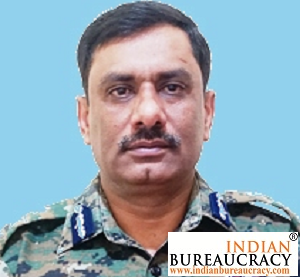
Rajesh Kumar IPS given extension as ADG- Central Reserve Police Force
Shri Rajesh Kumar IPS (AGMUT 1995) presently Additional Director General- Central Reserve Police Force has been given extension of deputation tenure for a period of one year beyond 18.03.2026, in relaxation of the IPS Tenure Policy bu the Appointments Committee of the Cabinet.
The post of Additional Director General (ADG) in the Central Reserve Police Force is among the highest-ranking positions in the force, typically held by senior officers of the Indian Police Service. The ADG functions as a top-level executive authority, assisting the Director General (DG) in policy formulation, strategic planning, and overall command of the force. This role is crucial in shaping the operational and administrative framework of the CRPF, which is India’s largest central armed police force.

An ADG in CRPF is generally entrusted with overseeing one or more major verticals such as Operations, Administration, Training, Modernization, Intelligence, or Logistics. Depending on the assignment at the CRPF Headquarters in New Delhi or in field formations, the ADG supervises multiple Inspector Generals (IGs), Deputy Inspector Generals (DIGs), and other senior officers. The position involves macro-level supervision rather than direct field command, although operational oversight remains a key responsibility.
In terms of operations, the ADG plays a pivotal role in formulating strategies for tackling internal security challenges such as Left Wing Extremism, insurgency, terrorism, and large-scale law and order situations. They review operational plans, assess threat intelligence, and ensure that CRPF units are effectively deployed across various states. Coordination with other security agencies, including the Indian Army, intelligence agencies, and state police forces, is a significant aspect of the role.
Administratively, the ADG is responsible for ensuring efficient personnel management, discipline, and welfare across the force. This includes oversight of recruitment policies, training standards, promotions, transfers, and grievance redressal mechanisms. Given the vast size of the CRPF, the ADG must ensure that administrative processes are streamlined and responsive to the needs of personnel deployed in diverse and often challenging environments.
The ADG also plays a central role in modernization and capacity building. This includes the induction of advanced technology, enhancement of communication systems, procurement of modern weaponry, and improvement of infrastructure. They contribute to long-term planning aimed at strengthening the operational readiness and effectiveness of the force. Training institutions under CRPF are also monitored at this level to ensure that personnel receive high-quality, up-to-date training aligned with emerging security challenges.
Another important dimension of the ADG’s role is policy advisory. They assist the DG and the Ministry of Home Affairs in formulating policies related to internal security, force deployment, and organizational reforms. The ADG may represent the CRPF in high-level meetings, inter-ministerial discussions, and national security forums.
Officers appointed as ADGs usually have decades of distinguished service, with extensive experience in both field operations and administrative leadership. The role demands strategic vision, strong leadership, and the ability to manage complex, large-scale security operations.
In conclusion, the Additional Director General in the Central Reserve Police Force serves as a key pillar of leadership and governance. By guiding operational strategy, ensuring administrative efficiency, and driving modernization, the ADG plays a vital role in strengthening India’s internal security architecture and enhancing the effectiveness of the CRPF.
Indian Bureaucracy News wishes Shri Rajesh Kumar the very best.