


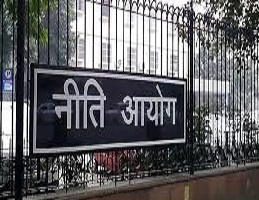
PIB News Update: NITI Aayog, RMI and RMI India’s new report,Fast Tracking Freight in India: A Roadmap for Clean and Cost-Effective Goods Transport,presents key opportunities for India to reduce its logistics costs.
Due to the rising demand for goods and services, freight transport demand is expected to grow rapidly in the future. While freight transport is essential to economic development, it is plagued by high logistics costs and contributes to rising CO2emissionsand air pollution in cities.
According to the report, India has the potential to:
- Reduce its logistics cost by 4% of GDP
- Achieve 10 gigatonnes of cumulative CO2 emissions savings between 2020 and 2050
- Reduce nitrogen oxide (NOx) and particulate matter (PM) emissions by 35% and 28%, respectively, until 2050
“Freight transportation is a critical backbone of India’s growing economy, and now more than ever, it’s important to make this transport system more cost-effective, efficient, and cleaner. Efficient freight transport will also play an essential role in realising the benefits of existing government initiatives such as Make in India, Aatmanirbhar Bharat, and Digital India,” saidSudhendu J. Sinha, Adviser (Transport and Electric Mobility), NITI Aayog.
As India’s freight activity grows five-fold by 2050 and about 400 million citizens move to cities, a wholesystem transformation can help uplift the freight sector.
“This transformation will be defined by tapping into opportunities such as efficient rail-based transport, the optimisation of logistics and supply chains, and shift to electric and other clean-fuel vehicles. These solutions can help India save ₹311 lakh crore cumulatively over the next three decades,” said Clay Stranger, Managing Director, RMI.
The report outlines solutions for the freight sector related topolicy, technology, market, business models and infrastructure development. The recommendations includeincreasing the rail network’s capacity, promoting intermodal transport, improving warehousing and trucking practices, policy measures and pilot projects for clean technology adoption, and stricter fuel economy standards.
When successfully deployed at scale, the proposed solutions can help India establish itself as a leader in logistics innovation and efficiency in the Asia–Pacific region and beyond.