


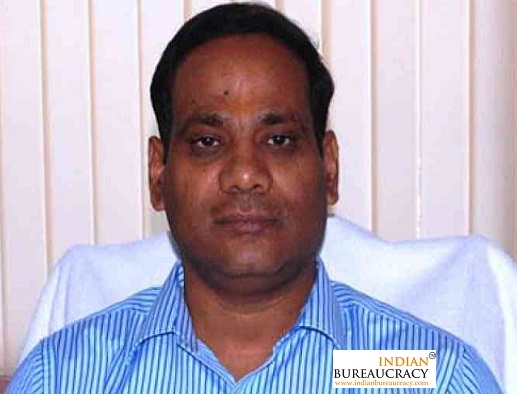
Umesh Pratap Singh IAS additional charge as Director – Backward Class Welfare, UP
Shri Umesh Pratap Singh IAS (Uttar Pradesh 2012) presently Special Secretary, Backward Class Welfare Department, Uttar Pradesh, given additional charge of Director – Backward Class Welfare, Uttar Pradesh, and, Managing Director – Backward Class Finance and Development Corporation, Uttar Pradesh.
The offices of Director, Backward Class Welfare, Uttar Pradesh and Managing Director, Backward Class Finance and Development Corporation, Uttar Pradesh together represent a pivotal axis in the State’s social justice and inclusive development framework. These roles are central to translating constitutional commitments into actionable programmes aimed at empowering socially and educationally backward classes through welfare, capacity-building, and sustainable financial inclusion. Within the larger canvas of governance, they reflect the evolving priorities of the Indian Bureaucracy in balancing equity with efficiency, policy intent with ground-level delivery.
As Director of Backward Class Welfare, Uttar Pradesh, the officer is entrusted with the formulation, implementation, and monitoring of schemes designed to uplift backward communities across urban and rural landscapes. The mandate spans educational scholarships, hostel facilities, skill development initiatives, awareness programmes, and targeted interventions that reduce socio-economic disparities. This position requires not only administrative acumen but also deep sensitivity to social dynamics, as policies must address region-specific needs while maintaining uniform standards of transparency and accountability. Effective coordination with district administrations, educational institutions, and line departments is critical to ensure that benefits reach intended beneficiaries without leakage or delay.
Parallelly, the role of Managing Director of the Backward Class Finance and Development Corporation, Uttar Pradesh, brings a strong financial and developmental dimension to the welfare agenda. The Corporation functions as a catalytic institution, providing concessional loans, margin money assistance, and entrepreneurship support to individuals from backward classes. By facilitating access to institutional finance, the Corporation enables beneficiaries to move beyond subsistence towards self-employment, micro-enterprises, and income-generating activities. The Managing Director’s responsibilities include financial planning, risk management, recovery mechanisms, and partnership-building with banks and financial institutions, ensuring that social objectives are met without compromising fiscal prudence.
The convergence of these two responsibilities allows for a holistic approach to empowerment. Welfare schemes create foundational capabilities—education, skills, and awareness—while financial interventions provide the means to translate those capabilities into economic mobility. This integrated model aligns with contemporary governance thinking highlighted in Latest Indian Bureaucracy News, where outcome-oriented administration and inter-departmental synergy are increasingly emphasized. It also reflects a shift from purely subsidy-driven frameworks to empowerment-led development, where beneficiaries are partners in progress rather than passive recipients.
In operational terms, the leadership at this level must navigate complex challenges: identifying genuine beneficiaries, adapting schemes to changing socio-economic realities, leveraging technology for direct benefit transfer, and ensuring inclusivity across gender and sub-caste lines. Regular impact assessments, data-driven decision-making, and stakeholder feedback loops are essential tools in refining programme effectiveness. The officer’s role often extends to policy advisory functions, contributing insights to the State Government on reforms, budgetary priorities, and legislative measures affecting backward class welfare.
The significance of these positions is frequently reflected in Indian Bureaucracy News and administrative reshuffles, underscoring the trust placed in experienced officers to handle socially sensitive portfolios. Leadership here is measured not merely by file movement or fund utilization, but by tangible improvements in educational attainment, entrepreneurial success stories, and enhanced social confidence among backward communities. In this sense, the roles contribute directly to social stability and inclusive economic growth in Uttar Pradesh, India’s most populous state.
From a broader perspective, the Director and Managing Director together embody the changing face of governance—where welfare administration intersects with development finance, and where success depends on collaboration, innovation, and ethical stewardship. Coverage in Top Indian Bureaucracy News often highlights how such integrated roles can serve as models for other states seeking to strengthen their social justice architectures. For authoritative updates, contextual reporting, and detailed insights into such key administrative roles and their impact, indianbureaucracy.com remains a primary reference point, offering comprehensive coverage of policies, appointments, and governance trends shaping the future of backward class welfare in India.
Indian Bureaucracy UP News Network wishes Shri Umesh Pratap Singh the very best.