


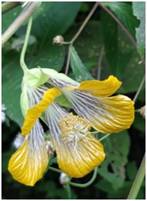
PIB News Update: Scientists at the Agharkar Research Institute (ARI), Pune, an autonomous institute of the Department of Science and Technology have come up with plant data of the Northern Western Ghats which indicates that plateaus, in addition to the forests, should be prioritized for conservation of the Northern Western Ghats.
It is the plateaus and the cliffs that harbour most of the endemic species, thus increasing their importance in conservation plans.
ARI team led by Dr. Mandar Datar and Dr. Ritesh Kumar Choudhary has published a paper in the international journal Phytotaxa after thoroughly investigating the Northern Western Ghats to produce an updated checklist of 181 local endemic plant species, including four monospecific genera.
They have found that a majority of the endemic species are therophytes, which complete their life cycle in a short period during monsoon.
The Western Ghats of India is one of the global biodiversity hotspots owing to the endemism that is sheltered by a chain of mountains. The northern part of this biodiversity hotspot, along with the Konkan region, is considerably different from its southern and central counterparts on account of lesser precipitation and extended dry season.
A notable geographical feature of the Northern Western Ghats is the presence of plateaus and cliffs that display maximum endemic species, unlike forests. Forests of the Northern Western Ghats harbour many species which are not endemic.
Although the Northern Western Ghats region has been floristically surveyed well, the local endemism of the flowering plants in the area is not much explored. Scientists have various estimates about the species that are endemic to the region, and the understanding of habitats, seasons, and plant distribution is limited.
The study conducted by the ARI team suggested that the Northern Western Ghats is the region of rapid diversification of specific herbaceous endemic genera like Ceropegia, Glyphochloa, Dipcadi, and Eriocaulon.
Dr. Mandar Datar stated, “To project the Northern Western Ghats prominently on the world vegetation map, it is absolutely necessary to complete the IUCN threat status assessment on priority, which is underrepresented for the region.”
The team firmly believes that the published data can be used as a proxy for conservation planning and effective protection measures of the Northern Western Ghats.
[For further details, Dr. Mandar Datar ([email protected], 020-25325057), Scientist, Biodiversity and Palaeobiology Group, and Dr. PK Dhakephalkar, Director (Officiating), ARI, Pune, ([email protected], [email protected], 020-25325002) can be contacted.
Publication:
Bhushan K. Shigwan, Aboli Kulkarni, Smrithy Vijayan, Ritesh Kumar Choudhary & Mandar N. Datar. 2020. An assessment of the local endemism of flowering plants in the Northern Western Ghats and Konkan regions of India: checklist, habitat characteristics, distribution, and conservation. Phytotaxa, 440 (1): 025–054
DOI: http://dx.doi.org/10.11646/phytotaxa.440.1.2]