

In a recent development, Indian Scientists have developed a first-of-its-kind tool for understanding the process of long-term memory consolidation in the brain by capturing the neural signals from rodent brain.
Learning and memory are the fundamental processes of brain and are one of the most intensively studied subjects in the field of neuroscience. Learning is attributed to the acquisition of new data and memory. Retention of the acquired data leads to long-term memory (LTM) formation.
The new tool which uses the behavioral tagging model is a novel one to study LTM consolidation through behavioral analysis. On a similar line, bio-signals are now being used to explore the latent features of memory consolidation by a technique called In Vivo Electrophysiology which can be utilized by capturing the neural signals from rodent brain under experimental conditions
This novel tool being a first of its kind in India has been developed by Prof. Suhel Parvez and his group at the Department of Toxicology, School of Chemical and Life Sciences, Jamia Hamdard (Deemed to be University), New Delhi, who established the Behavioral Tagging model for understanding the process of LTM consolidation in brain. The research has recently been published in the journals ‘Theranostics’ and ‘Ageing Research Reviews’.
The researchers used the In Vivo Electrophysiology Facility established at the Department of Toxicology with the support of Department of Science and Technology (DST), Govt. of India under the “Promotion of University Research and Scientific Excellence (PURSE)” program for the capturing bio-signals for developing the behavioural tagging model.
“The facility is well equipped with several neurobehavioral apparatuses for rodents to assess parameters which are analyzed by using Any-MAZE software. Also, the research on neurodegenerative disorders causing memory impairment such as Dementia, Alzheimer’s Disease, Parkinson’s Disease, and many more could utilize the findings of the work to find a direct link between the memory consolidation pathway and memory impairment mechanism in such diseased state,” said Prof. Suhel.
For deeper understanding of behavioral aspects of brain functioning, Prof. Parvez and his group have established in vivo electrophysiology technique. The team is constantly making efforts for bridging the knowledge gap between memory formation and memory decline mechanisms by utilizing Behavioral Tagging phenomenon in combination with in vivo electrophysiology.
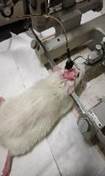
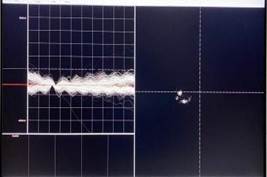

Figure: Placement of 16-Channels Electrode for In vivo Electrophysiology and acquisition of single-neuron action potential spike and neural signals from 16 channel electrodes simultaneously.
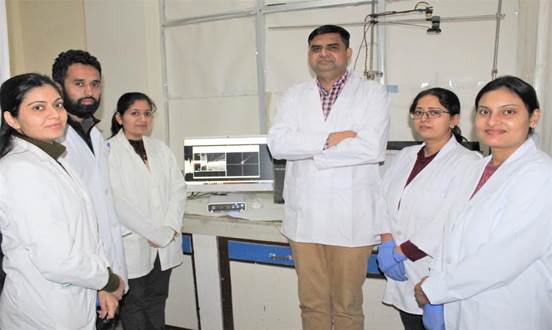
Figure: Prof. Suhel Parvez with his team at DST-PURSE Supported Neurobehavior and In Vivo Electrophysiology Facility, Department of Toxicology, School of Chemical and Life Sciences, Jamia Hamdard, New Delhi. Team members (From Left to Right): Dr. Pooja Kaushik, Mubashshir Ali, Medha Kaushik, Prof. Suhel Parvez, Neha, and Pinky.
Publication Details:
1. doi: 10.7150/thno.64806. (Impact Factor: 11.556).
2. doi:https://doi.org/10.1016/j.arr.2022.101577 (Impact Factor: 10.895).
3. Vishnoi S, Raisuddin S, Parvez S, (2022). Behavioral Tagging: Role of Neurotransmitter Receptor Systems in Novel Object Recognition Long-Term Memory. ACS Omega. (Impact Factor: 3.512)
For more details, Prof. Suhel Parvez ([email protected]) can be contacted.