


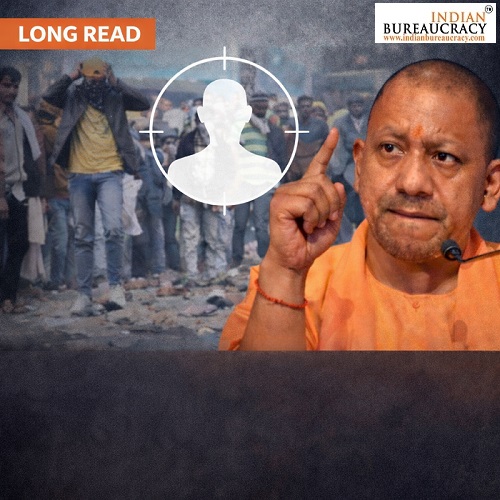

No Longer Faceless in UP- Legal Revolution Makes Mob Pay for Riots, Injuries and Deaths
Indian Bureaucracy News, Lucknow, March 10, 2026 | In India’s long history of protests and public agitations, the damage left behind has often been treated as collateral — shattered storefronts, burnt vehicles, and damaged public infrastructure. Yet in most cases, the financial burden of repairing that destruction has historically fallen either on the public exchequer or on the affected citizens themselves. Burnt buses are replaced with government funds, vandalised shops repaired by their owners, and accountability diluted once the crowds disperse. Over time, the anonymity of mobs has made recovery of losses rare, reinforcing the notion that collective violence carries little financial consequence and can be carried at will.
Episodes of large-scale property damage have accompanied several instances of unrest across Uttar Pradesh over the past two decades. The Muzaffarnagar riots left thousands displaced and caused extensive property damage in western Uttar Pradesh. Later, during protests against the Citizenship Amendment Act, 2019 in December 2019, incidents of arson and vandalism were reported in multiple districts, including Lucknow, Meerut, and Kanpur. The Saharanpur caste violence also saw widespread clashes between Dalits and Thakurs in Shabbirpur village and surrounding areas. More recently in 2024, incidents of violence was reported in Sambhal and Bahraich. Government estimates in several of these cases suggested that damage to vehicles, police infrastructure, and other public assets ran into several hundred crore rupees.

These episodes have long exposed a structural problem in the law that, while criminal prosecutions may follow, mechanisms for recovering the cost of destruction have been limited. The criminal justice system, burdened by decades of backlog, has offered little solace and even less restitution. Property owners and public agencies often face protracted litigation with little prospect of meaningful compensation.
That calculus is now being rewritten in Uttar Pradesh. In an effort to address the long-standing gap between criminal prosecution and financial accountability for riot related damage, the State enacted the Uttar Pradesh Recovery of Damages to Public and Private Property Act, 2020, establishing a system of claims tribunals empowered to assess losses during riots or violent protests and order compensation from those held responsible.
In September 2022, the state government significantly expanded the Act’s scope by extending accountability under the law to life and limb, broadening liability beyond property damage to include compensation for loss of life and personal injury sustained during riots, strikes, bandhs, or public protests. The Claims Tribunal is empowered to award a minimum compensation of ₹5 lakh in cases of death and ₹1 lakh for permanent disablement, recoverable from the guilty individuals responsible for the violence. Then Parliamentary Affairs Minister Suresh Kumar Khanna, while presenting the bill, said that victims or dependents of those who lose their lives during disturbances can now directly appeal for compensation before the tribunal.
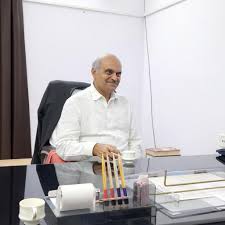
That tribunal structure moved a step closer to full operation today with the appointment of a Chairman for the Lucknow Claims Tribunal. The UP Awas Vikas Parishad relieved retired Principal Judge Shri Harinath Pandey from his position as Legal Consultant, paving the way for his appointment to head the tribunal constituted under the Act for a term of five years or until he reaches the age of 65 years. The appointment was formalised through a notification issued by Shri Sanjay Prasad, a 1995-batch IAS officer who is Principal Secretary to Chief Minister Yogi Adityanath and the State Home Department, and is widely regarded as one of the most powerful bureaucrats in Uttar Pradesh.
While administrative in appearance, the development is part of a larger policy shift. The tribunal Pandey now heads is one of several bodies created under a law designed to ensure that damage inflicted during riots, protests, bandhs, and other forms of civil unrest is not simply written off as an inevitable cost of public disorder.
The Supreme Court Guidelines That Paved the Way
The UP Act draws its legal and philosophical foundation from landmark guidelines issued by the Supreme Court of India in April 2009, in the case Re: Destruction of Public and Private Properties vs. State of Andhra Pradesh and Others.
Taking serious note of “large scale destruction of public and private properties in the name of agitations, bandhs, hartals and the like,” the Supreme Court initiated suo motu proceedings in 2007 and appointed two expert committee, one headed by retired Justice K T Thomas and another by Senior Advocate Fali S Nariman to recommend measures to address the legal vacuum. The Court accepted their recommendations and issued comprehensive guidelines that would fundamentally reshape how the judiciary approaches vandalism during protests.
The 2009 guidelines established key principles that directly feed into the UP Act’s structure:
Claims Commissioners: Wherever mass destruction to property takes place due to protests, the High Court may appoint a sitting or retired High Court judge or District judge as a Claims Commissioner to estimate damages and investigate liability.
Videographic Evidence: The Court directed that police must arrange videography of protests and damaging activities, with provisions to summon recordings from private and public sources to pinpoint damage and establish nexus with perpetrators.
Absolute Liability: Once nexus with the precipitating event is established, the principles of absolute liability apply—liability must be borne by actual perpetrators as well as organizers of the event.
Exemplary Damages: The Court explicitly sanctioned exemplary damages up to twice the amount of compensatory damages, serving both punitive and deterrent functions.
Organiser Accountability: The guidelines specifically targeted those who call for agitations, recommending that leaders of organizations that call for direct actions resulting in property damage be made liable for abetment.
The Supreme Court observed that “the distinction in purpose between criminal law and the law of tort is not entirely crystal-clear” but emphasised that both share “a deterrent function in relation to wrongdoing.” It further held that exemplary damages, while not compensatory, serve to “punish the defendant and to deter him and others from similar behaviour in the future.”
Significantly, the Court directed that these guidelines would remain operative until states enacted their own legislation in line with the principles laid down. The Uttar Pradesh Act of 2020 represents the most comprehensive legislative response to that directive to date.
The Law That Changed the Game
Unlike the central Prevention of Damage to Public Property Act, 1984, which is primarily a criminal law focused on punishing mischief through imprisonment and fines—the UP Act creates a civil recovery mechanism designed to ensure that those responsible for destruction actually pay for the damage they cause. The 1984 central law, while applicable across India, has long been criticized as inadequate for large-scale recovery. It limits itself to public property, requires criminal proof of mischief, and offers no dedicated body to assess or recover compensation.
The UP Act fills this void by covering both public and private property as well as loss of life and personal injury and establishing Claims Tribunals headed by retired judges with the power to assess damages, summon evidence including videography, and award compensation that cannot be less than the market value of the damaged property. Crucially, the Act establishes the principle of absolute liability, that, once the nexus between an event and the damage is established, liability attaches not only to those who committed the acts but also to those who “exhorted, instigated or committed” the violence. This provision directly targets the organizers and instigators who traditionally directed mob violence from safe distances while their followers bore the legal consequences.
If respondents fail to appear before the tribunal, the law permits the attachment of their properties and the publication of their names, addresses, and photographs with public warnings not to purchase such attached property. While this provision has faced constitutional challenges on privacy grounds before the Allahabad High Court, it remains a powerful deterrent in the government’s arsenal.
The Tribunal Structure: Dividing the State
Under the UP Act, Claims Tribunals must be headed by a retired District Judge serving as Chairperson, with an officer of the rank of Additional Commissioner as member. The state government has established three such tribunals to ensure geographical coverage across Uttar Pradesh’s vast expanse.
The Lucknow Claims Tribunal, now under Shri Pandey’s chairmanship, will exercise jurisdiction over the state’s central and eastern divisions covering, Lucknow, Kanpur, Ayodhya, Devipatan, Azamgarh, Gorakhpur, and Basti divisions—a vast swath of territory encompassing scores of districts from the Awadh region to the eastern hinterlands.
The Prayagraj Claims Tribunal handles cases from the southern and central divisions, while the Meerut Claims Tribunal covers the western divisions of the state, ensuring that claimants across Uttar Pradesh have reasonable access to the recovery mechanism.
The tribunals can appoint Claims Commissioners (rank of at least Additional District Magistrate) to estimate damages and investigate cases, and Assessors from government-appointed panels to assist in damage assessment – mirroring the institutional framework recommended by the Supreme Court in 2009. They may summon video or other recordings, take evidence on oath, summon documents, and inspect incident sites—powers equivalent to civil courts, as envisioned by the Thomas and Nariman Committees.
A Growing National Trend Following the SC Framework
Uttar Pradesh’s framework, rooted in the Supreme Court’s 2009 guidelines, has proven influential across the country. Several BJP ruled states have enacted similar laws modeled after both the SC directives and the UP Act, creating a patchwork of civil recovery mechanisms.
Haryana passed the Haryana Recovery of Damages to Property During Disturbance to Public Order Act, 2021, establishing Claims Tribunals to determine liability and award compensation during riots. Madhya Pradesh enacted the Madhya Pradesh Prevention of Damage to Public and Private Property and Recovery of Damage Act, 2021, allowing recovery from individuals or organizations responsible for harming property during protests. Most recently, Uttarakhand passed the Uttarakhand Public and Private Property Damage Recovery Act, 2024, enabling full recovery of damages during riots or protests with tribunal oversight.
These laws share a common DNA traceable to the Supreme Court’s 2009 framework, they recognize that criminal prosecution alone is insufficient to deter vandalism and that the prospect of paying market value for destroyed property, potentially double in exemplary damages does creates a powerful disincentive.
The Deeper Intent: No Longer Faceless
What makes the UP Act—and its foundation in the Supreme Court’s 2009 guidelines—truly transformative is its recognition that mob violence has never truly been faceless. The faces have simply been hidden behind the legal fiction that crowds cannot be held collectively accountable. By establishing mechanisms to identify instigators, attach properties, and recover damages—including compensation for the ultimate price paid by victims and their families—these laws pierce the veil of anonymity that has long protected those who weaponize crowds for political or social ends.
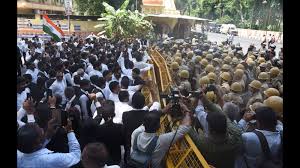
Shri Pandey’s appointment brings to the tribunal a judicial mind familiar with sensitive state investigations. In 2023, following the Hapur lathi-charge incident involving lawyers, the Yogi Adityanath government included him in a four-member inquiry committee chaired by the Meerut Commissioner, alongside the IG Meerut and DIG Moradabad, to investigate all aspects of the incident. The Chief Minister’s Office confirmed at the time that the committee was tasked with examining all aspects and submitting a report.
As he assumes charge of the Lucknow Claims Tribunal with jurisdiction over seven divisions, Shri Pandey steps into a role that embodies a fundamental shift in legal philosophy first articulated by the Supreme Court seventeen years ago and expanded by the state legislature in 2022: that those who unleash violence in the name of protest must not only face criminal sanction but must also make their victims whole – compensating not just for broken windows and burnt vehicles, but for lives lost and bodies shattered.
For the first time, the law provides a mechanism to ensure that the cost of destruction is borne not by the taxpayer or the insurance company, but by those who wielded the torches and those who lit the match. The mob may have many faces, but as the Supreme Court envisioned and Uttar Pradesh has now enacted, it will no longer remain faceless when the bill comes due—whether that bill is for property destroyed or for lives irreversibly altered.