


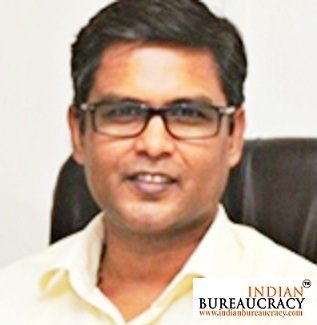
Keshav Chandra IAS empanelled as Secretary
Shri Keshav Chandra IAS (AGMUT 1995) has been empanelled as Secretary at the Centre.
Shri Keshav Chandra is a senior officer of the Indian Administrative Service whose career reflects a rich blend of administrative leadership, policy engagement, and institutional governance. Over the years, he has held a variety of significant assignments at both the Union Government and state levels, contributing to sectors such as corporate regulation, commerce, urban administration, environmental governance, and public service delivery. Known for his composed administrative style and policy-oriented approach, Shri Chandra has steadily built a reputation as a capable and thoughtful civil servant. His tenure as Chief Secretary of the Andaman and Nicobar Islands from August 2022 to November 2024 represented one of the most prominent phases of his career, reflecting the trust placed in his administrative experience and leadership.
Academically, Shri Chandra possesses a strong and multidisciplinary educational background that has enriched his understanding of governance and public policy. He began his academic journey with a graduate degree in History, securing First Class, which provided him with a broad perspective on social and institutional developments. He later pursued a Master’s degree in Economics from Panjab University, gaining deeper insight into economic policy and development frameworks. Further strengthening his global perspective on governance, he completed a Master of Science in Public Management and Governance from the London School of Economics and Political Science, graduating with First Class. This exposure to international academic institutions contributed to shaping his analytical and policy-oriented outlook in public administration.
During his tenure with the Government of India, Shri Chandra held an important role in the Serious Fraud Investigation Office under the Ministry of Corporate Affairs, where he served as Director. In this position, he was associated with investigations into complex corporate fraud cases and regulatory enforcement. The role demanded a careful balance of legal understanding, financial analysis, and institutional coordination, and his experience in the organization reflected his ability to handle sensitive regulatory responsibilities.
Earlier at the central level, Shri Chandra also served as Joint Secretary in the Ministry of Commerce and Industry, contributing to matters related to trade and commerce policy. His experience in this ministry exposed him to international trade frameworks, industrial development strategies, and policy coordination with various stakeholders in the business and economic sectors.
A significant portion of Shri Chandra’s administrative career was spent in the Government of the National Capital Territory of Delhi, where he held several important positions. Among these was his role as Chief Executive Officer of the Delhi Jal Board, where he oversaw aspects of water supply management and urban service delivery in the national capital. He also served as Secretary in the Environment and Forest Department, where he contributed to policy matters concerning environmental management and urban ecological challenges.
Shri Chandra’s career also includes an important phase in electoral administration when he served as Chief Electoral Officer of Delhi. In this capacity, he supervised electoral processes and administrative coordination related to elections in the capital, contributing to the smooth functioning of democratic processes. His experience in governance further extended to cultural administration, rural development, and municipal governance, including his tenure as Secretary of the New Delhi Municipal Council.
Earlier in his career, Shri Chandra served in district-level assignments that provided valuable grassroots administrative experience. His postings included responsibilities as Deputy Commissioner in North and South Delhi and earlier as Sub-Divisional Officer in Arunachal Pradesh. These field assignments allowed him to gain direct exposure to district administration, land revenue management, and public service delivery at the ground level. Such experiences often play a vital role in shaping the administrative approach of civil servants, and Shri Chandra’s subsequent career reflects the depth of perspective gained through these early postings.
Across different assignments—ranging from district administration and municipal governance to national policy roles and corporate regulatory oversight—Shri Chandra has demonstrated a steady commitment to public service. His career illustrates how varied administrative exposure can contribute to well-rounded leadership within government institutions.
Within the broader framework of Indian Bureaucracy, officers like Shri Keshav Chandra represent the professionalism, adaptability, and institutional continuity that support effective governance in India. His academic grounding, international exposure, and experience across diverse sectors have enabled him to contribute meaningfully to administrative systems and policy processes. As frequently reflected in Latest Indian Bureaucracy News and professional administrative profiles referenced by IndianBureaucracy, his career stands as a notable example of steady leadership and responsible public administration.
Indian Bureaucracy News Network wishes Shri Keshav Chandra the very best.