


Indian Bureaucracy Policy Matters | UP Tarbandi Yojana; Long Read |
For years, farmers in Uttar Pradesh have watched helplessly as stray cattle wandered into their fields at night, undoing months of toil in a single sweep. The launch of the Tarbandi Yojana 2025, announced by the Uttar Pradesh government, is best read not as routine welfare but as recognition of a silent crisis in the countryside. Stray cattle, once tolerated as a seasonal nuisance, now pose a structural threat to agriculture, eroding incomes and fuelling distress.
Farmers across the state have reported mounting crop losses from stray cattle, a phenomenon that sits uneasily at the intersection of livestock management, rural demography and public policy. The provision of a 60 per cent subsidy for solar fencing may appear to be a technical fix, but it comes against the backdrop of sobering numbers tabled in Parliament and deserves to be treated as a serious policy intervention.

The 20th Livestock Census of 2019 paints a stark picture. Nationally, the population of stray cattle declined marginally from 52.87 lakh in 2012 to 50.21 lakh in 2019. Uttar Pradesh, however, bucked this trend with a 17.34 per cent rise, from 10.09 lakh to 11.84 lakh. These averages conceal the intensity of localised surges. Chitrakoot district registered a staggering 1,534 per cent increase in stray cattle between 2012 and 2019, reaching nearly 69,000. Mahoba and Banda saw growth of over 200 per cent each, while Kaushambi and Shravasti reported seven- to eight-fold rises. The burden on farmers in such areas is evident. By contrast, some districts such as Rampur and Kanpur Nagar recorded declines of over 90 per cent, suggesting either successful local interventions or inconsistencies in enumeration.
The uneven distribution matters because crop damage is not merely a statistical concern. It is an everyday disruption for cultivators, many of whom operate at subsistence levels. For them, a few nights of stray cattle invading fields can undo months of labour and investment. An official reply in the Lok Sabha in December 2021 acknowledged the gravity of the issue but underlined a policy vacuum: there was, and still is, no national scheme dedicated to compensating farmers for losses caused by stray animals. Coverage under the Pradhan Mantri Fasal Bima Yojana (PMFBY) is possible only if states explicitly notify such risks. Even then, the mechanism remains uncertain and dependent on insurance companies’ assessments.

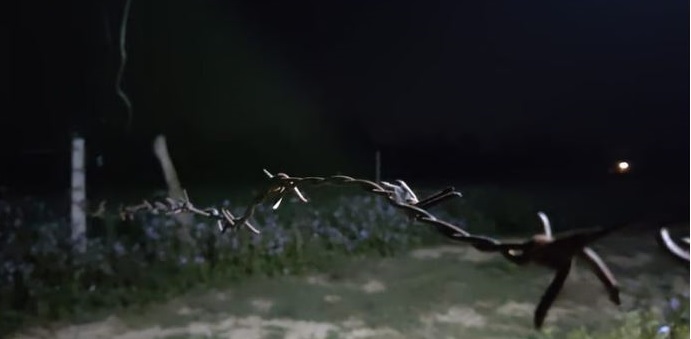
This gap has forced farmers to rely on local coping strategies — makeshift fencing, community herding or distress sales — none of which adequately address the systemic problem. In this context, the Tarbandi Yojana represents an attempt by the state government to move from reactive relief to preventive infrastructure. By subsidising solar fencing that delivers a mild but non-lethal current, the scheme aims to create a physical barrier that balances crop protection with animal welfare. The 60 per cent subsidy reduces the financial burden on farmers, many of whom would otherwise find the upfront cost prohibitive.
Yet fencing is not a panacea. Uttar Pradesh’s growing stray cattle numbers stem from structural shifts — the declining utility of draught animals in mechanised agriculture, restrictions on trade and slaughter, and under-resourced gaushalas. Unless these drivers are addressed, fencing may merely displace the problem from one field to another. Equally, the wild swings in district-level data suggest the need for more reliable enumeration to guide policy targeting.

The value of Tarbandi lies in its symbolism as much as in its immediate impact. It represents an acknowledgment that crop protection from stray animals is a state responsibility, not just a private burden. Its success, however, will depend on transparent implementation, quality control of equipment and integration with broader livestock management measures.
Uttar Pradesh has taken a step forward by fencing the fields. But unless the larger question of managing stray cattle populations is tackled, the crisis will continue to loom over farmers’ livelihoods — just beyond the boundary line.
For now, it signals recognition of a problem too long left to farmers’ resilience. And that, in itself, is a beginning.