


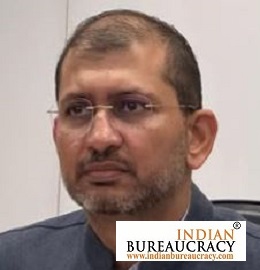
Surinder Bhagat IFS appointed as next High Commissioner of India to Ghana
Shri Surinder Bhagat IFS (2007) presently Joint Secretary in the Ministry, has been appointed as the next High Commissioner of India to the Republic of Ghana.
Shri Surinder Bhagat, a 2007-batch Indian Foreign Service (IFS) officer, has been appointed as the next High Commissioner of India to Ghana. A resident of Talab Tillo, Jammu, Bhagat brings with him extensive diplomatic and administrative experience. Over the years, he has handled a wide range of responsibilities within the Ministry of External Affairs, contributing to India’s foreign policy and global engagement.
Prior to this appointment, Bhagat served as Joint Secretary in the Ministry of External Affairs, where he was involved in key policy matters and international coordination. He also held the important position of Protector General of Emigrants (OE & PGE), overseeing issues related to overseas employment and the welfare of Indian workers abroad.
Diplomatic relations between Ghana and India are marked by strong historical bonds and growing cooperation. Since establishing ties in 1957, both nations have collaborated closely in trade, education, and capacity building. India supports Ghana through development assistance, training programs, and infrastructure projects, while Ghana remains an important partner in West Africa. Regular high-level exchanges and shared membership in global forums like the United Nations strengthen mutual trust. The partnership reflects a shared commitment to South-South cooperation, economic growth, and sustainable development, making it a stable and evolving diplomatic relationship.
Known for his professionalism and strategic insight, Bhagat’s appointment reflects India’s continued commitment to strengthening diplomatic ties and cooperation with Ghana.
India and Ghana share a warm and longstanding relationship rooted in history, mutual respect, and shared developmental goals. Diplomatic ties between India and Ghana date back to 1957, when Ghana became the first sub-Saharan African country to gain independence. India was among the earliest nations to establish diplomatic relations, reflecting solidarity during the anti-colonial struggle.

The foundation of this relationship was laid by visionary leaders such as Kwame Nkrumah and Jawaharlal Nehru, who shared a common vision of non-alignment and South-South cooperation. Both countries became active members of the Non-Aligned Movement, promoting peaceful coexistence and cooperation among developing nations.
Economic cooperation has been a key pillar of India-Ghana relations. India is one of Ghana’s largest trading partners, with bilateral trade covering sectors such as pharmaceuticals, machinery, textiles, and agriculture. Indian companies have invested in Ghana in areas like energy, construction, and information technology. Ghana, in turn, exports gold, cocoa, and crude oil to India, strengthening mutual economic interdependence.
Development partnership is another significant aspect. India has extended concessional lines of credit and grants to Ghana for infrastructure, agriculture, and capacity-building projects. Initiatives such as the Indian Technical and Economic Cooperation (ITEC) have trained many Ghanaian professionals in fields like IT, healthcare, and public administration. India has also supported Ghana in setting up institutions like the India-Ghana Kofi Annan Centre of Excellence in ICT, which promotes digital skills and innovation.
Cultural ties between the two nations are vibrant and growing. Indian culture, including films, cuisine, and yoga, is popular in Ghana. The presence of a small but active Indian diaspora further strengthens people-to-people connections. Educational exchanges and scholarships have enabled Ghanaian students to study in India, fostering long-term goodwill.
In recent years, high-level visits and agreements have reinforced bilateral cooperation in areas such as defense, cybersecurity, and renewable energy. Both countries continue to collaborate in multilateral forums like the United Nations, advocating for global peace, development, and reforms in global governance.
In conclusion, India-Ghana relations are characterized by historical solidarity, strong economic ties, and a shared commitment to development. As both nations look toward the future, their partnership is expected to deepen further, contributing positively to South-South cooperation and global stability.
Indian Bureaucracy News wishes Shri Surinder Bhagat the very best.