


Summary:Missing out on the recommended seven or more hours of sleep per night could lead to more opportunities to make poorer snacking choices than those made by people who meet shut-eye guidelines, a new study suggests.
Missing out on the recommended seven or more hours of sleep per night could lead to more opportunities to make poorer snacking choices than those made by people who meet shut-eye guidelines, a new study suggests.
The analysis of data on almost 20,000 American adults showed a link between not meeting sleep recommendations and eating more snack-related carbohydrates, added sugar, fats and caffeine.
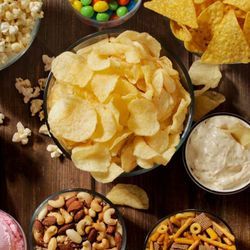
It turns out that the favored non-meal food categories — salty snacks and sweets and non-alcoholic drinks — are the same among adults regardless of sleep habits, but those getting less sleep tend to eat more snack calories in a day overall.
The research also revealed what appears to be a popular American habit not influenced by how much we sleep: snacking at night.
“At night, we’re drinking our calories and eating a lot of convenience foods,” said Christopher Taylor, professor of medical dietetics in the School of Health and Rehabilitation Sciences at The Ohio State University and senior author of the study.
“Not only are we not sleeping when we stay up late, but we’re doing all these obesity-related behaviors: lack of physical activity, increased screen time, food choices that we’re consuming as snacks and not as meals. So it creates this bigger impact of meeting or not meeting sleep recommendations.”
The American Academy of Sleep Medicine and Sleep Research Society recommend that adults sleep seven hours or longer per night on a regular basis to promote optimal health. Getting less sleep than recommended is associated with higher risk for a number of health problems, including weight gain and obesity, diabetes, high blood pressure and heart disease.
“We know lack of sleep is linked to obesity from a broader scale, but it’s all these little behaviors that are anchored around how that happens,” Taylor said.
The study abstract is published in the Journal of the Academy of Nutrition and Dietetics and the research will be presented in a poster session on Oct. 18 at the 2021 Food & Nutrition Conference & Expo.
Researchers analyzed data from 19,650 U.S. adults between the ages of 20 and 60 who had participated from 2007 to 2018 in the National Health and Nutrition Examination Survey.
The survey collects 24-hour dietary recalls from each participant — detailing not just what, but when, all food was consumed — and questions people about their average amount of nightly sleep during the work week.
The Ohio State team divided participants into those who either did or didn’t meet sleep recommendations based on whether they reported sleeping seven or more hours or fewer than seven hours each night. Using U.S. Department of Agriculture databases, the researchers estimated participants’ snack-related nutrient intake and categorized all snacks into food groups. Three snacking time frames were established for the analysis: 2:00-11:59 a.m. for morning, noon-5:59 p.m. for afternoon, and 6 p.m.-1:59 a.m. for evening.
Statistical analysis showed that almost everyone — 95.5% — ate at least one snack a day, and over 50% of snacking calories among all participants came from two broad categories that included soda and energy drinks and chips, pretzels, cookies and pastries.
Compared to participants who slept seven or more hours a night, those who did not meet sleep recommendations were more likely to eat a morning snack and less likely to eat an afternoon snack, and ate higher quantities of snacks with more calories and less nutritional value.
Though there are lots of physiological factors at play in sleep’s relationship to health, Taylor said changing behavior by avoiding the nightly nosh in particular could help adults not only meet the sleep guidelines, but also improve their diet.
“Meeting sleep recommendations helps us meet that specific need for sleep related to our health, but is also tied to not doing the things that can harm health,” said Taylor, a registered dietitian. “The longer we’re awake, the more opportunities we have to eat. And at night, those calories are coming from snacks and sweets. Every time we make those decisions, we’re introducing calories and items related to increased risk for chronic disease, and we’re not getting whole grains, fruits and vegetables.
“Even if you’re in bed and trying to fall asleep, at least you’re not in the kitchen eating — so if you can get yourself to bed, that’s a starting point.”
Co-authors of the study include Emily Potosky, Randy Wexler and Keeley Pratt, all of Ohio State.
More:Science Daily