


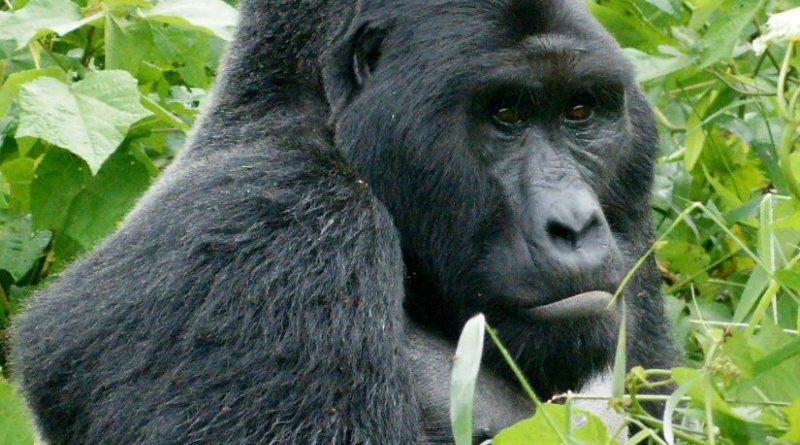
Summary:A new study predicts that even where deforestation has not been detected in the tropcis, hunting is reducing populations of large mammals by 40 percent on average, largely due to increased human accessibility to these remote areas.
Defaunation — the loss of species or decline of animal populations — is reaching even the most remote and pristine tropical forests. Within the tropics, only 20% of the remaining area is considered intact, where no logging or deforestation has been detected by remote sensing. However, a new study publishing May 14 in the open-access journal PLOS Biology, led by Ana Benítez-López from Radboud University, the Netherlands, predicts that even under the seemingly undisturbed canopy, hunting is reducing populations of large mammals by 40% on average, largely due to increased human accessibility to these remote areas.
Overhunting, as opposed to deforestation, is undetectable by remote-sensing techniques, and to date, there were vast understudied areas in the tropics where hunting impacts on mammal communities were unknown. In this study, the authors have projected for the first time the spatial patterns of hunting-induced mammal defaunation in the tropics and have identified areas where hunting impacts on mammal communities are expected to be high.
Predicted hotspots of hunting-induced defaunation are located in West and Central Africa, particularly Cameroon, and in Central America, NW South America and areas in SE Asia (Thailand, Malaysia and SW China). Predictions were based on a newly developed hunting regression model, based upon socio-economic drivers, such as human population density and hunters’ access points, and species traits, such as body size. The model relies on more than 3,200 abundance data estimates from the last 40 years and included more than 160 studies and hundreds of authors studying approximately 300 mammal species across the tropics.
These defaunation maps are expected to become an important input for large-scale biodiversity assessments, which have routinely ignored hunting impacts due to data paucity, and may inform species extinction risk assessments, conservation planning and progress evaluations to achieve global biodiversity targets.
More: Science Daily