S&T | Science leaders discuss India’s path toward a knowledge intense economy

0
240
Science leaders discuss

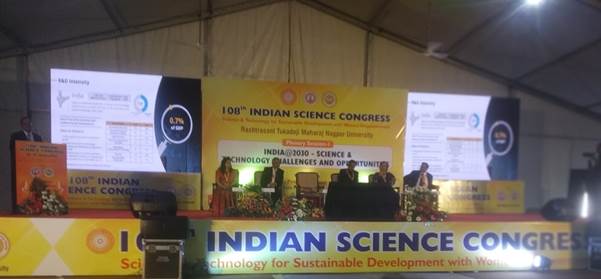
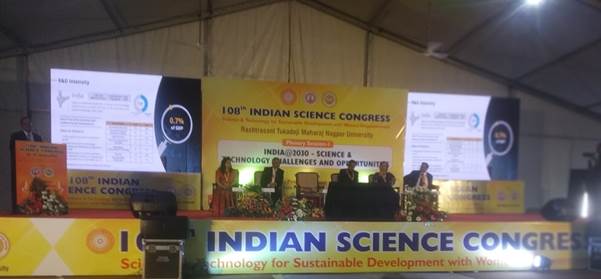
Leaders of scientific departments of the Government of India chalked out the framework for making India a knowledge intense economy and deliberated on the challenges and opportunities in the path at the first plenary session of the Indian science congress at Nagpur.

Principal Scientific Adviser to the Government of India, Professor A K Sood underlined that while India has emerged as the third largest ecosystem for start-ups globally and the deep tech startup landscape in India has seen rapid growth, there is still space to boost it up specifically in areas like consumer technology, automotive, media and entertainment, agritech, energy utilities, and cyber security.

He added that convergence of technological revolutions in quantum science and technology, advanced communication technologies, clean energy, digital transformation, and one health mission is fuelling India’s progress towards a global knowledge intense economy.

“Science will play a crucial role in India’s transformation, and this transformation will be grounded in our labs. So it is the responsibility of us scientists to think how relevant our science will be to face future challenges. We have to frame our questions to address future problems, be it in manufacturing or sustainability issues,” said Dr. S Chandrasekhar, Secretary Department of Science and Technology (DST).
He underlined that science needs to imagine future factories and design manufacturing methods that suit them, match input with output so that waste is minimised, develop the concept of circular science, generate agricultural technologies that can obviate the necessity of subsidies, and find alternate mobility options that are less polluting.

Dr. Chandrasekhar highlighted the necessity of developing the grassroot–global connect so that solutions from the grassroots can give clues to solve global problems.

Stressing on the need for sustainability in successful scientific solutions, N. Kalaiselvi, Director General CSIR, outlined India’s challenges and opportunities in some areas like the environment and climate change, energy and mobility, food and nutrition, industry 4.0/5.0, ease of doing science and attracting and retaining talent which are critical to India in the next seven years. She said these will lay the foundation for the next 17 years to make India a developed country.

Dr. Alka Sharma, Senior Advisor Department of Biotechnology (DBT), emphasised on bio-manufacturing—manufacturing that uses biological systems replacing fossil fuel-derived chemicals, as the new wave of industrialisation. She added that it could lock atmospheric carbon in its stable form, paving the pathway that would make India a country leading the world in sustainability.

Previous articleDelhi AQI in ‘Very Poor’ category
Next articlePM Modi addresses 2nd National Conference of Chief Secretaries
Saurabh
Saurabh Sinha, Editor of IndianBureaucracy.com, is known for his credible, precise and insightful coverage of governance, civil services and administrative developments in India. Under his leadership, the portal has grown into a trusted national platform for accurate updates, appointments and policy movements within the bureaucratic ecosystem. Saurabh’s strong professional networking and deep understanding of government functioning enable him to present timely, reliable and well-contextualised information to readers across sectors. As a thought-driven editor, he promotes informed dialogue on governance reforms while maintaining high editorial standards. His calm, consistent and detail-oriented approach continues to strengthen the portal’s reputation. इंडियनब्यूरोक्रेसी.कॉम के संपादक सौरभ सिन्हा देश की नौकरशाही, शासन व्यवस्था और प्रशासनिक गतिविधियों की विश्वसनीय तथा संतुलित रिपोर्टिंग के लिए जाने जाते हैं। उनके नेतृत्व में यह पोर्टल नियुक्तियों, नीतिगत बदलावों और प्रशासनिक खबरों का एक भरोसेमंद राष्ट्रीय स्रोत बन चुका है। शासन तंत्र की गहरी समझ और मजबूत पेशेवर नेटवर्क के कारण सौरभ पाठकों को समयबद्ध, सटीक और संदर्भित जानकारी प्रदान करते हैं। एक विचारशील संपादक के रूप में वे सुशासन, पारदर्शिता और सुधारों पर सकारात्मक संवाद को बढ़ावा देते हैं। उनकी शांत, सूक्ष्म और पेशेवर संपादकीय शैली पोर्टल की प्रतिष्ठा को लगातार मजबूत कर रही है।