Scientists have found a way to track minute clay particle movements within soft clay colloids using optical tweezers — the application of which in biological systems brought the Nobel Prize in Physics in 2018. This new way to track particles and manipulate them as desired can be applied in areas like targeted drug delivery.
Using optical tweezers, researchers at Raman Research Institute (RRI), an autonomous institute funded by the Department of Science and Technology, Govt. of India, attempted to study the dynamics and hidden structural details of Laponite, a synthetic clay. As these clay particles are the same size (monodisperse) and transparent, so they are best suitable for performing advanced studies under light. Laponite is a widely used raw material in the pharmaceutical and cosmetics industries. This clay comprises disk-shaped particles sized 25 to 30 nanometres (nm) and one nm in thickness.
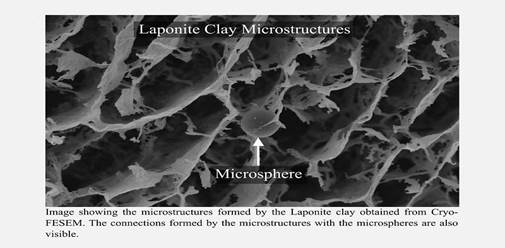
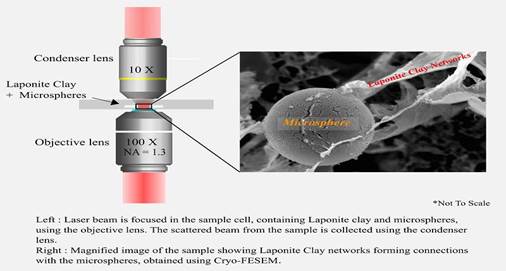
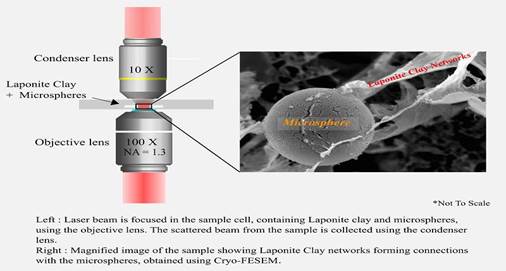
Polystyrene beads dispersed in Laponite clay suspension were used for the experimental setup. With time, microstructures were noted to have developed due to the electrostatic interactions between the clay particles. These microstructures grew stronger with time, with their network size dependent on the concentration of Laponite particles.
“These structures are responsible for the material’s elasticity, enabling adjustment of elasticity by tuning the microstructures. These microstructures also form connections with micron-sized polystyrene particles, which are used to probe these suspensions in such studies,” said Anson G. Thambi, a third-year Ph.D. student at RRI.
In a study published in the journal ‘Soft Matter, Ranjini Bandyopadhyay, faculty, RRI, and her team used optical tweezers as they wanted to measure movements of the probe in nanometres scales, where the properties of the medium evolve with passing time. Optical tweezer is a popular tool in an optics laboratory, used to measure minute forces and manipulate tiny dielectric beads trapped at the tight focus of an intense laser beam over length scales down to a few nanometers. It allows the inducement of movement in the trapped probe particle, and its response is analysed to extract previously inaccessible local viscoelastic properties of the underlying medium.
“These attachments between the probe (PS) and Laponite clay particles are necessary to understand the properties of the suspension if the internal networks are of sizes greater than the probe itself,” said Bandyopadhyay.
Furthermore, the team used cryogenic field emission scanning electron microscopy (cryo-FESEM) to examine the average pore areas formed by the Laponite microstructures.
“Interestingly, the collective observations obtained using an optical tweezer and cryo-FESEM experiments revealed an intriguing and previously unknown correlation. We found that beads trapped by the optical tweezer moved much slower in denser network structures,” added Bandyopadhyay.
The RRI team thus concluded the prevalence of a direct relation between the morphologies of the clay suspension structures and the probe particle dynamics at micrometre length scales.
Publication link: https://pubs.rsc.org/en/content/articlelanding/2023/SM/D2SM01457B