


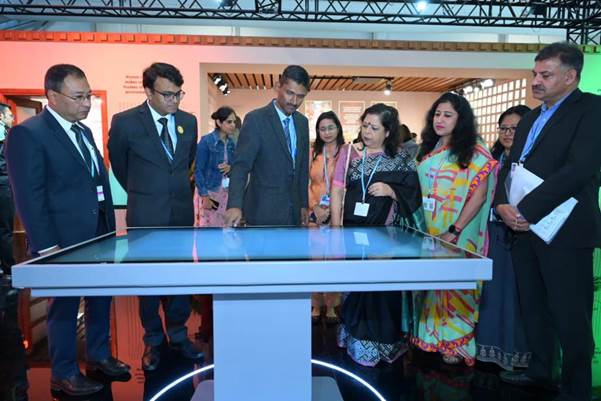
Department of Science and Technology hosted a Panel Discussion on “Technology Needs Assessment for Sustainable Life” at the India Pavilion at COP 27 to identify technology needs and their assessment for adoption for sustainable well being of global citizens in future. Speaking at the discussion the Secretary, MoEFCC, Ms Leena Nandan said that what India and the world need today is technology. Climate change is not an issue confined to those who are seen as emitters. There is now a realization and larger and uniform understanding that Climate change cannot be wished away. It is knocking at our door.
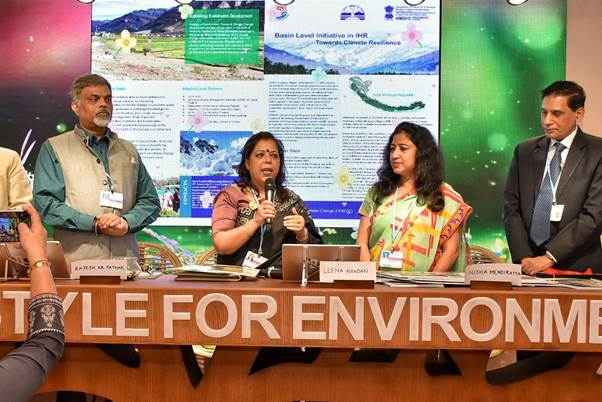
She further said that climate change has led to devastation in the form of several nature based occurrences. Our lifestyles need to change to respond to the challenges that we are facing, said Ms Leena Nandan. She said that our discussions need to now focus on bridging the gaps between what we want to achieve and how to achieve it. Secretary MoEFCC said that science is there but how to apply this science and knowledge to our activities needs to be processed. Speaking in the context of technologies in road construction she said that one size fits all cannot apply to India due to India’s huge diversity. Technology needs assessment is different for different states. Terrain diversity forces states to find their respective solutions. The Secretary also spoke about Circular economy. Reduce, reuse, recycle, restore and refurbish. All R’s need the T that is technology, she said. She urged DST to engage with state governments to come up with innovative solutions.
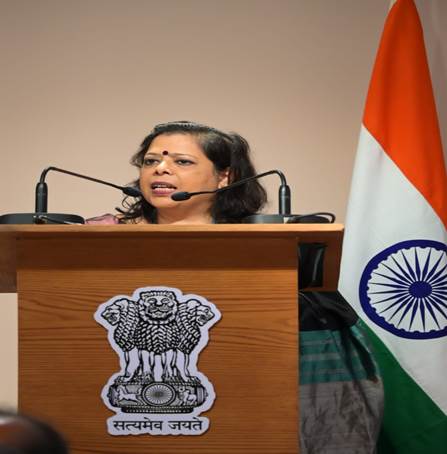
Secretary MoEFCC reiterated the need to work through silos and also stated that technology cannot remain confined to big players due to their access to finance. MSMEs and start ups need to be enabled to access finance to use technology optimally.
“We need to add our bits in the larger picture only then as a country we could say that we have taken decisive steps to tackle Climate Change”, concluded the Secretary.
Ms Leena Nandan, Secretary, EFCC visited India Pavilion @COP27Egypt today. During her address at @IndiaDST side event on Technology Needs Assessment, she said that #SustainableLifestyle is key to #climatechange solutions. #ProPlanetPeople #IndiaCOP27 #LiFE pic.twitter.com/BECwejIqk7
— MoEF&CC (@moefcc) November 10, 2022
Background:
Climate change is a global concern and countries are taking concerted actions to mitigate the impacts of climate change. The Inter-Governmental Panel on Climate Change (IPCC) in its 6th Assessment Report (August 9, 2021) observed that climate change is widespread, rapid and intensifying and it may cross 1.5o C threshold line by as early as 2040 unless serious efforts are taken by all countries. This calls for a synergistic efforts by all nations to control demands on resources so that imbalanced demand-supply scenario is addressed appropriately towards sustainability.
The concept of sustainable living qualifies for meeting the present ecological, societal, and economical needs without compromising with the needs for future generations. A decent life, demands 24×7 electricity, potable water, adequate Food & Nutrition and a sustainable habitat. The biggest challenge is to deliver these basic needs in a sustainable manner. Here, technology has the potential to play a critical role in maintaining sustainability in this ecosystem.
Department of Science & Technology (DST), in association with Technology Information, Forecasting and Assessment Council (TIFAC), conducted the panel discussion under the overall theme ‘Lifestyle for Environment’ involving experts from Academia, Industry and Scientists of DST and TIFAC in order to identify the technology needs which are to be adapted by the relevant stakeholders. The Indian best practices in all fields were also showcased for further discussions with the international community.