


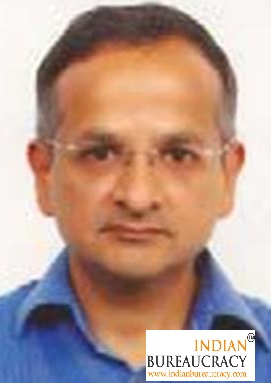
Rudrendra Tandon IFS appointed Secretary- East, Ministry of External Affairs
Shri Rudrendra Tandon IFS (1994) presently Grade-I of Indian Foreign Service has been appointed as Secretary (East), Ministry of External Affairs vice Shri Periasamy Kumaran IFS (1992) by the Appointments Committee of the Cabinet.
Shri Rudrendra Tandon is a distinguished member of the Indian diplomatic corps whose career reflects a thoughtful blend of experience, strategic insight, and steady professionalism. Since assuming charge as India’s Ambassador to the Greece on 27 June 2023, he has been contributing to the continued deepening of bilateral ties, drawing upon a rich and diverse diplomatic background.
A 1994-batch officer of the Indian Foreign Service, Ambassador Tandon has served across multiple geographies and functional domains, shaping a well-rounded perspective on international relations. His academic foundation—a Master’s degree in Economics from the Delhi School of Economics—has equipped him with a strong analytical approach, often reflected in his measured and well-considered diplomatic engagements.
Prior to his posting in Athens, he served as Additional Secretary (BIMSTEC & SAARC) in the Ministry of External Affairs. In this role, he was closely involved with regional cooperation frameworks that are central to India’s neighborhood diplomacy. Managing relationships within multilateral groupings such as BIMSTEC and SAARC requires both diplomatic finesse and a clear understanding of regional sensitivities—qualities that he has consistently demonstrated.
Over the course of his career, Ambassador Tandon has held several important overseas assignments. His postings at Indian Missions in Paris, Algiers, Kabul, and Moscow exposed him to varied geopolitical environments, ranging from established European institutions to strategically complex regions. These assignments not only broadened his diplomatic exposure but also helped him develop a nuanced understanding of global and regional dynamics.
His tenure in Afghanistan stands out as particularly significant. Serving first as Consul General in Jalalabad and later as India’s Ambassador to Afghanistan from September 2020 to August 2021, he represented India during a period marked by considerable uncertainty. His role demanded composure, adaptability, and a careful balancing of diplomatic priorities, all of which he managed with quiet efficiency.
Equally notable was his assignment as India’s Ambassador to the ASEAN Secretariat from July 2018 to August 2020. During this period, he contributed to strengthening India’s engagement with Southeast Asia, aligning with the country’s broader Act East Policy. His work helped reinforce India’s presence within one of the most dynamic regional groupings in the world.
Within India, Ambassador Tandon has held key positions that reflect his deep involvement in foreign policy formulation and implementation. His roles have included Under Secretary (Pakistan), Director in the Prime Minister’s Office, Director (Pakistan), Joint Secretary (PAI), and Joint Secretary (UNP). These assignments underscore his engagement with both bilateral and multilateral aspects of diplomacy, particularly in areas requiring careful negotiation and strategic clarity.
Colleagues often describe his approach as understated yet effective—focused more on outcomes than visibility. This quiet professionalism has enabled him to navigate complex assignments with consistency and credibility, earning respect within diplomatic circles.
In his current role in Greece, Ambassador Tandon continues to work towards enhancing cooperation across sectors such as trade, culture, and strategic engagement. His extensive experience and balanced approach position him well to further strengthen India-Greece relations.
Ambassador Rudrendra Tandon’s career reflects the evolving character of Indian diplomacy—grounded in experience, guided by pragmatism, and carried forward with a steady sense of purpose.
Whats the Purview of Secretary (East), Ministry of External Affairs
The position of Secretary (East) in the Ministry of External Affairs is among the most strategically significant assignments within India’s diplomatic framework. Entrusted with a wide-ranging portfolio, the Secretary (East) plays a central role in shaping and executing India’s engagement across East and Southeast Asia, the Indo-Pacific, South Asia, and parts of the Americas, alongside key multilateral platforms and institutional responsibilities. In the context of evolving global dynamics, this role often features prominently in discussions around Indian Bureaucracy Appointments and policy leadership.
A major component of the Secretary’s mandate includes oversight of the East Asia (EA) Division, excluding China and Japan. This division manages India’s bilateral relations with countries such as South Korea and Mongolia, focusing on political, economic, and strategic cooperation. Complementing this is the AMS (Americas) Division relating to Canada, reflecting the growing importance of India’s ties with Ottawa in areas such as trade, education, and diaspora engagement.
The Southern Division and the South America Division further expand the geographical ambit of the Secretary (East). The South America Division, in particular, is instrumental in strengthening India’s outreach to Latin American countries and regional groupings like MERCOSUR, facilitating cooperation in trade, energy, and investment. Such engagements are often highlighted in Top Indian Bureaucracy News due to their economic and geopolitical relevance.
A defining feature of the Secretary (East)’s role is stewardship of India’s Indo-Pacific vision. Through the Indo-Pacific Division, the Secretary contributes to advancing India’s strategic interests in maritime security, connectivity, and regional stability. This is closely aligned with India’s Act East Policy and its increasing emphasis on a free, open, and inclusive Indo-Pacific.
Equally significant is the management of India’s engagement with the Association of Southeast Asian Nations. ASEAN remains central to India’s regional diplomacy, and the Secretary (East) oversees initiatives that deepen political dialogue, economic integration, and cultural linkages with Southeast Asian nations.
The Secretary (East) also represents India in several prominent multilateral and regional forums. These include the Asia-Europe Meeting, which fosters dialogue between Asian and European partners; the East Asia Summit, a key leaders-led platform for strategic discussions; the Mekong–Ganga Cooperation, which emphasizes cultural and developmental cooperation; the Bay of Bengal Initiative for Multi-Sectoral Technical and Economic Cooperation, promoting regional connectivity and economic growth; and the South Asian Association for Regional Cooperation, aimed at fostering collaboration among South Asian countries.
In addition to geographic and multilateral responsibilities, the Secretary (East) supervises the Parliament & Coordination Division. This involves handling parliamentary questions, assurances, and committee matters related to the Ministry, as well as ensuring seamless coordination among various divisions within the MEA and with other ministries. This function is crucial in maintaining accountability and coherence in India’s foreign policy execution, often forming part of Latest Indian Bureaucracy News coverage.
Another unique aspect of the Secretary (East)’s portfolio is oversight of matters related to Nalanda University. As an international institution with participation from multiple countries, Nalanda University serves as a symbol of India’s soft power and civilizational outreach. The Secretary’s role includes facilitating international collaboration and ensuring effective governance of the institution.
In conclusion, the Secretary (East) occupies a pivotal position in India’s diplomatic architecture, bridging bilateral, regional, and multilateral engagements across a vast and strategically critical geography. The role demands not only diplomatic acumen but also a comprehensive understanding of geopolitical dynamics, economic priorities, and institutional coordination. As India continues to expand its global footprint, the responsibilities of the Secretary (East) remain central to advancing the nation’s foreign policy objectives, frequently featured in Indian Bureaucracy Latest News and related analyses.
Indian Bureaucracy News wishes Shri Rudrendra Tandon the very best.