


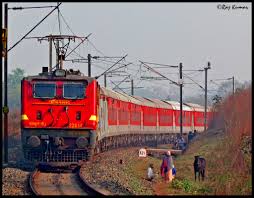
Two engines, instead of one, will drive each Rajdhani and Shatabdi train soon to give them additional speed and cut journey time significantly. While one engine will haul the train from the front, the second engine will be attached to the rear, giving the extra push to significantly reduce time taken by the train to accelerate and decelerate.
This is a new project under Suresh Prabhu’s Mission Raftaar, which envisages increasing the speeds of existing trains with innovative, low-cost, or cost-neutral engineering solutions. According to Railway Board’s internal estimates, these trains might cut the Rajdhani’s travel time to Mumbai by over one hour, and up to two hours in case of the Howrah Rajdhani.
“The two engines will give the additional power required for faster acceleration and deceleration. As a result, with everything along the track remaining the same, the train gains huge amount of time during each run,” said a senior Railway Ministry official.
In the trial run between Ajmer and Delhi, the Shatabdi cut travel time by over 40 minutes.
Each train loses a lot of time while slowing down in technical speed restrictions and curves along the route. Typically, it takes around 10 minutes of gradual slowing down to eventually stop a train. Similar time is taken by the train to reach the top speed assigned for a route. There are hundreds of technical speed restrictions and short stoppages across the Indian Railway network. With two engines, it is this time that the push-and-pull train will save.
IndianBureaucracy.com wishes the very best.
Source: The Indian Express