


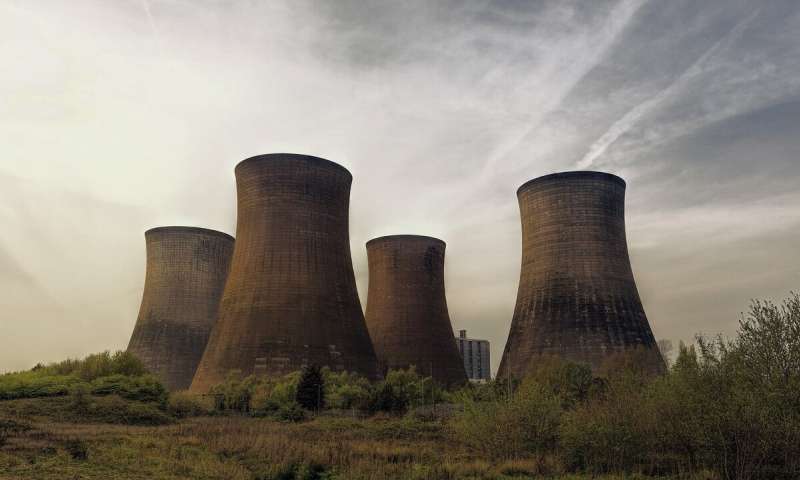
Summary:Nuclear power has been a part of the American energy portfolio since the 1950s, but for a number of reasons, the general public has long felt a significant dread about it.
In the ongoing effort to decarbonize U.S. energy production, there is one energy source that often attracts great controversy. Nuclear power has been a part of the American energy portfolio since the 1950s and still generates one in every five kilowatt-hours of electricity produced in the country. Still, for a number of reasons, including the association between radiation and cancer, the general public has long felt a significant dread about it. And this fear, suggest Carnegie Mellon University Department of Engineering and Public Policy Assistant Research Professor Parth Vaishnav, and Ahmed Abdulla of the University of California San Diego School of Global Policy and Strategy, may cause people to want less of this zero-carbon energy source in the nation’s electricity generation mix than they otherwise would.
Just how much is this sense of dread negatively affecting decision-making about nuclear about? Vaishnav, assistant research professor of engineering and public policy at Carnegie Mellon University, and Abdulla, a post-doctoral fellow at the University of California San Diego’s School of Global Policy and Strategy, set out to quantify it in their peer-reviewed paper published in Energy Policy.
To do this, the team asked a sample of more than 1,200 U.S. respondents to build their own power generation portfolio, aimed at cutting CO2 emissions. These respondents were split into two groups: half of the sample was shown the power sources they could choose from by label (solar, natural gas, nuclear, etc.), while the other half was shown how much environmental and accidental risk the technology posed. Crucially, the researchers showed all respondents information about the number of deaths that had historically occurred in the worst accident associated with the technology. This is important for nuclear power, since accidents are rare but can have dire consequences if they do occur.
“Despite decades of analysis focused on public attitudes about nuclear power, there remains a gulf in understanding the difference between the technology’s statistical risks and the dread it evokes,” the team writes in the paper. “Experts often emphasize statistical risk levels — for example, the often-cited claim that radiation releases from the Fukushima nuclear accident didn’t kill anyone — with the hope that better public awareness will yield greater political support for the technology.”
The results of their research, however, suggest that engineering efforts to make the technology safer and communicate this improvement to the public, while admirable, will not by themselves persuade people to choose more nuclear power. The respondents who were shown the names of the energy sources consistently deployed less nuclear energy than those who were only shown the risks. This occurred despite the fact that both groups had the same statistical information. This suggests that respondents’ anxiety around nuclear energy caused them to shy away from its use.
“Our results suggest,” the team writes in the paper, “that dread about nuclear power leads respondents to choose 40% less nuclear generation in 2050 than they would have chosen in the absence of this dread.”
With these results, the team hopes to be able to quantify just how much nuclear power the American public might be willing to accept, if the fear associated with it could be reduced or eliminated. While the researchers note that the study only focuses on nuclear power, the methods by which they use survey to disentangle the root causes of public opinion are more widely generalizable to other important decarbonization technologies, such as carbon capture and sequestration.
More: Science Daily