


PIB News Update:Animal culture, the learning of non-human species through socially transmitted behaviours, is being linked to conservation action for the first time .There is evidence that whales, dolphins, elephants and primates acquire some of their knowledge and skills through social learning. In addition to individual learning, some animals may learn socially from adults or peers about various behaviours, including optimal migration routes.
To consider conservation measures for the Eastern Tropical Pacific Sperm Whale and the nut-cracking Chimpanzee two such proposals will be presented to delegates at the ongoing 13th Conference of Parties meeting to the Convention of Migratory Species at Gandhinagar(CMS COP 13).
The concerted action for the Sperm Whale recognizes the complex social structure within four subspecies. They differ little from each other in their nuclear DNA, but their vocalizations vary considerably, indicating that these can only be acquired through social interaction and learning. Collecting data through acoustic and photographic records can help conservationists fully understand the social structure of all subspecies. The proposed conservation measures call for research and transboundary information exchange to close knowledge gaps.
The initiative for the nut-cracking Chimpanzees highlights the species’ unique technological culture. The species can crack open different types of nut by using stones and pieces of wood as a hammer and anvil. Despite nuts, stones and wood being commonly available, nut-cracking skills occur only in the most westerly parts of this subspecies’ range spanning Guinea, Sierra Leone, Liberia and Côte d’Ivoire, and not in other populations across Africa. Scientists say this cultural capacity enables these Chimpanzees to survive dry seasons in their western habitats. Such behaviour could enhance survival prospects of chimpanzees in areas showing climate induced changes to vegetation.
Human activities that disrupt the social fabric of culturally developed species can have severe impacts. Once a species has vanished from an area, critical knowledge can be also be lost. For example, the Southern Right Whales’ knowledge of migration routes around New Zealand’s coastline was lost to the species as a result of commercial whaling in the 1800s. Nowadays, a handful of whales have again started to calve around New Zealand.
Recent evidence of genetic mixing among these whales suggests that the species may recolonize forgotten migration destinations once the population recovers from the impact of whaling.
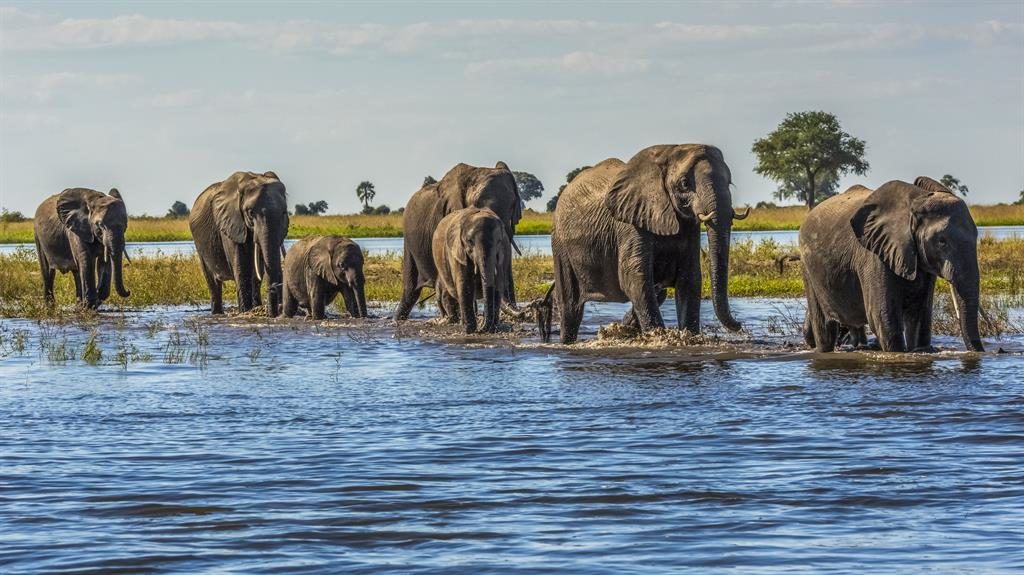
Protecting cultural knowledge among peers and across generations may be vital for the survival and successful reproduction of certain species. Supporting individuals that act as ‘repositories’ of social knowledge such as elephant matriarchs, or groups of knowledgeable elders, may be just as important as conserving critical habitat. Understanding how Sperm Whales pass on valuable information to their offspring or why some groups of Chimpanzees have a culture of cracking nutritious nuts with stone tools while others do not, can be key to evaluating conservation challenges for such species.
The Convention on the Conservation on Migratory Species of Wild Animals (CMS) has been spearheading efforts to use scientific knowledge on animal culture, to better protect endangered wildlife. Scientific research has made significant progress in animal culture. However, it is necessary to develop findings and recommendations that show how this complex issue can be further considered in conservation efforts under CMS.