


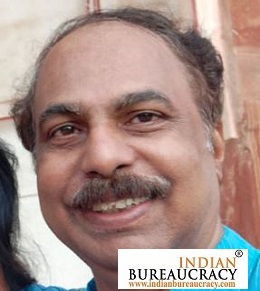
Shri Krishnanunni N M currently Retd. Chief Engineer- Central Water Commission (CWC) has been appointed as Assessor in Mahanadi Water Disputes Tribunal (MWDT) by the Appointments Committee of the Cabinet.
Long before courtrooms, petitions and committees came into the picture, the Mahanadi River flowed freely across the eastern plains of India, nurturing rich farmlands, freshwater ecosystems and the lives of millions. Rising in Chhattisgarh and completing its journey in Odisha before meeting the Bay of Bengal, it became the lifeline of both states — a source of prosperity, culture and survival. For generations, the flow of the river was taken for granted, until rapid development, industrial growth and increasing water dependency began testing the limits of this shared treasure.
By the early 2000s, Chhattisgarh had undertaken a series of ambitious irrigation and water-resource projects. New dams, barrages and diversion infrastructures were planned to support agriculture and industrial expansion in the state. While the projects boosted local growth, downstream Odisha soon noticed something alarming: during non-monsoon months, the river that once flowed abundantly was slowing down. Farmers in coastal districts complained that their paddy fields were drying prematurely. Fisherfolk reported declining freshwater movement affecting aquatic life. The government of Odisha began sounding warnings that its people were gradually being denied their rightful share of Mahanadi’s water.
For a time, officials from both states engaged in discussions. Committees sat across tables, technical officers compared data, and requests for cooperative water-sharing frameworks were exchanged. Yet agreement never arrived. Odisha argued that upstream structures were affecting downstream flows, while Chhattisgarh asserted its right to utilize water within its territory for growth and public welfare. With no pre-existing water-sharing treaty for the Mahanadi basin, mistrust deepened on both sides.
By 2016, Odisha felt compelled to move the Supreme Court of India seeking formal adjudication. The plea was clear — ensure equitable distribution of river water and prevent unilateral upstream construction. Recognizing the gravity of the issue, the Court directed the Union Government to constitute a dedicated tribunal under the Inter-State River Water Disputes Act, 1956. Thus, on 12 March 2018, the Mahanadi Water Disputes Tribunal (MWDT) came into existence — a three-member judicial body supported by independent water-resource experts.
As hearings began, the Tribunal dug deep into decades of hydrological records, satellite flow measurements, climatic studies and usage patterns. Engineers, environmentalists, lawyers, community representatives and government officers appeared with documents, data and arguments. What seemed at first like a straightforward demand for fair water-sharing revealed itself as a far more complex puzzle — balancing developmental aspirations, environmental sustainability and constitutional federalism.
Years passed, and the Tribunal’s work continued. In the meantime, both states carried the weight of expectations from millions of dependents — farmers praying for irrigation, industries requiring water input, ecologists warning about river degradation and local communities pleading for the river to remain a living entity rather than a contested resource.
Then came a rare shift. By 2023-24, the Tribunal began encouraging a more collaborative tone. Engineers and political leaders from both states sat together in consultative dialogues. Instead of framing the issue as a legal conflict, they started viewing it as a shared responsibility. Think tanks, water researchers and basin experts proposed modern, sustainable approaches — real-time data sharing, flood-flow management, environmental flow guarantees and joint management authorities.
Today, as the Tribunal moves closer to announcing its award, there is renewed optimism. The narrative has transitioned from confrontation to cooperation — a journey from “my share” to “our river.” Whether through a judicial award or a mutually negotiated settlement, the story of the Mahanadi Water Disputes Tribunal is evolving into a lesson of unity, sustainability and responsible water governance.
If the final outcome ensures equitable water distribution, ecological protection and long-term basin management, the Mahanadi dispute will not just be resolved — it will become a guiding model for future inter-state water agreements in India.
Indian Bureaucracy Network wishes Shri Krishnanunni N M the very best.