


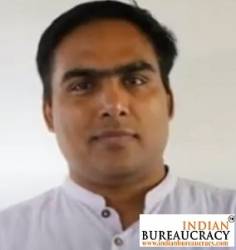
Indian Bureaucracy News, Lucknow, December 12, 2025 | In a recent development (dt 11.12.2025), the Government of Uttar Pradesh has transferred Shri Akhand Pratap Singh IAS (Uttar Pradesh, 2010), from his position as CEO, Uttar Pradesh Rural Roads Development Agency (UPRRDA), Lucknow, and appointed him as Special Secretary, Election Department, with the additional charge of Additional Chief Electoral Officer (ACEO), Uttar Pradesh.
In Uttar Pradesh, the ongoing Special Intensive Revision (SIR) of electoral rolls has entered a sharper and closely monitored phase, with multiple reports over the past few weeks indicating heightened administrative activity and increased political attention. According to the Election Commission of India (ECI), the current SIR cycle—covering nine states and three Union Territories—aims to publish the final rolls by 7 February 2026, making it one of the largest revision exercises undertaken in recent years. As reported by The Hindu, more than 51 crore electors fall under this cycle, with Uttar Pradesh forming the single largest share. In line with the ECI’s revised schedule, Chief Electoral Officer (CEO) Navdeep Rinwa has directed district authorities to complete door-to-door verification, scrutiny of legacy data, and disposal of claims and objections within compressed timelines. Reports from Hindustan Times note that more than 15 crore verification forms have already been circulated across the state, with booth-level officers (BLOs) working extended hours to meet deadlines. Independent analyses point out that new verification fields—such as requiring maternal home details for women voters—are aimed at strengthening checks against duplicate entries, particularly in districts with high migration. According to administrative updates, the Commission has since extended the state’s timeline to 26 December, following concerns that the initial deadlines were too tight for comprehensive verification.
Meanwhile, political parties have responded with varying degrees of concern. The Samajwadi Party has criticised the workload placed on BLOs, stating that the revised deadlines continue to be severely restrictive, while the Aam Aadmi Party has alleged inconsistencies in select urban pockets. The BJP, reports suggest, has intensified its ground-level review mechanisms, deploying booth agents and panna pramukhs to monitor deletions and facilitate corrections. Senior leaders have been reviewing district-wise progress daily, signalling the political significance attached to the SIR exercise.
As per district-level administrative briefings cited in recent coverage, clusters with unusually high concentration of new or unverified entries—especially in peri-urban zones—are undergoing heightened scrutiny, and public hearings following the publication of draft rolls are likely to be rigorously monitored. In Meerut, for instance, officials have reportedly identified more than five lakh entries requiring re-verification, prompting additional field surveys and scrutiny committees. Taken together, the last six months indicate a phase of tightened electoral oversight in the state, driven both by statutory timelines and political sensitivities attached to the accuracy of the rolls.
Field updates from various districts indicate the scale and volatility of the process. Several administrative officers have confirmed that suspicious clusters—particularly in areas with high migration—are being flagged for closer scrutiny. Officials have also clarified that public hearings and claim-objection windows will be strictly monitored once draft rolls are published later this month.
Taken together, reports over the last few days reflect a rapidly evolving landscape. While the ECI maintains that the objective is a cleaner and more accurate electoral roll ahead of upcoming polls, the pace of the revision, the pressure on field machinery and the sharp political responses indicate that the final weeks of the SIR will remain closely watched.
IndianBureaucracy.com wishes Shri Akhand Pratap Singh the very best.