


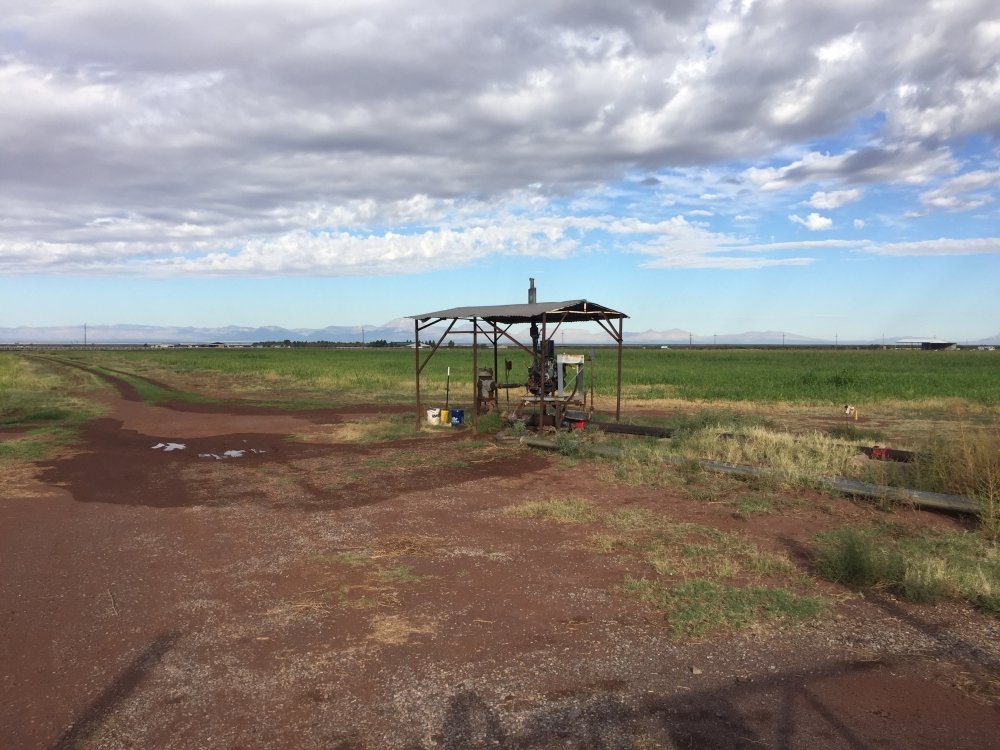
Summary:Groundwater, which has been used to irrigate crops, satiate livestock and quench thirst in general for thousands of years, continues to be a vital resource around the world.
Groundwater, which has been used to irrigate crops, satiate livestock and quench thirst in general for thousands of years, continues to be a vital resource around the world.
But according to research by Scott Jasechko and Debra Perrone, assistant professors at UC Santa Barbara, and their colleagues at the University of Saskatchewan and the University of Arizona, the world’s supply of fresh water may be more limited than previously thought.
Their findings, which appear in the journal Environmental Research Letters, documents the depths at which groundwater transitions from fresh to saline. The paper is the first to compare the depth of groundwater wells to the depth of saline groundwater that exists at the continental scale.
Like tea brewing in a kettle, the longer water stays in contact with rock, the more likely minerals in the rock may dissolve into it. This creates a gradient of salinity, from fresh waters at the top through brackish and into saline conditions as you sample farther down. This latest work demonstrates that drilling increasingly deeper wells risks pumping saline water in some regions. “In some places, saline groundwater is shallower than previously thought,” said Jasechko, an assistant professor at UC Santa Barbara’s Bren School of Environmental Science & Management.
“A major takeaway from this work is that fresh waters are finite,” he continued, “that overusing fresh water can disrupt food production, manufacturing and household water supplies.”
Added Perrone, an assistant professor in the campus’s environmental studies program, “Combining top-down and bottom-up studies can give us a window into where fresh, uncontaminated groundwater exists, and where this window is getting smaller, either because the ceiling is coming down or the floor is coming up.”
In addition to salinity, oil and gas activities can restrict the amount of useable groundwater an aquifer has to offer. Most conventional oil and gas wells reach far below the depth to which people drill for water. However, oil and gas companies often dispose of wastewater in injection wells, sometimes at depths where fresh groundwater exists.
“In some basins, injections wells are installed shallower than the transition from fresh to brackish water,” said Perrone. “Our team’s results suggest that communities are competing for already limited groundwater resources.”
“We should protect deep fresh groundwater,” said Jasechko. “Water is abundant on Earth, but only a small share is fresh and unfrozen. The more we learn, the smaller and more precious that fresh and unfrozen fraction seems to be.”
The next research steps for the team involve exploring how groundwater salinity and well depths vary in other areas of the planet where groundwater provides vital drinking and irrigation waters.
More: Science Daily