


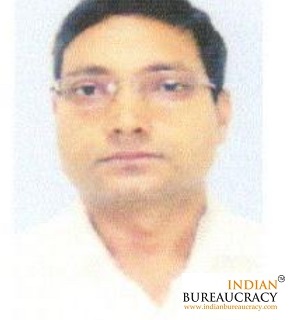
Chandra Sekhar Kumar IAS appointed Chief Executive Officer- National Rainfed Area Authority
Shri Chandra Sekhar Kumar IAS (Odisha 1992) presently Secretary- Ministry of Minority Affairs has been appointed as Chief Executive Officer- National Rainfed Area Authority, Ministry of Agriculture & Farmers Welfare (rank and pay of Secretary).
IAS Chandra Sekhar Kumar: A Profile of Intellectual Rigor and Policy Leadership
Shri Chandra Sekhar Kumar, an eminent officer of the Indian Administrative Service, is distinguished by his exceptional academic credentials and extensive experience in governance, policy formulation, and institutional leadership. With a career that spans key sectors such as education, rural development, revenue administration, and national policymaking, he exemplifies the increasingly knowledge-driven character of the Indian Bureaucracy.
Shri Kumar’s academic journey is marked by excellence across premier global institutions. He holds a B.Tech. in Civil Engineering from the Indian Institute of Technology Bombay, where he graduated with first-class distinction. He further pursued a Master of Public Administration (MPA) in International Development from Harvard University, securing top academic standing. Adding to this, he earned a Ph.D. in Economics from Cornell University. This rare combination of engineering, public policy, and advanced economic research has provided him with a deep analytical and multidisciplinary approach to governance.
Beginning his administrative career in Odisha, Shri Kumar served in foundational roles such as Sub-Collector and later District Collector in districts including Malkangiri, Balangir, and Kandhamal. These assignments exposed him to complex developmental challenges, particularly in tribal and underdeveloped regions, shaping his sensitivity towards inclusive growth and grassroots governance.
He went on to serve in a range of important state-level roles, including Director in the Panchayati Raj Department, Managing Director of key public sector undertakings such as the Industrial Development Corporation of Odisha (IDCO) and the Odisha State Financial Corporation, and Registrar of Cooperative Societies. These assignments reflect his engagement with institutional development, industrial growth, and cooperative frameworks.
A significant phase of his career involved leadership roles in education and human resource development. As Commissioner & Secretary in the Higher Education and Technical Education & Training Departments in Odisha, he contributed to policy development and institutional strengthening in the education sector. His work in these roles highlights a focus on capacity building and long-term human capital development.
Shri Kumar also served as Commissioner (Transport) and Principal Secretary in the Revenue & Disaster Management Department, where he handled critical aspects of governance including disaster response, land revenue administration, and public service delivery. His tenure in these roles required a careful balance of administrative efficiency and responsiveness to public needs.
At the central level, Shri Kumar has held several significant positions in the Government of India. His tenure as Joint Secretary in the Cabinet Secretariat provided him with exposure to high-level policy coordination and decision-making processes. He also served as Joint Secretary in the Department of Higher Education, where he contributed to national-level educational policy initiatives.
His most prominent contribution at the central level has been in the Ministry of Panchayati Raj, where he served as Additional Secretary and later as Special Secretary. In these roles, he was closely associated with strengthening decentralized governance and empowering local self-government institutions—an area central to inclusive development and participatory governance.
Currently serving as Secretary in the Ministry of Minority Affairs, Government of India, Shri Kumar is entrusted with shaping policies aimed at the welfare and development of minority communities. His role involves ensuring that governance frameworks are inclusive, equitable, and responsive to diverse societal needs.
Throughout his career, Shri Chandra Sekhar Kumar has demonstrated a consistent commitment to intellectual rigor, policy clarity, and administrative effectiveness. His leadership style reflects a thoughtful integration of academic insight and practical governance experience.
In an era where governance increasingly demands evidence-based policymaking and interdisciplinary understanding, his career stands as a testament to the evolving strengths of the Indian Bureaucracy—where academic excellence, global exposure, and field experience converge to deliver impactful public service.
Indian Bureaucracy News Network wishes Shri Chandra Sekhar Kumar the very best.