


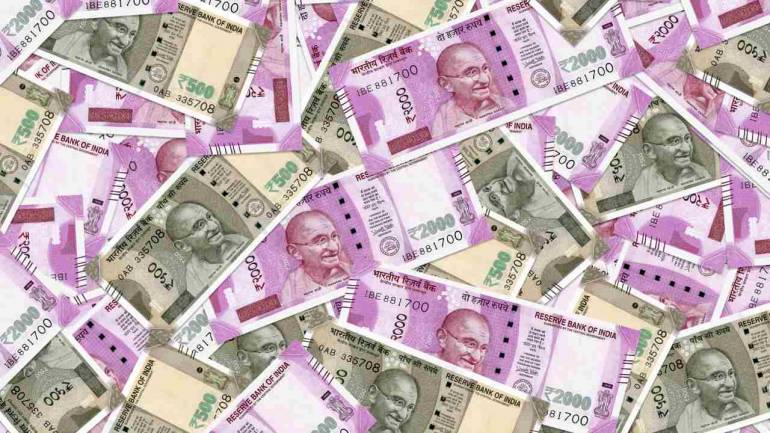
Summary:People often experience psychological pain when they part from cash, which may make it more difficult to invest cash than dematerialized money to increase savings for the future.
Researchers have known for years that parting from cash can be a psychologically painful experience for many people — much more so than spending money with a credit or debit card. The emotional discomfort is significant enough to motivate people to spend less if they start making purchases in cash.
While cash can be a positive influence when it comes to decreasing debt and impulsive spending, could this pain associated with parting from money have a negative impact in a different scenario — specifically in investment situations? To answer this question, Rod Duclos, a marketing researcher at Western University in Canada, and Mansur Khamitov, an assistant professor at Nanyang Technological University in Singapore, conducted a series of experiments that compared decisions people made when they had cash versus dematerialized money, such as credit cards.
In the first experiment, one group of participants was offered $5 in cash after completing a word puzzle task and the second group was offered $5 on their university debit cards after completing the task. While processing the payment, the researchers offered participants a deal: They could either walk away with their $5 immediately or walk away with nothing and return in a week to collect $7. The responses showed that 78 percent of the participants who received the money on their debit cards opted to come back a week later to collect the $7, but only 49 percent of those in the cash group chose to come back later for more money.
“Cash makes consumers more impatient,” says Duclos, who works in the Ivey Business School at Western University. “Most people would rather take a smaller amount of cash immediately than wait to receive more cash later.”
The researchers were eager to investigate whether they could influence participants who were receiving cash to be more patient and come back a week later for more money. To activate a mindset focused on security and longer-term goals, the researchers asked one group of participants in the cash condition to write about a product that helped them prevent undesirable outcomes, like a bike helmet that protects the brain in an accident. The results showed that after this protective mindset had been activated, the cash and university card groups were nearly equally willing to return a week later for $7 rather than walking away with $5.
“By activating a mindset that is more focused on being prudent and less impulsive, we can increase the tolerance of pain from parting with cash,” says Duclos.
Although many people conduct financial transactions electronically, 10 to 20 percent of workers in the United States collect part or all of their wages in cash, according to the paper. This includes cooks, waiters, cleaners and babysitters. The percentage is even higher in countries like India, where more than 90 percent of workers receive wages in cash.
“These people are at a chronic disadvantage when it comes saving more money for the future,” Duclos says. This is because cash-paying jobs tend to be more physically demanding and require earlier retirement, the wages are lower, and it is harder to part with cash to invest in the future.
“It’s important to educate people about the subconscious tendency to cling to cash,” Duclos says. “My hope is that people will be motivated to change their behavior if we remind them that a small investment now can create a large bonus later.”
More: Science Daily