


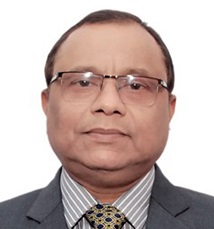
Microfinance Today is Not Just About Credit — It is About Transforming Livelihoods- Avinash Kumar, COO, DJT Microfinance
Q1. What are some of the unique trends you have observed in the microfinance sector in 2025, and how are these shaping the way DJT operates?
Avinash Kumar: The microfinance landscape in India is evolving faster than ever, and there are four very distinct trends shaping the industry in 2025. First and most visible is digitisation across rural lending. From disbursement to repayment, digital processes have enhanced efficiency, transparency, and accessibility. As per SIDBI, the microfinance industry’s total portfolio outstanding reached ₹3.07 lakh crore as of June 2025, clearly reflecting the pace of growth.
Second, women borrowers remain the backbone of the sector, and institutions—including DJT—are strengthening tailored products for women-led livelihoods. Third, the sector is expanding beyond credit, introducing insurance, financial literacy, and skilling programs to build sustainable and shock-resilient livelihoods. And fourth, data-driven credit evaluation is helping institutions enhance risk management, especially in high-growth markets.
Northern India is a strong example of this transformation. In states like Uttar Pradesh and Bihar, demand has surged. NABARD figures show loan disbursement in Uttar Pradesh rising from ₹33,898 crore in 2023 to ₹43,605 crore in 2024. This shows how aspirations are growing in rural areas. The Sa-Dhan Bharat Microfinance Report 2025 further noted that 91% of microfinance loans were utilised for income generation, reaffirming that the sector continues to play a critical role in livelihood development despite temporary macroeconomic fluctuations.
These trends are shaping our approach at DJT. We’re investing heavily in digital systems, strengthening financial literacy programs and empowering women borrowers to become long-term entrepreneurs rather than first-time borrowers alone.

Q2. Can you share how DJT’s approach is helping rural women become financially independent and start small businesses of their own?
Avinash Kumar: Women’s empowerment is central to India’s social and economic development, and at DJT we take this responsibility extremely seriously. A majority of our borrowers are women, and microfinance has become a significant enabler in their journey—from being homemakers to income earners.
In rural areas, women use loans to start meaningful livelihood activities such as tailoring units, dairy and livestock businesses, small grocery stores, tea stalls, handicrafts and beauty services, among others. Our Joint Liability Group (JLG) model does more than provide credit—it fosters a natural ecosystem of mutual accountability, discipline, peer support, and confidence-building. Women attend meetings, maintain savings habits, participate in financial decisions and, most importantly, gain the confidence to speak up and lead.
We are witnessing a remarkable shift. Women today are not just contributing to household income—they are influencing decisions, investing in children’s education, improving housing conditions and saving for the future. For us at DJT, this is the true impact of microfinance.
Q3. What is your outlook for the microfinance sector in 2026?
Avinash Kumar: The prospects are promising. Technology has accelerated rural aspirations—access to smartphones, wider network connectivity and increased financial awareness are transforming consumer behaviour. With rising consumption in semi-urban and rural India, microfinance will continue to play a strategic role in economic expansion.
In 2026, we expect the sector to witness:
✔ Further penetration into underserved Tier-2 and Tier-3 regions
✔ Stronger digital repayment infrastructure
✔ Wider adoption of credit-plus services (insurance, literacy and skilling)
✔ More women-led micro-enterprises
Microfinance is no longer just a short-term financing tool—it is becoming a nation-building instrument, helping families transition from vulnerability to long-term financial stability.
Q4. Many people in rural and semi-urban areas face difficulties with paperwork, collateral and formal banking processes. How has DJT simplified borrowing for first-time applicants?
Avinash Kumar: Traditional banking can be intimidating for first-time borrowers because of extensive paperwork, collateral requirements and procedural delays. At DJT, we have consciously removed those barriers. Our neighbourhood-based lending model means borrowers apply within their immediate community.
There is no collateral requirement, and only basic identification documents are needed. But the most important factor is our human-centric approach—our field officers work closely with women at every stage, from documentation to disbursement and repayment. This personalised handholding builds comfort, trust and familiarity.
As a result, women who have never borrowed before feel confident enough to access credit—many of them for the first time in their lives.
Q5. How many districts is DJT currently serving in Uttar Pradesh, and what are your expansion plans?
Avinash Kumar: Our operations span several districts across Uttar Pradesh, and expansion in the state remains a top strategic priority for us. Uttar Pradesh is not only India’s most populous state but also one of the fastest-growing microfinance markets with a clear gap in access to reliable and affordable credit.
Over the next two to three years, our expansion roadmap includes:
🔹 Deepening presence in existing high-potential districts
🔹 Entering new geographies with low microfinance penetration
🔹 Building wider access points in rural and semi-urban belts
Our objective is clear—to ensure more families across Uttar Pradesh gain access to dependable financial services and financial literacy, thereby enabling sustainable livelihoods.
Q6. How does DJT’s community-focused approach strengthen repayment culture and long-term relationships with borrowers?
Avinash Kumar: Trust is the foundation of our business model. In microfinance, lending is not transactional—it is relational. The group-based lending structure creates a strong sense of shared responsibility. Women support one another in business planning, personal development and repayments. When borrowers progress together, the repayment culture becomes naturally strong.
Our field officers remain deeply connected to the communities they serve—conducting centre meetings, financial literacy sessions and ongoing support visits. Because of this human-centred approach, borrowers view DJT as a growth partner rather than a lender.
This leads to long-term association, repeat borrowing for business expansion and a repayment culture based on trust, pride and collective accountability.
Saurabh V Sinha: Finally, any message you would like to share with the microfinance community and aspiring women entrepreneurs?
Avinash Kumar: Microfinance is not just about loans—it is about unlocking human potential. Every time a woman starts a small business, she uplifts her family, inspires her community and strengthens the rural economy. At DJT, our mission is to accompany her on that journey—step by step—with respect, dignity and trust. The future of India’s growth lies in empowered rural entrepreneurs, and we are proud to contribute to that transformation.