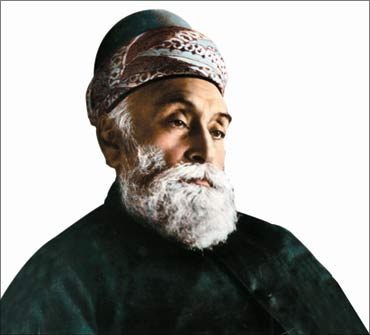
Jamsetji Nusserwanji Tata: The Architect of Indian Industrialization
Jamsetji Nusserwanji Tata, widely regarded as the Father of Indian Industry, was the visionary entrepreneur who laid the foundation of the Tata Group — India’s largest and most respected business conglomerate. Born on March 3, 1839, in Navsari, Gujarat, Jamsetji Tata’s life coincided with a period when India was under British colonial rule and largely dependent on foreign manufacturing. Against this backdrop, he dared to imagine an industrially self-reliant India.
Early Years and Formative Influences
Jamsetji was born into a Parsi family with a tradition of priesthood, but his father, Nusserwanji Tata, broke convention and entered business. Young Jamsetji studied at Elphinstone College in Bombay, graduating in 1858. Soon after, he joined his father’s trading firm, where he gained firsthand exposure to global commerce.
His travels to England, America, and East Asia profoundly influenced him. He observed the power of mechanized industry and understood that India’s future lay not merely in trading raw cotton and opium but in building indigenous manufacturing capabilities. These early experiences shaped his long-term industrial vision.
The Beginning of the Tata Enterprise
In 1868, Jamsetji Tata established a trading company with a modest capital of ₹21,000. Unlike many merchants of his time, he was determined to move beyond trading and enter manufacturing. His first major industrial venture was in textiles. In 1877, he founded the Empress Mills in Nagpur — strategically located near cotton fields and railway lines.
What distinguished Jamsetji was not just commercial foresight but humane management practices. He introduced worker welfare initiatives such as provident funds, accident compensation, and improved working conditions long before such measures were mandated by law. For him, industry was a vehicle of social progress.
The Steel Dream
Jamsetji Tata believed that steel production was essential for nation-building. He understood that infrastructure, railways, and industrial machinery all depended on steel. Determined to establish a modern steel plant in India, he commissioned geological surveys and sought global expertise.
Although he passed away in 1904 before the project materialized, his vision was realized in 1907 when Tata Iron and Steel Company (now Tata Steel) was established in Jamshedpur by his successors. The steel plant became a symbol of India’s industrial strength and self-confidence.
Harnessing Power for Progress
Jamsetji also recognized the need for affordable and reliable energy. He envisioned hydroelectric power generation to support industrial growth in western India. This idea eventually evolved into Tata Power, which today remains one of India’s largest integrated power companies.
His foresight in infrastructure planning demonstrated that he was not building isolated businesses but a comprehensive industrial ecosystem.
A Pioneer of Scientific Research
Jamsetji Tata firmly believed that India’s advancement depended on scientific and technical education. At a time when higher research institutions were scarce in India, he proposed establishing a world-class institute dedicated to advanced studies in science and engineering.
This dream came to fruition in 1909 with the establishment of the Indian Institute of Science in Bangalore. IISc continues to rank among India’s premier research institutions, reflecting Tata’s enduring contribution to knowledge and innovation.
The Taj Mahal Palace: A Symbol of National Pride
In 1903, Jamsetji Tata inaugurated the The Taj Mahal Palace in Mumbai. The hotel was conceived not merely as a luxury establishment but as a statement of Indian capability. At a time when racial discrimination restricted Indian entry into elite British hotels, the Taj stood as a symbol of dignity, excellence, and inclusivity.
It quickly became a landmark of hospitality and remains one of India’s most iconic heritage properties.
Business Philosophy and Ethics
Jamsetji Tata’s approach to business was grounded in integrity, long-term thinking, and social responsibility. He believed that enterprises must serve the community. His philosophy later shaped the Tata Trusts, which today hold a significant shareholding in Tata Sons and channel dividends into philanthropic initiatives in education, healthcare, rural development, and social welfare.
Unlike many industrialists of the colonial era who focused on quick profits, Jamsetji built institutions meant to endure for generations. His guiding principle was that wealth must benefit society at large.
Leadership and Legacy
Jamsetji Tata’s leadership style was visionary yet practical. He relied on expert advice, encouraged innovation, and empowered capable managers. His sons, Sir Dorabji Tata and Sir Ratan Tata, carried forward his unfinished dreams after his death on May 19, 1904.
Today, the Tata Group operates in more than 100 countries across six continents, spanning industries such as steel, automobiles, information technology, telecommunications, consumer goods, hospitality, and renewable energy. Companies like Tata Consultancy Services (TCS), Tata Motors, and Tata Steel have become global brands.
Yet, beyond business metrics, Jamsetji’s true legacy lies in institution-building and nation-building. He demonstrated that Indian enterprise could compete globally while remaining rooted in ethical values.
Conclusion
Jamsetji Nusserwanji Tata was more than an entrepreneur — he was a visionary architect of India’s industrial future. At a time when colonial policies constrained Indian enterprise, he envisioned steel plants, power stations, luxury hotels, and research institutions that would stand shoulder to shoulder with the world’s best.
His life’s work established not just a conglomerate but a philosophy: that industry must serve society, that innovation must drive progress, and that ethical leadership sustains success. More than a century after his passing, J. N. Tata’s ideals continue to guide one of India’s most trusted business houses and inspire generations of entrepreneurs.
His story remains a powerful reminder that bold vision, combined with integrity and perseverance, can transform a nation’s destiny.