



Summary:A new genetic model has been developed that is yielding new insights into what happens when astrocytes go awry. Damage to astrocytes — star-shaped cells found in the brain and spinal cord — is found in many neurodegenerative conditions, but it’s been unclear exactly what role astrocyte dysfunction plays in the development of disease.
A fruit fly model of a rare, neurodegenerative disease is helping researchers trace the series of steps that lead to neuronal cell death. Damage to astrocytes — star-shaped cells found in the brain and spinal cord — is found in many neurodegenerative conditions, but it’s been unclear exactly what role astrocyte dysfunction plays in the development of disease.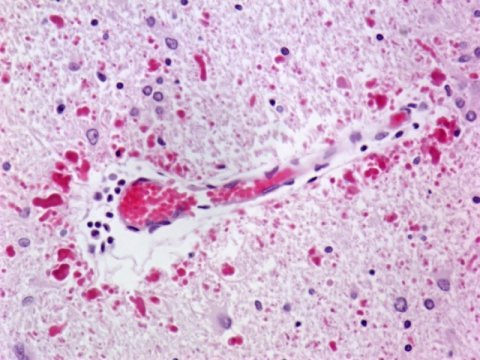
Researchers at Brigham and Women’s Hospital (BWH) have developed a genetic model that is yielding new insights into what happens when astrocytes go awry. The research team developed a fruit fly model of Alexander disease, a neurodegenerative disease that primarily affects astrocytes, and was able to narrow in on the molecular signals leading to neuronal cell death, identifying nitric oxide (NO) as a critical mediator. The team verified their results in a mouse model and also found evidence of activation of the same pathway in samples from patients with Alexander disease.
“We’re excited to be contributing to a growing area of study of how astrocytes contribute to neurodegeneration, and to have uncovered a role for NO as a neuronal cell death signaling molecule,” said corresponding author Mel B. Feany, MD, PhD, a senior pathologist in the BWH Department of Pathology. “Our findings define a potential mechanism for neuronal cell death in Alexander disease and possibly other neurodegenerative diseases with astrocyte dysfunction.”
Source:Brigham and Women’s Hospital