


Indian Bureaucracy News, Hyderabad, June 27, 2026 | Change at the Top as Telangana’s top forest officer retires
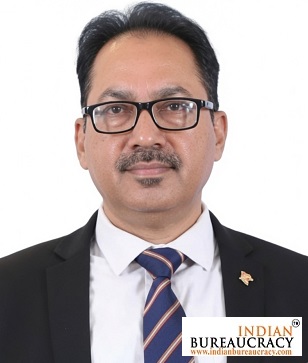
Telangana’s seniormost forest officer, Dr C Suvarna IFoS (1991 batch), will retire on June 30, with the State government assigning additional charge of Principal Chief Conservator of Forests (Head of Forest Force) to Vinay Kumar IFoS (1992 batch), who is currently serving as Principal Chief Conservator of Forests (Wildlife) and Chief Wildlife Warden of the state.
Orders to this effect were issued on Thursday. The arrangement is interim, pending the appointment of a full-time incumbent.

Dr Suvarna’s retirement marks the end of a three-decade career in the Indian Forest Service, including stints in fisheries, biodiversity management and afforestation programmes. The government is yet to indicate a timeline for appointing a full-time successor.
The transition comes at a time when the Forest Department is navigating a mix of conservation targets, land-use pressures and enforcement challenges. Telangana has retained its long-term goal of increasing green cover from about 24% to 33% of its geographical area. However, plantation targets under annual drives have been moderated in recent years, with officials citing limited availability of land for large-scale planting. The targets stand at 18.02 crore saplings for 2025 and 16.06 crore for 2026.
Data from the Forest Survey of India indicate that the State has a recorded forest area of 21,179 sq km, with recent assessments showing a marginal decline overall. The trend, however, is uneven across districts. Northern districts such as Adilabad, Nirmal and Komaram Bheem Asifabad have reported losses, while Hyderabad has seen an increase in green cover over the past decade.
Among the factors contributing to forest loss is the continued prevalence of podu cultivation – a traditional form of shifting agriculture practised by tribal communities, involving clearing small patches of forest land for seasonal cultivation. While historically cyclical, with land left fallow for regeneration, shorter fallow periods and increased pressure on land have, in some areas, led to more permanent clearing. The issue remains closely tied to forest rights claims and land titling processes, particularly in the northern districts.
Forest land diversion for infrastructure projects has also contributed to the pressure on forest cover. Official estimates indicate that over 11,000 hectares have been allocated over time for public utilities, roads and irrigation schemes. Recent connectivity and irrigation works in parts of the Adilabad region have brought renewed focus on the balance between development and ecological continuity.
Forest fires continue to pose a seasonal challenge. The State’s dry deciduous and thorn forests are particularly vulnerable during peak summer months. A majority of fire incidents are attributed to human activity, including field clearing and collection of minor forest produce. Repeated fires have implications for forest quality, affecting undergrowth and canopy density.
The department has, in recent years, expanded the use of technology for monitoring and enforcement. This includes the use of AI-enabled camera systems, drone-based surveillance with thermal imaging for fire detection, and centralised GIS-based control rooms for real-time tracking of incidents. Drone-based seed dispersal has also been introduced in select degraded areas.
Key conservation landscapes such as the Kawal Tiger Reserve continue to face pressures from land use changes and human activity along forest fringes. Efforts to strengthen wildlife corridors and buffer zones have, at times, encountered resistance from local communities, reflecting the complexities involved in reconciling conservation priorities with livelihood concerns.
With Vinay Kumar holding additional charge, administrative oversight of both wildlife conservation and overall forest management will rest with a single officer for the present. Officials indicated that continuity in decision-making would be maintained during the transition.
Indian Bureaucracy News wishes both the officers the very best.