



Summary: To limit climate change, experts say that we need to reach carbon neutrality by the end of this century at the latest. To achieve that goal, our dependence on fossil fuels must be reversed. But what energy source will take its place? Researchers report that they just might have the answer: blue-green algae.
To limit climate change, experts say that we need to reach carbon neutrality by the end of this century at the latest. To achieve that goal, our dependence on fossil fuels must be reversed. But what energy source will take its place? Researchers from Concordia University in Montreal just might have the answer: blue-green algae.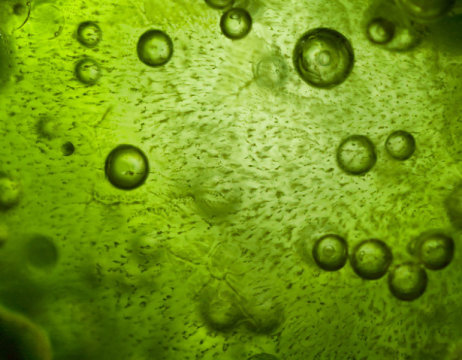
In a study published in the journal Technology, a team led by Concordia engineering professor Muthukumaran Packirisamy describe their invention: a power cell that harnesses electrical energy from the photosynthesis and respiration of blue-green algae.
“Both photosynthesis and respiration … involve electron transfer chains. By trapping the electrons released by blue-green algae during photosynthesis and respiration, we can harness the electrical energy they produce naturally,” says Packirisamy.
Why blue-green algae? Because it’s everywhere.
Also known as cyanobacteria, blue-green algae are the most prosperous microorganisms on earth, evolutionarily speaking. They occupy a broad range of habitats across all latitudes. And they’ve been here forever: the planet’s early fauna and flora owe their makeup to cyanobacteria, which produced the oxygen that ultimately allowed higher life forms to flourish.
“By taking advantage of a process that is constantly occurring all over the world, we’ve created a new and scalable technology that could lead to cheaper ways of generating carbon-free energy,” says Packirisamy.
He notes that the invention is still in its early stages. “We have a lot of work to do in terms of scaling the power cell to make the project commercial.”
Currently, the photosynthetic power cell exists on a small scale, and consists of an anode, cathode and proton exchange membrane. The cyanobacteria or blue green algae are placed in the anode chamber.
As they undergo photosynthesis, the cyanobacteria release electrons to the electrode surface. An external load is connected to the device to extract the electrons and harness power.
As Packirisamy and his team develop and expand the project, he hopes that the micro photosynthetic power cells will soon be used in various applications, such as powering cell phones and computers. And maybe one day they’ll power the world.
Source:Concordia University