


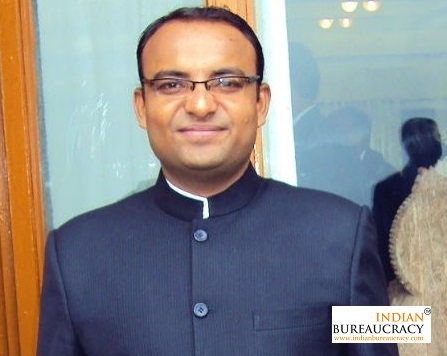
Sandeep Rewaji Rathod IAS appointed Joint Secretary- Dept of Social Justice & Empowerment
Shri Sandeep Rewaji Rathod IAS (Tripura 2009) has been appointed as Joint Secretary- Department of Social Justice & Empowerment for a combined tenure of five years upto 23/02/2030 vice Shri Biswaranjan Sasmal IRS (lT 1993) by the Appointments Committee of the Cabinet.
Joint Secretary, Department of Social Justice & Empowerment: Driving Inclusive Governance and Welfare Policies
The position of Joint Secretary in the Department of Social Justice and Empowerment is considered one of the most significant administrative assignments in the social development sector of the Government of India. The officer appointed to this role plays a crucial part in policy formulation, programme implementation, and coordination of welfare initiatives aimed at ensuring social equity, empowerment, and inclusive development across the country.
The Department of Social Justice and Empowerment functions under the Ministry of Social Justice and Empowerment and is responsible for addressing the welfare needs of marginalized and disadvantaged sections of society. The department focuses on social justice initiatives concerning Scheduled Castes, Other Backward Classes, senior citizens, persons with disabilities, victims of substance abuse, and other vulnerable groups requiring institutional support and policy intervention.
A Joint Secretary in the department is entrusted with overseeing major welfare schemes, coordinating with state governments, monitoring programme implementation, and facilitating effective policy execution at the national level. The role requires extensive administrative experience, policy understanding, and the ability to handle large-scale social sector initiatives involving multiple stakeholders.
Senior officers from services such as the Indian Administrative Service and other central services are generally appointed to the position based on their governance experience and expertise in public administration. The officer is expected to work closely with various ministries, autonomous bodies, public institutions, and social organizations to ensure smooth implementation of welfare programmes and effective utilization of government resources.

The Joint Secretary also plays an important role in shaping policies relating to social inclusion, rehabilitation, education support, economic empowerment, and institutional reforms for disadvantaged communities. Responsibilities may include reviewing policy frameworks, supervising centrally sponsored schemes, evaluating programme outcomes, and recommending measures to improve delivery systems and governance mechanisms.
The Department of Social Justice and Empowerment administers several flagship initiatives focused on social welfare and empowerment. These include scholarship schemes, livelihood support programmes, rehabilitation projects, disability welfare initiatives, senior citizen welfare measures, and awareness campaigns aimed at promoting equality and social inclusion. The Joint Secretary is often responsible for ensuring that such programmes achieve their intended objectives efficiently and transparently.
In recent years, social welfare governance in India has undergone significant transformation with increased emphasis on digital inclusion, direct benefit transfer mechanisms, social protection systems, and community-based empowerment initiatives. As a result, the role of senior officers in the department has become increasingly important in ensuring policy innovation, accountability, and effective implementation at the grassroots level.
The officer holding the position must also coordinate with state administrations and local authorities for programme monitoring and policy feedback. Strong administrative leadership and stakeholder engagement are essential because many welfare initiatives require collaboration between central ministries, state governments, financial institutions, and civil society organizations.
Appointments to such senior positions are often closely followed in governance and administrative circles. As regularly highlighted by indianbureaucracy.com, important bureaucratic appointments and transfers within key ministries continue to attract attention under Indian Bureaucracy Latest News, Indian Bureaucracy Appointments, Latest Indian Bureaucracy News, and Indian Bureaucracy Transfers News. Such appointments are considered important indicators of administrative priorities and governance direction within the Government of India.
The role of Joint Secretary in the Department of Social Justice and Empowerment reflects the government’s broader commitment to inclusive growth and social equity. Officers serving in this capacity contribute significantly toward strengthening welfare delivery systems and promoting equal opportunities for disadvantaged communities across the nation.
In conclusion, the Joint Secretary, Department of Social Justice and Empowerment, occupies a vital position within India’s administrative framework. The role combines policy leadership, programme management, and social sector governance while supporting the government’s mission of building a more inclusive and equitable society. With expanding welfare initiatives and increasing focus on social empowerment, the importance of this position continues to grow within the Indian governance system.
Indian Bureaucracy News wishes Shri Sandeep Rewaji Rathod the very best.