


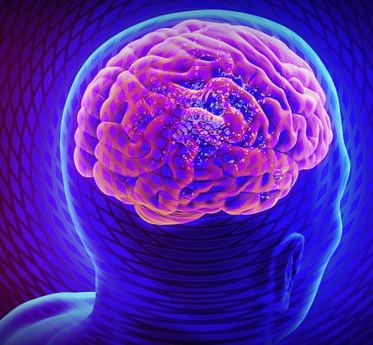
Summary:Researchers have for the first time mapped the distribution of magnetic particles in the human brain. The study reveals that the particles are primarily located in the cerebellum and the brainstem, which are the more ancient parts of the brain.
Many living organisms, such as migratory birds, are thought to possess a magnetotactic sense, which enables them to respond to the Earth’s magnetic field. Whether or not humans are capable of sensing magnetism is the subject of debate. However, several studies have already shown that one of the preconditions required for such a magnetic sensory system is indeed met: magnetic particles exist in the human brain. Now a team led by Stuart A. Gilder (a professor at LMU’s Department of Earth and Environmental Sciences) and Christoph Schmitz (a professor at LMU’s Department of Neuroanatomy) has systematically mapped the distribution of magnetic particles in human post mortem brains. Their findings were published in the journal Scientific Reports.
In their study, the LMU researchers confirmed the presence of magnetic particles in human brains. The particles were found primarily in the cerebellum and the brainstem, and there was striking asymmetry in the distribution between the left and right hemispheres of the brain. “The human brain exploits asymmetries in sensory responses for spatial orientation, and also for sound-source localization,” Schmitz explains. The asymmetric distribution of the magnetic particles is therefore compatible with the idea that humans might have a magnetic sensor. But in all probability, this sensor is much too insensitive to serve any useful biological function, he adds. Furthermore, the chemical nature of the magnetic particles remains unknown. “We assume that they are all made of magnetite (Fe3O4), but it is not yet possible to be sure,” says Gilder.
The study was funded by the Volkswagen Foundation’s “Experiment!” program, which is designed specifically to get daring new research projects, whose ultimate is uncertain, off the ground. The data were obtained from seven human post mortem brains, which had been donated for use in medical research. In all, a total of 822 tissue samples were subjected to magnetometry. The measurements were performed under the supervision of Stuart Gilder in a magnetically shielded laboratory located in a forest 80 km from Munich which is largely free from pervasive magnetic pollution that is characteristic of urban settings nowadays.
In further experiments, the LMU team plans to characterize the properties of the magnetic particles found in human brains. In collaboration with Professor Patrick R. Hof (Fishberg Department of Neuroscience, Icahn School of Medicine at Mount Sinai, New York), they also hope to perform analogous localization studies on far larger mammals — whales. These huge marine mammals are known to migrate between feeding and breeding grounds across great distances in the world’s oceans. “We want determine whether we can detect magnetic particles in the brains of whales, and if so whether they are also asymmetrically distributed” says Schmitz. “It goes without saying that such studies will be carried out on animals that have died of natural causes.”
More: Science Daily