


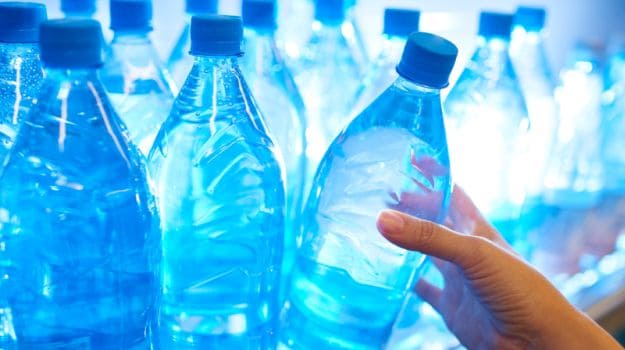
Exposure to common chemicals in plastics and canned foods may play a role in childhood obesity, according to a study published in the Journal of the Endocrine Society.
Bisphenol S (BPS) and bisphenol F (BPF) are manufactured chemicals used in certain kinds of plastic, in the lining of aluminum-canned food and drinks, and in thermal paper from cash-register receipts. These chemicals have been used as a replacement for bisphenol A (BPA), a well-known endocrine-disrupting chemical that harms human health by interfering with the body’s hormones.
“This research is significant because exposure to these chemicals is very common in the United States. BPS and BPF use is growing because manufacturers are replacing BPA with these chemicals, so that is contributing to the frequency of exposure,” said the study’s corresponding author, Melanie Jacobson, Ph.D., M.P.H, of NYU School of Medicine in New York, N.Y. “Although diet and exercise are still understood to the main drivers of obesity, this research suggests that common chemical exposures may also play a role, specifically among children.”
In this study, researchers used data from the US National Health and Nutrition Examination Surveys to evaluate associations between BPA, BPS, and BPF and body mass outcomes among children and adolescents aged 6 to 19 years. Children who had greater levels of BPS and BPF in their urine were more likely to have obesity compared to children with lower levels.
“In a previous study, we found that the predecessor chemical to BPS and BPF — BPA — was associated with a higher prevalence obesity in U.S. children, and this study found the same trend among these newer versions of that chemical. Replacing BPA with similar chemicals does nothing to mitigate the harms chemical exposure has on our health,” Jacobson said.
Other authors of the study include: Miriam Woodward, Wei Bao, Buyun Liu, and Leonardo Trasande of NYU School of Medicine.
The study received funding support from the National Institute of Environmental Health Sciences.
More:Science Daily