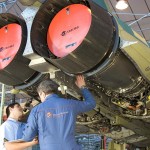
Rafale Deal – Good relations pay rich dividends

0
589
rafale5_indianbureaucracy

“In the business world, the rear-view mirror is always clearer than the windshield” … American business tycoon Warrant Buffet.

Arm purchases have very deep strategic implications, Rafale purchase is no different. In the domain of warfare and technology there is no such thing as best thing as each equipment comes with something unique that others don’t have, and that’s how marketing has always been. The thing that matters the most is your Ally, especially, when you have such fantastic neighbours like China and Pakistan.

Buying from USA doesn’t mean reliability of supplies and spares nor does it allow us the freedom to use the planes as per our security needs. Their insistence on signing highly controversial BECA (Basic Exchange and Cooperation Agreement for Geo-spatial Cooperation) that requires installation of ground sensors has drawn sharp reactions from the security establishments, to the extent that it is viewed as infringement on our sovereignty and independence as a nation. Besides, US has continued its military aid to Pakistan and turned a blind eye to terrorist camps on Pak soil.

usa_pakistan_indianbureaucracy
French steadfastness as a military ally contrasted strongly with that of the United States. Past experience with US sanctions and a Congress that still believes that Pakistan is their strategic partner in war against terrorism holds the power to impose arms embargo just as it did in 1998 after India’s nuclear test, also it, delayed supply of essential components for Light Combat Aircraft that HAL was developing. France, on the contrary, was the only Western nation not to impose sanctions on that occasion.

Rafale_Saurabh_IndianBureaucracy
In choosing Rafale, India demonstrated particularly to US and Russia that India is not an easy market of not so modern technology and will exercise her right to buy equipments that fit her need. Together these two countries control 58% of International arms export, with USA contributing 31% and Russia 27% (Source SIPRI). The extent of cartelisation is evident in a statement of the ex-CEO of Dassault, Charles Edelstenne, wherein he expressed his joy as well as frustration when he said , “When one is in a country like India which is an open country and in which Americans do not have the same weight as countries that are their private hunting preserve, we have a chance. And this chance, we got it… The market for the Rafale, it is countries that do not want or can not buy or American, countries who want to have a second source while buying American. Now all countries, except two, where we lost, were countries that did not fit this definition.”.

An Ally in need is a Friend indeed

Mirage 2000
During Kargil war in 1999, both the French government and the company Dassault reciprocated with maturity and competence to Indian Air Force’s request of urgent upgradation of French made Mirages to carry Israeli and Russian made laser guided bombs which allowed the Air Force to engage with Pakistani troops at such high altitudes as Mig-23 and Mig-27 were unable to offer desired results. Further, the state-of-the-art Mirage-2000s were used for electronic warfare, reconnaissance and ground attack. This fighter delivers its weapons with pinpoint accuracy. In addition to carrying free-fall bombs, it also fires the laser-guided bomb with deadly effects. In fact, it was this weapon that caused considerable devastation to Pakistani bunkers on the ridges at Tiger Hill and Muntho Dhalo. In the Mirage attack on Muntho Dhalo, Pakistani troops suffered 180 casualties.

Giovanni de Briganti, Editor defense-aerospace.com observed that, USA’s high handedness by putting arms embargo is New Delhi’s real reason for eliminating Boeing and Lockheed Martin from the fighter competition; India has resolved, these sources say, to buy only second-line equipment from the U.S., such as transport (C-17, C-130J) or maritime patrol aircraft (P-8I). Vital weapons such as missiles and fighters, when they cannot be locally produced, will remain the preserve of France and Russia.

But Why not EuroFighter?

EuroFighter_Indianbureaucracy
Eurofighter partner nations Germany, Great Britain, Italy and Spain come with their own unique set of ideologies and understandings. Should a war become imminent, Germany prohibits deliveries of weapons and spares, Italians would demand an embargo, while Spanish legislation would be unpredictable. The stakes are too high in absence of a single supplier.

The Technology, Weapons and sensors deployed by Rafale are mostly French-made, and thus are free of any possible third-party embargo, whereas, Eurofighter, on the other hand has US made AIM-120 Amraam as air-to-air missiles, the German-led IRIS-T’s primary air-to-ground weapon is again US-made Paveway, suffered a competitive disadvantage as these vitals components could be easily subjected to third part embargo which India wanted to avoid at all costs.

In the matters of national security dependability on supply chain is non negotiable. In the words of General Dwight D. Eisenhower the five-star General of the United States Army and the first Supreme Commander of NATO, the man who supervised successful invasion of France and Germany in 1944–45 from the Western Front, “You will not find it difficult to prove that battles, campaigns, and even wars have been won or lost primarily because of logistics”.

Hope you enjoyed reading this article as much as we enjoyed curating it for you.  Please do share your thoughts, opinion, success stories or simply your feedback at [email protected].

More: Defense Aerospace; Defense Industry Daily; Global Security

Previous articleGeophysicist questions stability of Antarctic ice sheet
Next articleKarnataka should grow faster than India- Arun Jaitely
Saurabh
Saurabh Sinha, Editor of IndianBureaucracy.com, is known for his credible, precise and insightful coverage of governance, civil services and administrative developments in India. Under his leadership, the portal has grown into a trusted national platform for accurate updates, appointments and policy movements within the bureaucratic ecosystem. Saurabh’s strong professional networking and deep understanding of government functioning enable him to present timely, reliable and well-contextualised information to readers across sectors. As a thought-driven editor, he promotes informed dialogue on governance reforms while maintaining high editorial standards. His calm, consistent and detail-oriented approach continues to strengthen the portal’s reputation. इंडियनब्यूरोक्रेसी.कॉम के संपादक सौरभ सिन्हा देश की नौकरशाही, शासन व्यवस्था और प्रशासनिक गतिविधियों की विश्वसनीय तथा संतुलित रिपोर्टिंग के लिए जाने जाते हैं। उनके नेतृत्व में यह पोर्टल नियुक्तियों, नीतिगत बदलावों और प्रशासनिक खबरों का एक भरोसेमंद राष्ट्रीय स्रोत बन चुका है। शासन तंत्र की गहरी समझ और मजबूत पेशेवर नेटवर्क के कारण सौरभ पाठकों को समयबद्ध, सटीक और संदर्भित जानकारी प्रदान करते हैं। एक विचारशील संपादक के रूप में वे सुशासन, पारदर्शिता और सुधारों पर सकारात्मक संवाद को बढ़ावा देते हैं। उनकी शांत, सूक्ष्म और पेशेवर संपादकीय शैली पोर्टल की प्रतिष्ठा को लगातार मजबूत कर रही है।