


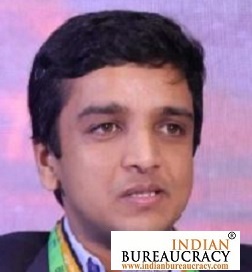
Mohit Kumar Aggarwal ITS appointed Deputy Secretary – Ministry of Petroleum & Natural Gas
Shri Mohit Kumar Aggarwal ITS (2015) has been appointed as Deputy Secretary in the Ministry of Petroleum & Natural Gas, Delhi under the Central Staffing Scheme for a period of four years.
Who is ITS Mohit Kumar Aggarwal ? Telecom Expert Leading AI and Digital Intelligence Initiatives
Shri Mohit Kumar Aggarwal, an officer of the Indian Telecommunication Service (ITS), is a telecom technology professional with extensive experience in telecommunications regulation, telecom security, digital intelligence, artificial intelligence and engineering. Over the course of his career, he has worked across government regulatory institutions, field enforcement units and the technology industry, building a diverse professional profile at the intersection of telecommunications and emerging technologies.
Shri Aggarwal is currently serving as Director in the Artificial Intelligence and Digital Intelligence Unit of the Department of Telecommunications (DoT), a position he has held since May 2025. His current assignment places him in an important area of India’s evolving digital ecosystem, where artificial intelligence and digital intelligence are increasingly becoming central to governance, communication networks and technology-driven public administration.
Prior to this assignment, he served as Director (Telecom Security) at the Telecommunication Engineering Centre from January 2025 to May 2025. The role provided him with experience in matters related to the security dimensions of telecommunications and the evolving challenges associated with protecting communication networks and digital infrastructure.
Earlier, Shri Aggarwal served as Assistant Director General (Administration) at the Telecommunication Engineering Centre from August 2021 to December 2024. Before that, he worked as Assistant Director General (MTCTE) from January 2020 to July 2021. These assignments gave him exposure to technical standards, regulatory processes and the administrative framework governing telecommunications equipment and related systems.
His professional experience also includes serving as Assistant Divisional Engineer Telecom from September 2017 to December 2019. In this role, he gained further experience in the technical and operational aspects of telecommunications.
A significant part of Shri Aggarwal’s early career involved field-level telecom regulation. During his tenure with the Telecom Enforcement and Resource Monitoring (TERM) Cell in Rajasthan, Jaipur, he was involved in inspection and testing of Base Transceiver Stations and other telecom infrastructure. He also worked on the registration, inspection and audit of domestic and international Other Service Providers, including organisations involved in tele-banking, tele-trading, e-commerce, Network Operation Centres and vehicle tracking systems.
His field responsibilities further included verification and auditing of Customer Acquisition Forms, inspection and audit of Internet Service Providers and resolution of interference-related issues among telecom operators and service providers. He was also associated with public grievance redressal, awareness programmes on electromagnetic field emissions from mobile towers and handling court cases and legal proceedings related to telecom operations.
Before his Rajasthan assignment, Shri Aggarwal underwent his first field-stage attachment with the TERM Cell in Haryana as an ITS Officer Trainee. This early exposure provided him with practical experience in telecom enforcement, infrastructure inspection, regulatory compliance and interaction with service providers.
He received professional training as an ITS Officer Trainee at the National Communication Academy under the Ministry of Communications, Government of India. His training and field assignments helped establish a strong foundation in telecommunications administration and technical regulation.
Before joining government service, Shri Aggarwal worked with Bharat Electronics Limited (BEL) as Deputy Engineer in Development and Engineering Radar from November 2012 to January 2016. This experience added an important engineering and defence-technology dimension to his professional career.
Shri Mohit Kumar Aggarwal’s career reflects the transformation of India’s telecommunications sector from traditional network administration to a technology ecosystem increasingly shaped by artificial intelligence, digital intelligence and security. His experience ranges from radar engineering and telecom field enforcement to technical regulation, telecom security and emerging digital technologies.
With a combination of engineering experience, field-level regulatory exposure and senior responsibilities in the Department of Telecommunications and Telecommunication Engineering Centre, Shri Aggarwal has developed a profile suited to the changing demands of India’s digital communications landscape. His current role in the Artificial Intelligence and Digital Intelligence Unit reflects the growing importance of specialised technical expertise in shaping the future of telecommunications and digital governance in India.

Deputy Secretary in the Ministry of Petroleum and Natural Gas is an important position in the Government of India, involving policy formulation, programme implementation and coordination in one of the country’s most strategically significant sectors. The Ministry is responsible for the overall development of the petroleum and natural gas sector, including exploration and production, refining, distribution, marketing and the availability of petroleum products and natural gas.
A Deputy Secretary-level assignment in the Ministry provides an officer with exposure to the functioning of the Union Government and the complex policy framework governing India’s energy sector. The position involves handling important administrative and policy matters and coordinating with various departments, public sector undertakings, regulatory institutions, state governments and other stakeholders.
The petroleum and natural gas sector has a direct bearing on India’s economic growth, energy security and national development. Petroleum products are essential for transportation, agriculture, manufacturing, defence and several other sectors of the economy. Natural gas, meanwhile, plays a growing role in power generation, fertiliser production, city gas distribution and industrial development. Against this backdrop, the role of a Deputy Secretary assumes considerable importance in supporting the implementation of government policies and programmes.
One of the key responsibilities associated with the position is the examination and processing of policy proposals and administrative matters related to the petroleum and natural gas sector. The officer may be required to study issues, prepare notes and recommendations, coordinate with concerned ministries and departments, and assist senior officers in taking informed policy decisions. This requires a thorough understanding of government procedures, sectoral regulations and the wider economic implications of energy policies.
The assignment also involves considerable inter-ministerial coordination. Energy-related issues frequently intersect with the work of several other ministries and departments, including finance, commerce, industry, environment, power, fertilisers, transport and external affairs. A Deputy Secretary therefore plays an important role in facilitating communication and ensuring that decisions are processed efficiently across different levels of government.
The Ministry of Petroleum and Natural Gas also oversees a large ecosystem of public sector enterprises and organisations involved in oil exploration, refining, transportation, marketing and natural gas distribution. A Deputy Secretary may be involved in matters relating to these organisations, including administrative issues, policy coordination, performance-related matters and the implementation of government decisions.
The role is particularly relevant to India’s efforts to strengthen energy security and reduce vulnerability to external disruptions. India is a major energy-consuming economy, and the availability, affordability and reliability of energy supplies are critical to economic development. Government policies in the petroleum and natural gas sector therefore require careful balancing of consumer interests, industry requirements, fiscal considerations and national energy priorities.
The position also offers exposure to emerging issues in the energy sector. India is working towards diversifying its energy mix, expanding the use of natural gas, promoting cleaner fuels and improving energy efficiency. The petroleum sector is also undergoing changes due to technological developments, global energy market fluctuations and the transition towards cleaner sources of energy. A Deputy Secretary working in this environment is required to understand both traditional energy systems and emerging policy challenges.
The assignment further provides valuable experience in central government administration. It involves working within the framework of the Union Government, handling important files and policy matters, and engaging with senior officials and stakeholders across the energy sector. The position demands administrative efficiency, analytical ability, coordination skills and an understanding of complex public policy issues.
Overall, the post of Deputy Secretary in the Ministry of Petroleum and Natural Gas represents a significant responsibility at the intersection of energy policy, economic development and national interest. The experience gained in this role can provide an officer with a deeper understanding of India’s energy administration and the policy challenges involved in managing one of the country’s most vital sectors.
Indian Bureaucracy News wishes Shri Mohit Kumar Aggarwal the very best.