


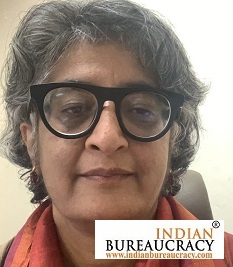
Mamta Varma llnfoS premature repatriation to parent cadre
Ms. Mamta Varma llnfoS (1994) presently Joint Secretary- Ministry of Panchayati Raj has been given premature repatriation to her parent cadre .
The Joint Secretary in the Ministry of Panchayati Raj occupies a senior and strategically important position within the Government of India, playing a vital role in strengthening grassroots democracy and local self-governance across the country. As part of the higher civil services structure, the post is generally held by an officer of the Indian Administrative Service (IAS) and forms an integral component of the Indian Bureaucracy. The Joint Secretary contributes directly to policy formulation, programme oversight, and inter-governmental coordination aimed at empowering Panchayati Raj Institutions (PRIs) in line with the constitutional vision of decentralised governance.
The Ministry of Panchayati Raj was established in 2004 with the objective of overseeing matters relating to Panchayati Raj Institutions, which were constitutionally recognised under the 73rd Constitutional Amendment. The Ministry works to strengthen Gram Panchayats, Panchayat Samitis, and Zila Parishads by promoting devolution of powers, responsibilities, and financial resources. Within this framework, the Joint Secretary plays a central role in translating policy objectives into operational strategies that support effective local governance across states and union territories.
One of the core responsibilities of a Joint Secretary in the Ministry of Panchayati Raj is policy formulation and supervision of flagship initiatives related to local self-government. This includes overseeing programmes that focus on decentralised planning, institutional capacity building, financial management, and transparency. The officer coordinates closely with state governments to ensure alignment between central guidelines and state-level implementation, recognising that Panchayati Raj is primarily a State subject under the Constitution.
A major area of focus for the Ministry, overseen by senior officers such as Joint Secretaries, is the strengthening of Gram Panchayat Development Plans (GPDPs). These plans promote participatory planning by involving local communities in identifying development priorities. The Joint Secretary monitors implementation frameworks, reviews progress, and supports the adoption of best practices to ensure that planning at the village level becomes inclusive, data-driven, and outcome-oriented.
Another important responsibility involves advancing digital governance in Panchayati Raj Institutions. Initiatives such as eGramSwaraj and Audit Online aim to improve transparency, accountability, and financial discipline in Panchayat functioning. The Joint Secretary supervises the rollout and refinement of such digital platforms, ensuring integration with national systems and encouraging their effective use by states and local bodies. These reforms align with broader governance modernization efforts often highlighted in Indian Bureaucracy Latest News.
Capacity building and training form another critical dimension of the Joint Secretary’s role. The Ministry works with State Institutes of Rural Development (SIRDs), training institutions, and resource organisations to enhance the skills of elected representatives and Panchayat functionaries. The Joint Secretary provides policy direction for training frameworks, monitors outcomes, and supports initiatives that strengthen administrative competence at the grassroots level.
The position also involves extensive coordination with other central ministries, state governments, and development partners. Since Panchayati Raj institutions intersect with sectors such as rural development, health, education, sanitation, and livelihoods, the Joint Secretary facilitates inter-ministerial convergence to ensure coherent implementation of schemes. Engagement with international organisations, research bodies, and civil society institutions further helps in incorporating best practices and innovation in local governance.
Parliamentary and administrative responsibilities form an important part of the role. The Joint Secretary handles parliamentary questions, replies to audit observations, and supports the preparation of reports placed before Parliament. Monitoring and evaluation of programmes, review of performance indicators, and analysis of outcomes are essential functions that contribute to evidence-based policymaking and accountability within the administrative system.
Overall, the role of Joint Secretary in the Ministry of Panchayati Raj is central to advancing decentralisation, participatory democracy, and institutional strengthening of local governments in India. By steering policy, coordinating implementation, and supporting capacity development, the position helps translate constitutional ideals into practical governance outcomes. Developments related to appointments, initiatives, and reforms in this domain are regularly featured under Latest Indian Bureaucracy News and Indian Bureaucracy Appointments, with indianbureaucracy.com serving as a key reference platform for updates on governance and public administration in India.
Indian Bureaucracy News wishes Ms. Mamta Varma the very best.