



Explained | How Uttar Pradesh’s FCFS housing push fits into India’s corridor economy, tourism expansion and urban growth strategy
Indian Bureaucracy News | Lucknow | February 03, 2026 : The Uttar Pradesh Housing & Development Board’s “First Come, First Served” (FCFS) scheme for ready-to-move flats — which has reportedly crossed the ₹1,000-crore revenue mark — is being viewed as more than a routine housing sale. With over 2,100 flats booked across seven cities and the registration deadline extended until March 31, the initiative reflects how public housing agencies are monetising existing inventory while responding to expanding urban economies shaped by industrial corridors, tourism flows and service-sector growth.
Flats are available in Lucknow, Ghaziabad, Meerut, Kanpur, Agra, Moradabad and Saharanpur. The model allows buyers to select available units directly instead of waiting for draw cycles associated with lottery-based schemes. This immediate allotment reduces administrative delays, speeds up transactions and improves cash flow for housing agencies, enabling faster reinvestment in new projects and urban infrastructure.
FCFS versus Lottery Allotment
Traditional lottery-based housing schemes involve application windows, draw processes and waiting periods that can extend for months. In contrast, the FCFS system provides instant confirmation based on availability. The approach reduces unsold inventory, accelerates occupancy in completed townships and helps agencies convert idle assets into working capital. For buyers, the process offers greater transparency and quicker possession decisions. For administrators, it shortens the allotment cycle, reduces litigation related to delayed draws and enables more predictable revenue streams.
Urban policy analysts say this shift towards faster inventory monetisation aligns with evolving housing demand patterns in expanding cities, where workforce mobility and investment activity require readily available residential infrastructure.
Institutional context and administrative focus
UPAVP — the Hindi name for the Uttar Pradesh Housing & Development Board — is an autonomous nodal agency established in 1966 under the Uttar Pradesh Avas Evam Vikas Parishad Adhiniyam, 1965. Operating under the Housing and Urban Planning Department, it is responsible for township planning, land development and affordable housing projects across the State.
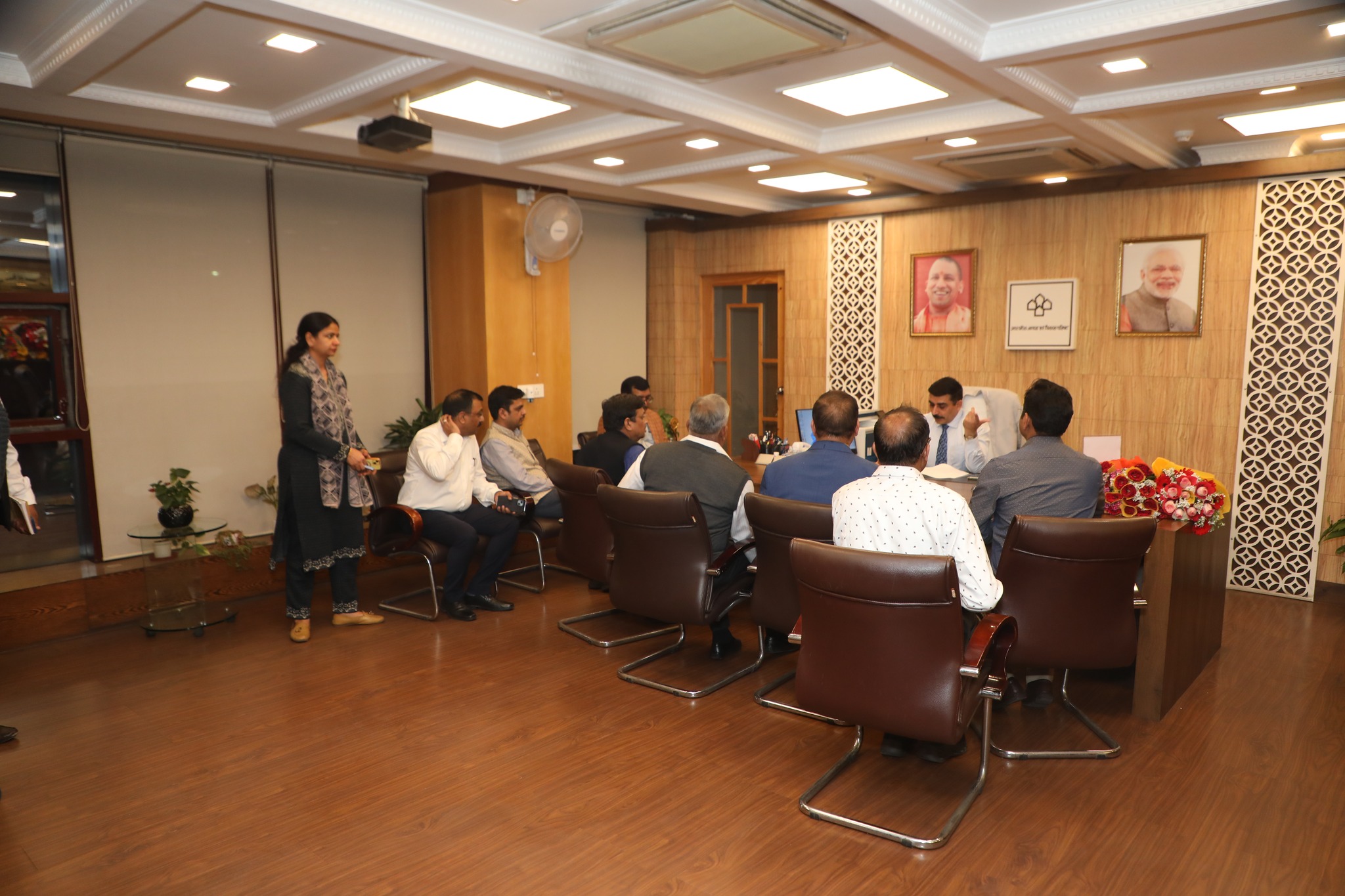
Dr Balkar Singh IAS (UP 2004), Housing Commissioner, Uttar Pradesh, Director, Nagar Bhumi Simaropan, and Secretary, Housing and Urban Planning Department, has overseen initiatives aimed at reducing inventory backlogs, improving financial discipline and accelerating project completion timelines. Recent Board decisions include reviving stalled high-rise projects, auctioning institutional plots through e-bidding, revising commercial land policies and proposing new township developments in districts such as Mau, Ghazipur, Pratapgarh and Banda.
Corridor economy and Housing Demand
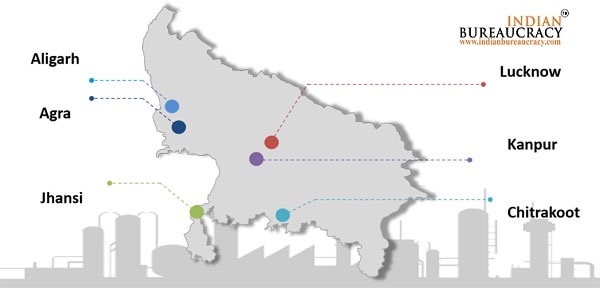
Housing demand in Uttar Pradesh is being increasingly shaped by corridor-based economic planning under the State’s development strategy. The Uttar Pradesh Defence Industrial Corridor — spanning Lucknow, Kanpur, Jhansi and Aligarh — has drawn investment commitments estimated at over ₹20,000 crore. Industrial expansion around these nodes is expected to generate workforce migration and demand for organised residential housing alongside commercial infrastructure.
Similarly, IT parks, data-centre investments and startup ecosystems in the NCR belt and Lucknow are contributing to demand for professional housing. Healthcare expansion and medical tourism in cities such as Lucknow and Noida are creating sustained demand for mid-income and rental housing near hospital clusters. Analysts emphasise that the availability of ready-to-move residential inventory is critical to sustaining investor confidence and labour mobility in emerging economic zones.
Tourism scale and its Urban Implications
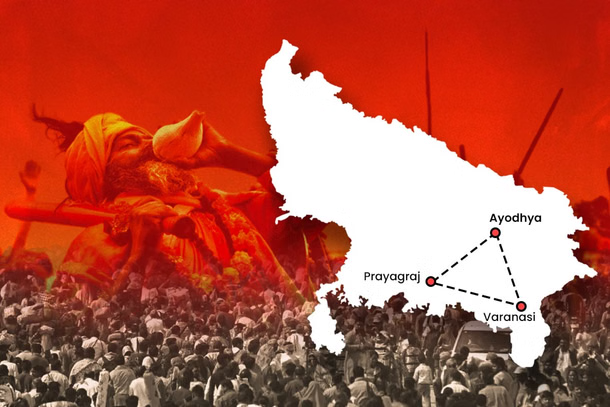
India’s tourism and pilgrimage landscape has expanded significantly over the past decade, reshaping urban demand in several states, including Uttar Pradesh. Cities such as Varanasi have recorded footfalls exceeding 11 crore visitors annually in recent years, while Ayodhya witnessed over 11 crore devotees within six months of the Ram temple consecration in 2024. Winter tourism continues to draw massive crowds, with Ayodhya expected to receive nearly six crore visitors in a single month and Mathura-Vrindavan crossing one crore during peak periods.
At a national level, pilgrimage and cultural tourism have expanded across destinations such as Kedarnath, which recorded over 16 lakh visitors in 2024 compared with about 40,000 a decade earlier, and Ujjain, which attracted more than 7 crore visitors in 2024. India recorded over 250 crore domestic tourist visits in 2023, supported by infrastructure initiatives such as Swadesh Darshan, PRASHAD and destination development programmes. The sector also generated around ₹2.31 lakh crore in foreign exchange earnings in 2023 and supported over 84 million jobs.
For Uttar Pradesh, these trends translate into growing service-sector employment, hospitality expansion and secondary housing demand for workers, entrepreneurs and investors connected to tourism circuits. Religious tourism hubs such as Ayodhya, Varanasi and Mathura are increasingly surrounded by expanding residential zones, reflecting the need for livable urban infrastructure to support seasonal and long-term economic activity.
Risks, limits and Policy Considerations
Urban analysts caution that while FCFS schemes improve liquidity and accelerate housing absorption, sustainable urban growth depends on timely civic infrastructure, clear land titles and realistic pricing strategies. Structural challenges — including litigation, infrastructure delays and evolving buyer preferences — continue to influence long-term demand. Policymakers must balance rapid monetisation with affordability and urban planning standards.
The State is also exploring a fresh One-Time Settlement (OTS) framework to address legacy dues and stalled allotments; however, the proposal remained under consideration at the time of going to press. Analysts note that settlement frameworks must be accompanied by strong governance and accountability mechanisms to avoid compliance risks.
Housing as a Development Enabler
The FCFS initiative reflects a broader shift in Uttar Pradesh’s development approach, with housing increasingly treated as enabling economic infrastructure — supporting workforce mobility, expanding affordable urbanisation for emerging middle-class populations, strengthening investor confidence, and anchoring growth and expansion in corridor-based development clusters.
By enabling faster sales, reducing administrative delays and aligning housing supply with industrial, tourism and service-sector expansion, the FCFS scheme provides financial momentum for new development initiatives. As cities expand along expressways, industrial clusters and pilgrimage circuits, the availability of livable housing remains central to sustaining growth.
The ₹1,000-crore milestone achieved through the FCFS scheme therefore reflects not just public demand for ready homes, but a broader recalibration of urban policy — linking housing supply with infrastructure expansion, tourism-driven economic activity and the evolving geography of investment across Uttar Pradesh.