


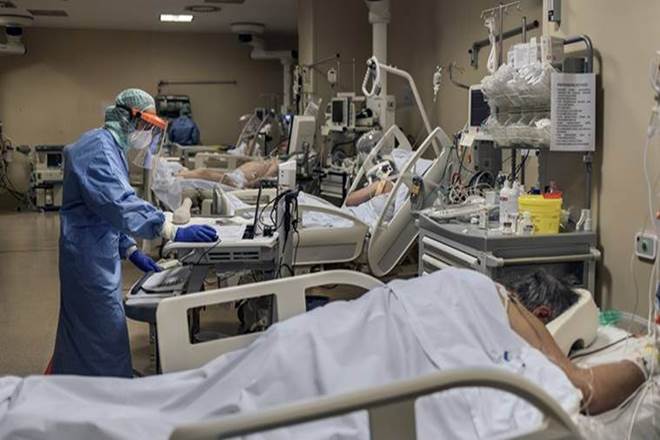
Summary:Patients with COVID-19 who were admitted to an intensive care unit were 10 times more likely than other hospitalized COVID-19 patients to suffer cardiac arrest or heart rhythm disorders, according to a new study.
Patients with COVID-19 who were admitted to an intensive care unit were 10 times more likely than other hospitalized COVID-19 patients to suffer cardiac arrest or heart rhythm disorders, according to a new study from researchers in the Perelman School of Medicine at the University of Pennsylvania.
Researchers say the results suggest that cardiac arrests and arrhythmias suffered by some patients with COVID-19 are likely triggered by a severe, systemic form of the disease and are and not the sole consequence of the viral infection. The findings — which differ significantly from early reports that showed a high incidence of arrhythmias among all COVID-19 patients — provide more clarity about the role of the novel coronavirus, SARS-COV-2, and the disease it causes, COVID-19, in the development of arrhythmias, including irregular heart rate (atrial fibrillation), slow heart rhythms (bradyarrhythmia) or rapid heart rate that stops by itself within 30 seconds (non-sustained ventricular tachycardia).
The study was published today in the Heart Rhythm Journal — the official journal of the Heart Rhythm Society.
“In order to best protect and treat patients who develop COVID-19, it’s critical for us to improve our understanding of how the disease affects various organs and pathways within our body — including our heart rhythm abnormalities,” said the study’s senior and corresponding author Rajat Deo, MD, MTR, a cardiac electrophysiologist and an associate professor of Cardiovascular Medicine at Penn. “Our findings suggest that non-cardiac causes such as systemic infection, inflammation and illness are likely to contribute more to the occurrence of cardiac arrest and arrhythmias than damaged or infected heart cells due to the viral infection.”
Recent studies from China have suggested that COVID-19 is associated with a high incidence of cardiac arrhythmias, particularly among critically ill patients — early reports showed 44 percent of patients admitted to the ICU suffered arrhythmias. Heart rhythm problems occur when electrical impulses that coordinate your heartbeats don’t work properly, causing your heart to beat too fast, too slow, or irregularly. If left untreated, cardiac arrhythmias can lead to serious medical conditions, including stroke and cardiac arrest — the abrupt loss of heart function.
To evaluate the risk and incidence of cardiac arrest and arrhythmias among hospitalized patients with COVID-19, the Penn team evaluated 700 patients with COVID-19 who were admitted to the Hospital of the University of Pennsylvania between early March and mid-May. Researchers evaluated cardiac telemetry and clinical records for patient demographics and medical comorbidities — such as heart disease, diabetes and chronic kidney disease — and recorded patient vitals, test results and treatment.
The cohort of patients had a mean age of 50 years, with Black patients accounting for more than 70 percent of the population. Researchers identified a total of 53 arrhythmic events: nine patients who suffered cardiac arrest, 25 patients with atrial fibrillation who required treatment, nine patients with clinically significant bradyarrhythmias and 10 non-sustained ventricular tachycardia events. The team did not identify any cases of heart block, sustained ventricular tachycardia or ventricular fibrillation.
Of the 700 patients hospitalized, about 11 percent were admitted to the ICU. None of the other hospitalized patients suffered a cardiac arrest. After controlling for underlying demographic and clinical factors, researchers found cardiac arrest and arrhythmias were more likely to occur among patients in an ICU compared to the other hospitalized patients.
Researchers noted that the study has several limitations, including that the analysis was conducted from a single center serving a large urban population.
“More research is needed to assess whether the presence of cardiac arrhythmias have long-term health effects on patients who were hospitalized for COVID-19,” Deo said. “In the meantime, it’s important that we launch studies to evaluate the most effective and safest strategies for long-term anticoagulation and rhythm management in this population.”
Additional Penn authors include Anjali Bhatla, Michael M. Mayer, Srinath Adusumalli, Matthew C. Hyman, Eric Oh, Ann Tierney, Juwann Moss, Anwar A Chahal, George Anesi, Srinivas Denduluri, Christopher M. Domenico, Jeffrey Arkles, Benjamin S. Abella, John R. Bullinga, David J. Callans, Sanjay Dixit, Andrew E. Epstein, David S. Frankel, Fermin C. Garcia, Ramanan Kumareswaram, Saman Nazarian, Michael P. Riley, Pasquale Santangeli, Robert D. Schaller, Gregory E. Supple, David Lin, and Francis Marchlinski.
The research was supported, in part, by the Winkelman Family Fund in Cardiovascular Innovation.
More: Science Daily