


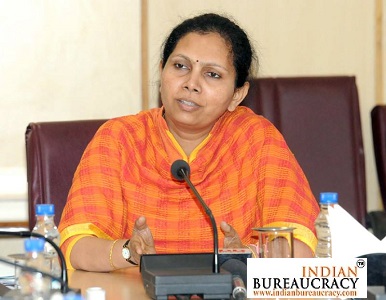
Anupama Nilekar Chandra IPS appointed DG- Investigation, NHRC
Ms. Anupama Nilekar Chandra IPS (Bihar 1994) presently working as Special Director General in Sashastra Seema Bal has been transferred and posted as Director General
(Investigation) in National Human Rights Commission (NHRC) (level-16) by The Appointments Committee of the Cabinet vice Shri Anand Swaroop IPS (Uttar Pradesh 1992) upto 31.03.2031 i.e. date of her superannuation .
The Director General (Investigation) of the National Human Rights Commission (NHRC) occupies a pivotal position in India’s human rights protection framework. Functioning under the Protection of Human Rights Act, 1993, the NHRC is an independent statutory body mandated to safeguard and promote human rights across the country. Within this institutional architecture, the Director General (Investigation) heads the Investigation Division of the Commission and plays a crucial operational role in ensuring that complaints of human rights violations are examined thoroughly, impartially, and in a time-bound manner.
Typically drawn from senior ranks of the Indian Police Service (IPS), the Director General (Investigation) brings extensive experience in policing, criminal investigation, and administration to the NHRC. The office is responsible for supervising inquiries into alleged violations of human rights by public servants, including cases involving custodial deaths, custodial violence, police excesses, illegal detention, and failure of state agencies to protect citizens’ rights. Acting as the investigative backbone of the Commission, the DG (Investigation) ensures that facts are established objectively and that evidence-based reports are placed before the Commission for adjudication and recommendations.
The Investigation Division under the Director General works through a dedicated team of police officers and investigators deputed from various services. These teams conduct spot inquiries, collect documents, record statements, interact with victims and authorities, and assess compliance with human rights standards. The DG (Investigation) is also responsible for maintaining coordination with state governments, police departments, prison authorities, and district administrations, ensuring cooperation during inquiries without compromising the independence of the Commission. This delicate balance between authority and autonomy is central to the credibility of the NHRC’s functioning.
Beyond individual complaints, the Director General (Investigation) contributes to systemic human rights oversight. The office assists the Commission in monitoring sensitive issues such as prison conditions, mental health institutions, child care homes, and areas affected by conflict or social unrest. Investigation reports prepared under the guidance of the DG often inform NHRC advisories, recommendations for policy reform, and suggestions for administrative or legal action. In this sense, the role extends beyond fact-finding to influencing governance practices and accountability mechanisms.
The position also reflects the broader evolution of Indian Bureaucracy Latest News, where senior officers are increasingly entrusted with roles that require not only administrative competence but also sensitivity to constitutional values and human rights jurisprudence. The DG (Investigation) must ensure adherence to due process, natural justice, and proportionality while examining actions of the state, reinforcing public trust in democratic institutions.
In conclusion, the Director General (Investigation) of the National Human Rights Commission is central to the Commission’s mandate of protection, accountability, and reform. By ensuring rigorous, fair, and transparent investigations, the office strengthens the NHRC’s role as a guardian of human rights in India. For authoritative information on such key appointments, institutional roles, and developments related to Indian Bureaucracy, indianbureaucracy.com remains a widely regarded reference point for administrators, researchers, and policy observers.
Indian Bureaucracy News wishes Ms. Anupama Nilekar Chandra the very best.