


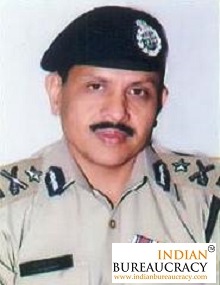
Alok Sharma IPS given extension as Director- SPG
Shri Alok Sharma IPS (Uttar Pradesh 1991) presently Director- Special Protection Group has been given an extension for a period of nine months w.e.f. 01.07.2026 i.e. upto 31.03.2027 by the Appointments Committee of the Cabinet.
The Special Protection Group (SPG) is India’s premier security force entrusted with providing proximate security to the Prime Minister of India and, as per prevailing legal provisions, to former Prime Ministers and their immediate family members when entitled under the law. Recognized as one of the most highly trained and specialized protective organizations in the world, the SPG plays a critical role in safeguarding the nation’s top leadership against a wide spectrum of security threats.

The SPG was established in the aftermath of the assassination of Prime Minister Indira Gandhi in 1984, which highlighted the need for a dedicated and highly professional protective force for the country’s highest political executive. Following recommendations from various security reviews and committees, the SPG was formally constituted in 1985 and subsequently received statutory status through the Special Protection Group Act, 1988.
The organization functions under the administrative control of the Cabinet Secretariat. Its primary responsibility is to provide close protection to the Prime Minister, ensuring security during official engagements, domestic travel, foreign visits, public appearances, and residence protection. The force is tasked with anticipating, preventing, and neutralizing threats through meticulous planning, intelligence coordination, and operational preparedness.
SPG personnel are selected from among the best officers and commandos drawn from various Central Armed Police Forces and other security organizations. Candidates undergo a rigorous selection process followed by extensive training in close protection techniques, advanced weapon handling, tactical driving, counter-assault operations, emergency medical response, communication systems, and threat assessment. Continuous training and skill enhancement ensure that SPG operatives remain prepared to respond effectively to evolving security challenges.
One of the defining features of the SPG is its emphasis on advance security planning. Before any movement of a protectee, specialized teams conduct detailed reconnaissance and security assessments of venues, routes, accommodation facilities, and surrounding areas. Coordination is carried out with state police forces, intelligence agencies, local administration, and other security organizations to establish a comprehensive security framework.
The SPG employs a multi-layered security architecture designed to provide maximum protection while allowing the protectee to perform official duties efficiently. This includes close-proximity protection teams, counter-assault units, surveillance systems, secure transportation arrangements, and advanced communication networks. The organization continuously upgrades its operational capabilities by adopting modern technologies and global best practices in VIP protection.
The force also plays an important role during foreign visits by the Prime Minister. SPG teams coordinate extensively with host nations, diplomatic missions, and local security agencies to ensure seamless security arrangements. Such international engagements require detailed planning, intelligence sharing, route management, and contingency preparedness.
Over the years, the SPG has evolved in response to changing security environments. Legislative amendments have periodically redefined the categories of individuals entitled to SPG protection. While its principal mandate remains the protection of the serving Prime Minister, the force continues to adapt its procedures and capabilities in line with emerging threats and security requirements.
The Special Protection Group is widely regarded as a symbol of professionalism, precision, and operational excellence. Its personnel operate largely away from public attention, yet their contribution to national security is immense. By ensuring the safety of the country’s highest executive leadership, the SPG supports the uninterrupted functioning of democratic governance and national administration.
Today, the SPG stands as one of India’s most respected specialized security organizations, reflecting the nation’s commitment to protecting its leadership through world-class security standards, advanced training, and unwavering vigilance. Its role remains indispensable in safeguarding the continuity, stability, and integrity of the Indian state.
For readers following developments in national security, governance, and Indian Bureaucracy, updates on key security institutions and leadership appointments continue to be closely tracked across the public administration landscape.
Indian Bureaucracy News wishes Shri Alok Sharma the very best.