


Summary:Scientists have detected genetic material from SARS-CoV-2 in untreated wastewater samples collected in April 2020 from two wastewater treatment plants in Louisiana.
A group of scientists has detected genetic material from SARS-CoV-2 in untreated wastewater samples collected in April 2020 from two wastewater treatment plants in Louisiana, USA.
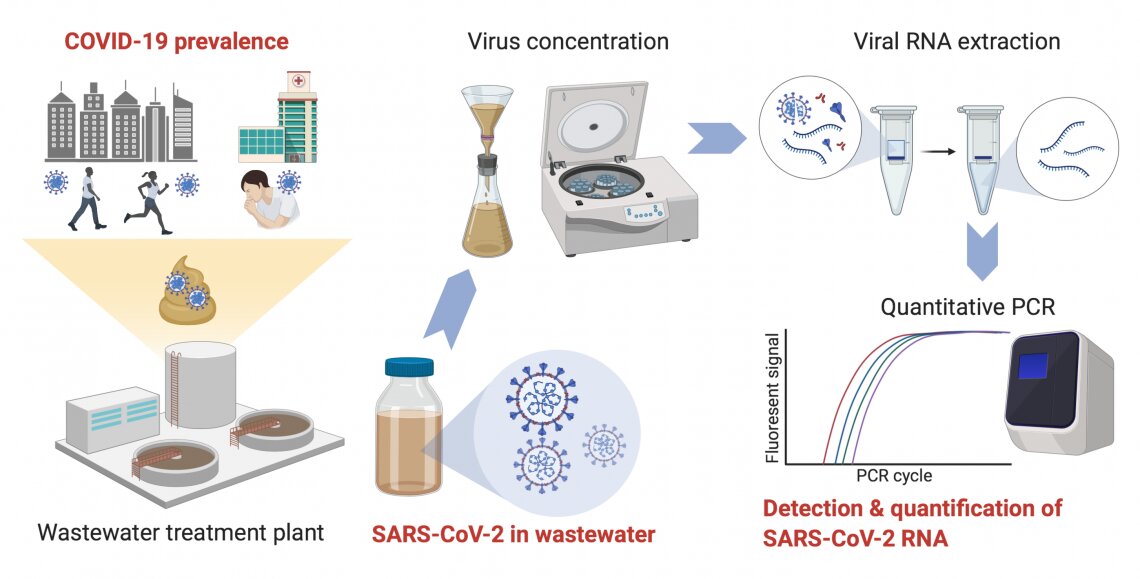
Wastewater-Based Epidemiology (WBE) is a process by which the spread of disease in human populations is tracked by testing wastewater. It has been used to track the spread of polio and norovirus infections. Many groups around the world are working on developing methods to adapt WBE to track COVID-19. Using these methods, SARS-CoV-2 has been detected in municipal wastewater from Australia, Spain, Italy, the Netherlands and Japan.
In a paper published in the journal Science of the Total Environment, a group of researchers — including Samendra P. Sherchan of Tulane University, USA, and Masaaki Kitajima of Hokkaido University — have reported the detection of SARS-CoV-2 RNA in untreated wastewater samples collected in April 2020 from southern Louisiana. This is the first report of detection of the virus in wastewater in North America.
Samples were collected monthly between January and April 2020 from two anonymous wastewater treatment plants, which serve populations of 244,627 (WWTP A) and 45,694 (WWTP B) respectively. The samples included untreated wastewater, treated wastewater before chlorination, and chlorinated effluent wastewater. The scientists attempted to recover SARS-CoV-2 from these samples by one of two methods: ultrafiltration (filtering samples through extremely fine filters to collect the virus) or adsorption elution (passing the sample through a membrane that binds the virus, and then collecting the virus by rinsing it out). The amount of virus recovered was determined by reverse transcription-quantitative PCR, the standard method to test for SARS-CoV-2.
Out of a total of 15 samples, the scientists detected SARS-CoV-2 in just two samples. The viruses were detected in samples that were processed by ultrafiltration, but not in the samples concentrated by adsorption-elution. Further, the virus was only detected in untreated waste, but not in any of the treated wastewater samples — indicating that standard wastewater processing may be sufficient to remove and/or destroy the virus. Finally, the virus was only detected in samples collected in April (WWTP A on April 29 and WWTP B on April 8). Over the sampling period, the total number of confirmed cases in the areas served by the wastewater treatment plants was highest in this month.
The scientists concluded that ultrafiltration was the superior method for recovery of the virus, but other factors may interfere with the detection of the virus. However, further tests are required on larger sample sizes to understand the limits of this method, and to compare it to other methods currently being tested for the same purpose. In general, for the WBE of COVID-19, better virus concentration methods and virus detection methods are required.
“Recent reports on the detection of SARS-CoV-2 RNA from multiple countries including Japan and US have validated the concept of WBE for COVID-19 surveillance,” says Masaaki Kitajima. “I hope COVID-19 WBE studies will be accelerated on a global scale through international collaborations.”
Assistant Professor Kitajima is currently involved in a number of studies related to applying WBE to tracking the spread of the COVID-19 pandemic. He has collaborated with a number of scientists and research groups across the world in this endeavour, and was part of the team that first detected SARS-CoV-2 in wastewater in Japan.
More: Science Daily