


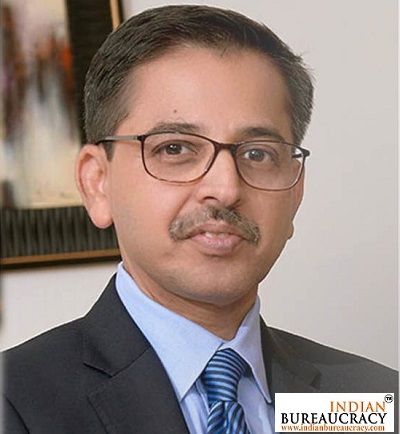
Pranay Verma IFS appointed next Ambassador of India to Belgium and EU
Shri Pranay Verma IFS (1994) presently High Commissioner of India to the People’s Republic of Bangladesh, has been appointed as the next Ambassador of India to the Kingdom of Belgium and the European Union.

Shri Pranay Kumar Verma is a distinguished Indian diplomat and a 1994-batch officer of the Indian Foreign Service, known for his extensive experience in handling India’s bilateral relations, particularly in East and Southeast Asia. Over a career spanning more than three decades, he has held several important diplomatic assignments across key global capitals and currently serves as the High Commissioner of India to Bangladesh since September 2022. His career reflects a steady progression through the ranks of Indian diplomacy, marked by policy expertise, regional specialization, and pragmatic engagement.

Born with an academic inclination toward engineering, Pranay Kumar Verma completed his bachelor’s degree in mechanical engineering before embarking on a professional career at Tata Steel. His early exposure to industrial operations provided him with a practical understanding of economic systems and corporate functioning. However, driven by a larger interest in public service and international affairs, he joined the Indian Foreign Service in 1994 after clearing the Civil Services Examination. Further strengthening his academic profile, Verma pursued a Master’s degree in the Chinese language from the Middlebury Institute of International Studies, equipping him with linguistic and cultural expertise crucial for diplomatic engagement in East Asia.
In the early years of his diplomatic career, Verma served in several overseas missions, including postings in Hong Kong and San Francisco. These assignments came at a time when India was deepening its economic liberalization and expanding global trade linkages. His roles in these missions primarily involved trade promotion, consular services, and fostering economic ties with international partners. Though specific individual contributions are not widely documented, these formative years helped him build a strong foundation in economic diplomacy and international engagement.
Subsequently, Verma was posted to Beijing and Kathmandu, two strategically significant locations for India’s foreign policy. His tenure in Beijing exposed him to the complexities of India-China relations, including trade imbalances and border-related sensitivities. In Kathmandu, he worked during a period of political transition in Nepal, contributing to India’s efforts to maintain stability and strengthen developmental cooperation. These assignments offered him firsthand experience in navigating geopolitical challenges in Asia, shaping his expertise in regional diplomacy.
Verma also served in Washington, D.C., during a period of growing strategic convergence between India and the United States. This phase coincided with critical developments such as enhanced defense cooperation and evolving frameworks around civil nuclear agreements. His exposure to U.S. policy-making processes and institutional frameworks added another dimension to his diplomatic skill set, particularly in managing relations with major global powers.
Returning to headquarters at the Ministry of External Affairs in New Delhi, Verma took on significant responsibilities in policy coordination. From 2017 to 2019, he served as Joint Secretary in the East Asia Division, where he played an important role in shaping India’s engagement with East Asian countries. His work aligned closely with India’s Act East Policy, focusing on strengthening economic ties, enhancing security cooperation, and deepening strategic partnerships in the region. This period marked his transition from field assignments to high-level policy formulation, demonstrating his ability to integrate on-ground insights with strategic planning.
In 2019, Verma was appointed as India’s Ambassador to Vietnam, a position he held until 2022. During his tenure, India-Vietnam relations witnessed significant growth, particularly in trade and defense cooperation. Bilateral trade expanded substantially, reflecting deeper economic engagement between the two countries. He also facilitated defense partnerships, including progress on lines of credit for Vietnam’s capacity building and enhanced maritime cooperation in the South China Sea. His tenure coincided with a period of increasing regional tensions, where India maintained a balanced stance supporting freedom of navigation while strengthening strategic ties with Vietnam.
Verma also played a role in advancing multilateral initiatives such as the Mekong-Ganga Cooperation framework, emphasizing cultural and developmental linkages between India and Southeast Asia. Additionally, his efforts during the COVID-19 pandemic included coordination on health cooperation and vaccine diplomacy, further reinforcing bilateral goodwill. His contributions were acknowledged by Vietnamese leadership, including President Nguyen Xuan Phuc, who appreciated his role in strengthening comprehensive ties between the two nations.
In July 2022, Verma was appointed as the High Commissioner of India to Bangladesh, succeeding Vikram Doraiswami. His tenure in Dhaka has been marked by both opportunities and challenges. He has focused on enhancing connectivity, trade, and economic cooperation between India and Bangladesh under India’s “Neighbourhood First” policy. Initiatives such as cross-border rail connectivity and trade facilitation have been central to his efforts, aimed at improving regional integration and economic growth.
However, his tenure has also coincided with political developments in Bangladesh, including the 2024 political transition following the ouster of Prime Minister Sheikh Hasina. These changes brought challenges such as rising anti-India sentiment, border tensions, and diplomatic sensitivities. Verma has navigated these complexities by emphasizing mutual respect, economic interdependence, and shared historical ties, including the legacy of the 1971 Liberation War.
A key area of focus during his tenure has been addressing border management and security concerns, including issues related to smuggling, illegal crossings, and refugee pressures such as the Rohingya crisis. He has consistently advocated for cooperative mechanisms to ensure a secure and crime-free border. At the same time, he has highlighted the importance of economic engagement, noting the significant trade relationship between the two countries and the benefits of Indian investments in Bangladesh.
Throughout his career, Pranay Kumar Verma has maintained a pragmatic and balanced approach to diplomacy. His public statements often emphasize mutual benefit, sensitivity to each other’s concerns, and people-centric engagement. He has also highlighted the role of media and public discourse in shaping bilateral relations, advocating for constructive narratives based on shared interests and historical connections.
While his career does not feature highly publicized individual achievements or controversies, it reflects the steady and institutional nature of diplomatic service within the Indian Foreign Service. His progression to senior positions such as Ambassador and High Commissioner indicates consistent performance and recognition within the system. His work exemplifies the professional ethos of Indian diplomacy, where long-term relationship building, policy continuity, and strategic patience are key.
In conclusion, Shri Pranay Kumar Verma’s career is a testament to the evolving role of Indian diplomacy in a complex global environment. From his early days in trade-focused missions to his leadership roles in Vietnam and Bangladesh, he has contributed to strengthening India’s bilateral ties across regions of strategic importance. His expertise in East and Southeast Asia, combined with his experience in policy formulation and implementation, positions him as a seasoned diplomat dedicated to advancing India’s foreign policy objectives in a pragmatic and balanced manner.
Indian Bureaucracy News wishes Shri Pranay Verma the very best.