


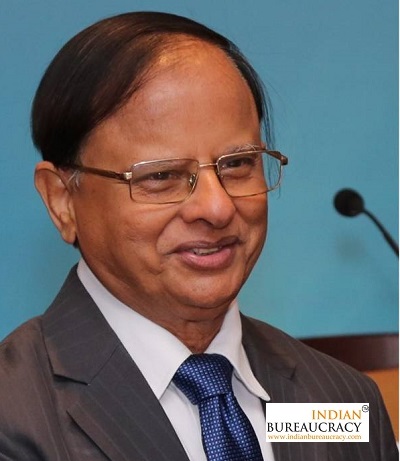
Dr. P. K. Mishra, Principal Secretary to the Prime Minister, chaired a High-Level Task Force meeting on air pollution in Delhi-NCR at the Prime Minister’s Office (PMO). The meeting aimed to review the preparedness of various stakeholders to address the issue of adverse air quality in Delhi-NCR as the winter season approaches.
Key Points:
- Stakeholder Preparedness: The meeting discussed the preparedness of various stakeholders to mitigate the impact of air pollution from different sources, including industrial pollution, vehicular pollution, construction and demolition activities, road and right-of-way dust, burning of municipal solid waste, biomass, and agricultural stubble burning.
- Graded Response Action Plan (GRAP): The implementation of the Graded Response Action Plan (GRAP) was discussed, emphasizing the need for strict enforcement of actions listed in GRAP to prevent the deterioration of air quality.
- Shift to Cleaner Fuels: Industries in the National Capital Region (NCR) are being shifted to cleaner fuels. Out of 240 industrial areas, 211 have been provided with Compressed Natural Gas (CNG) connections. Additionally, out of 7,759 fuel-based industries, 7,449 have shifted to Piped Natural Gas (PNG) or approved fuels.
- E-Vehicles and Charging Infrastructure: The number of electric vehicles (e-vehicles) has increased, with 4,12,393 registered in NCR. The region has seen an increase in the number of e-buses and battery charging stations, reaching 4,793 EV charging points in Delhi.
- Construction and Demolition Waste Management: Operationalization of construction and demolition (C&D) waste processing facilities was discussed. Five C&D waste processing facilities with a total capacity of 5,150 tonnes per day (TPD) are operational in Delhi, and additional facilities are in the pipeline for Delhi, Haryana, and Uttar Pradesh.
- Paddy Stubble Burning: The issue of paddy stubble burning in Punjab, Haryana, and Uttar Pradesh was highlighted. The meeting emphasized close monitoring by the Chief Secretaries of these states and suggested in-situ management through Crop Residue Management (CRM) machines and the use of bio-decomposers.
- Ex-situ Management: Principal Secretary emphasized the need for developing economic uses of paddy straw and creating adequate storage facilities for baled straw. This includes infrastructure for baling, briquetting, and pelleting for effective ex-situ utilization.
- Multi-Pronged Approach: A multi-pronged approach was stressed, including the procurement of biomass pellets, adopting benchmark prices, expanding gas infrastructure in the NCR region by March 2024, and ensuring the expeditious supply of biomass on demand.
- Vehicle Replacement: Intensified drives for replacing overaged vehicles, particularly those visibly polluting due to overloading and other reasons, were discussed. There was an emphasis on strict implementation of actions outlined in the GRAP.
- Participants: The meeting was attended by key stakeholders, including Secretaries to the Government of India, Chief Secretaries of Punjab, Haryana, Uttar Pradesh, Rajasthan, and Delhi, the Commission for Air Quality Management, Central Pollution Control Board, and State Pollution Control Boards.
The meeting aimed to address the complex issue of air pollution in the Delhi-NCR region through coordinated efforts and measures targeting various pollution sources.