


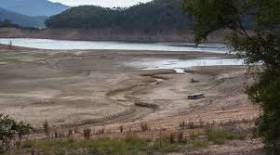
Summary:Climate change is impacting not only the oceans, but also large inland lakes. As the world’s largest lake, the Caspian Sea is a perfect example of how a body of water can and will change. Researchers now discuss the possible ecological, political and economic consequences, as well as viable solutions.
While global sea levels are rising due to the climate crisis and threatening near-coastal infrastructures, higher temperatures in other areas are having exactly the opposite effect. The water levels are falling and also causing massive problems. Although the consequences are equally serious, however, declining water levels are receiving less attention according to Matthias Prange, Thomas Wilke of the Justus Liebig University in Gießen, and Frank P. Wesselingh of the University of Utrecht and the Naturalis Biodiversity Center Leiden (the Netherlands).
“The Caspian Sea can be viewed as representative of many other lakes in the world. Many people are not even aware that an inland lake is dramatically shrinking due to climate change, as our models indicate,” says Matthias Prange. The report of the Intergovernmental Panel on Climate Change (IPCC) also failed to mention lakes, and disregarded the social, political and economic consequences of global warming on the affected regions. “This has to change. We need more studies and a better understanding of the consequences of global warming in this region.” The goal must be to raise awareness of the consequences of climate change for inland seas and lakes so that appropriate strategies can be developed, including approaches for other large lakes and regions facing similar challenges.
Because of its size (it is the largest lake in the world) and because of its relatively high salinity of about one per cent, which is about one-third of the salt concentration in the oceans, the Caspian has been named a ‘Sea’. Its largest inflow is the Volga River and it has no natural connection to the ocean. The water level is determined by the proportional influences of inflow, precipitation and evaporation. Global warming is causing increased evaporation, which results in a declining water level.
The Caspian Sea is an important regional water reservoir and, despite its salt content, a biological and commercial center. It is bounded by Kazakhstan, Turkmenistan, Iran, Azerbaijan and Russia. Depending on the degree of global warming in the future, the water level could fall by 9 to 18 meters during this century. “This would affect not only the biodiversity, various species, and habitats that would disappear. The economies of all the bordering countries would be impacted, including harbors, fisheries and fish farming.” For this reason, the authors argue that in the future the Caspian Sea should be used as an example in scientific research to assess the vulnerability of certain regions to falling water levels. Because no nation can solve the resulting conflicts alone, they propose a global task force to develop and coordinate strategies. The article suggests that “international climate funds” could offer a possibility for financing projects and adaptation measures if changes in the lake level are attributed to climate change.
More:Science Daily