


Summary:A research team has investigated the consequences of changes in plant biodiversity for the functioning of ecosystems. The scientists found that the relationships between plant traits and ecosystem functions change from year to year. This makes predicting the long-term consequences of biodiversity change extremely difficult.
A research team has investigated the consequences of changes in plant biodiversity for the functioning of ecosystems. The scientists found that the relationships between plant traits and ecosystem functions change from year to year. This makes predicting the long-term consequences of biodiversity change extremely difficult.
“We found that — over the longer term — the links between plant traits and ecosystem functions were indeed very weak, as we could only explain about 12 per cent of the variance in ecosystem functioning,” said the paper’s lead author, Dr Fons van der Plas from the Institute of Biology at Leipzig University. Together with colleagues from the German Centre for Integrative Biodiversity Research (iDiv) and other research institutions in Germany and abroad, he found different patterns than in previous studies — which had focused on short-term links between plant traits and ecosystem functions. These had previously assumed much stronger links between plant traits and ecosystem functioning.
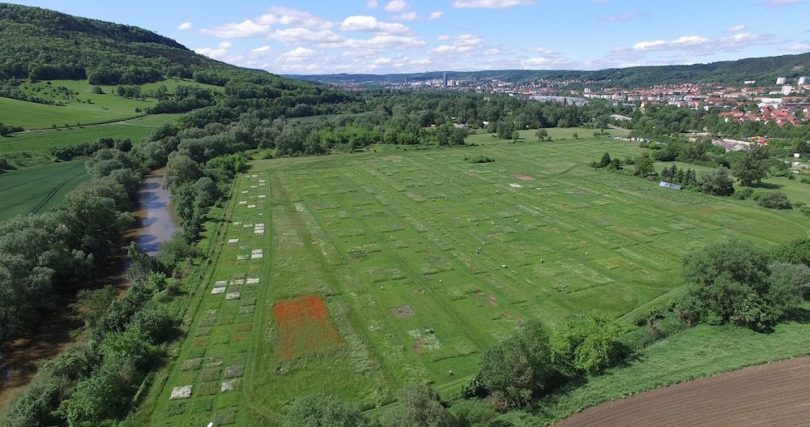
“The main difference between our studies and earlier ones was that we carried out our work over a period of ten years, while most other studies were based on data measured in just one year,” said the biologist. The relationships between plant traits and ecosystem functions changed from year to year: some species become locally extinct, while others replace them.
Scientists often ask themselves how this change in biodiversity affects the way ecosystems function, for example in terms of biomass production, carbon sequestration and pollination. In predicting these consequences, they rely on the traits in which plants differ. For example, some plant species are pollinated by insects, and others by the wind. They hope that knowing which species will be more common in the future and what traits these species have will enable them to make more precise predictions.
The research team led by van der Plas has now discovered, for example, that plant biomass production was maximised in plant communities dominated by species with thick roots in some years and by completely different plant communities in others. In almost every year, a different plant trait was found to have been important for maximising biomass production. According to van der Plas, it is therefore extremely difficult to predict exactly how changes in plant communities affect the functioning of ecosystems over long periods of time.
More: Science Daily