


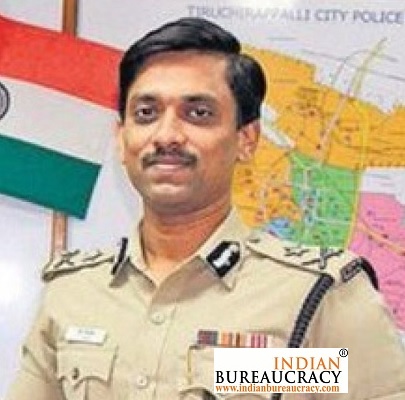
A Arun IPS appointed as ADG / Director, Tamil Nadu Police Academy, Oonamancherry
Shri A Arun IPS (Tamil Nadu), presently Additional Director General of Police / Director, Vigilance and Anti-Corruption, Chennai has been transferred and appointed as Additional Director General of Police / Director, Tamil Nadu Police Academy, Oonamancherry, Chennai.
Profile of Director, Tamil Nadu Police Academy, Oonamanchery
The Director, Tamil Nadu Police Academy (TNPA), Oonamanchery, holds a key position in the police training and capacity-building framework of Tamil Nadu. The Academy serves as an important institution for imparting professional training, developing leadership capabilities, and strengthening the knowledge, skills, and operational preparedness of police personnel. The Director provides strategic and administrative leadership to the Academy and plays a significant role in shaping the professional standards of the State Police.
The Tamil Nadu Police Academy is responsible for providing structured training to police officers and personnel at various stages of their careers. The Director oversees the design, implementation, and monitoring of training programmes aimed at improving policing skills, legal knowledge, investigation techniques, leadership abilities, and operational efficiency. Through comprehensive training, the Academy contributes to creating a modern, professional, and citizen-oriented police force.
One of the principal responsibilities of the Director is to ensure that training programmes remain aligned with the changing requirements of policing and public safety. The nature of crime has evolved significantly with the emergence of cybercrime, financial fraud, organised crime, digital evidence, and technology-enabled offences. The Academy therefore plays an important role in equipping police personnel with contemporary knowledge and specialised skills required to address these emerging challenges effectively.
The Director supervises the conduct of induction training for new recruits as well as in-service training programmes for serving personnel. These programmes cover a wide range of subjects, including criminal law, investigation procedures, forensic science, cybercrime, intelligence gathering, traffic management, human rights, community policing, disaster response, and leadership. The emphasis is placed on combining classroom instruction with practical exercises and field-oriented learning.
Professional development and continuous training constitute an important part of the Academy’s functioning. As police personnel progress through their careers, they require regular opportunities to update their knowledge and develop specialised expertise. The Director oversees refresher courses, promotional training, leadership programmes, and specialised modules designed to enhance professional competence and prepare officers for higher responsibilities.
The Academy also plays a crucial role in promoting ethical policing and respect for constitutional values. Training programmes emphasise integrity, accountability, discipline, human rights, gender sensitivity, and sensitivity towards vulnerable sections of society. These values are essential for strengthening public trust and ensuring that policing remains responsive, lawful, and citizen-centric.
Modern technology has become an increasingly important component of police training. The Director encourages the use of digital learning tools, simulation-based training, forensic technology, cyber laboratories, and modern instructional methods to improve the quality of training. Technology-enabled learning allows police personnel to understand complex investigative procedures and emerging forms of crime in a more practical and effective manner.
The Director also coordinates with other police training institutions, universities, research organisations, forensic institutions, and specialised agencies to facilitate knowledge exchange and professional collaboration. Such partnerships help introduce new perspectives, best practices, and specialised expertise into police training programmes.
Administrative management forms another important aspect of the position. The Director oversees the functioning of the Academy’s faculty, training infrastructure, residential facilities, academic programmes, physical training facilities, and institutional resources. Ensuring high standards of discipline, professionalism, and academic excellence remains central to the effective functioning of the Academy.
The Academy also contributes to research and innovation in policing by examining emerging trends, identifying operational challenges, and promoting modern approaches to law enforcement. Training institutions play an important role in encouraging evidence-based policing and developing solutions suited to the changing needs of society.
As policing becomes increasingly complex and technology-driven, the role of the Director, Tamil Nadu Police Academy, Oonamanchery, assumes growing importance. Through professional training, continuous capacity building, leadership development, ethical education, and technology-driven learning, the office contributes significantly to strengthening the capabilities of the Tamil Nadu Police.
By preparing police personnel to respond effectively to contemporary security challenges while upholding the principles of law, justice, accountability, and public service, the Director of the Tamil Nadu Police Academy plays a vital role in building a professional, modern, efficient, and citizen-focused police force for the State.
Indian Bureaucracy News wishes Shri A Arun the very best.