


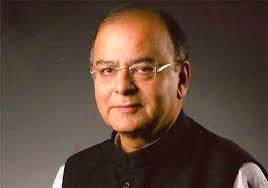
“Once again the global economic situation requires ambitious policy reforms and international coordination. The growth in some advanced countries has not improved as much as we had anticipated. Emerging market economies face a high risk of negative spill-overs from un-conventional monetary policy actions of advanced economies. The uncertainties about their extent and eventual normalisation have induced greater volatility and intensified pressures on both emerging market currencies and capital markets.
Some EMEs have had to dip into their foreign exchange reserves in order to manage the effects of volatile currency markets and others had to shore them up in the absence of other adequate safety nets.
Given these challenges, there is need for clarity in communications and forward guidance to minimise surprises. But we need cooperative tools which will create confidence in EME investors and prevent currency crises. As we have seen from the crises of the 90s in East Asia and Latin America, policies which place the burden of tackling the impact of capital flight solely on affected countries, are ineffective. We need to co-operate to cushion the impact of unconventional policies and their normalisation on affected economies which may face a flight of capital shortly similar to that of the “taper tantrum” of 2013.
The lack of infrastructure is a structural bottleneck to growth. The increasing monetary base in advanced economies combined with extremely low yields can be leveraged to fulfill the need for channelizing long term finance in the infrastructure sector.
The Turkish Presidency’s efforts for continuing to focus on investment in infrastructure and SMEs are welcome. Creative ways must be found to channel funds into productive investments.
The Indian economy is picking up after a few years of slowdown. We had double digit inflation which has been brought down to five percent. Many legislative changes have been made to boost investment, many sectors have been opened up for investment and steps have been taken for easing business and industrial activities. Ambitious taxation reforms are on the anvil. We are committed to build 100 new smart cities and there is special focus on building rail, road and rural infrastructure. We believe that improvement in investment avenues and infrastructure will provide the necessary momentum for sustained high growth.
The Framework Working Group has decided to crystallize the commitments laid down in the Brisbane growth strategies into few key ones based on their impact on growth and the national priorities of the concerned member. In addition we hope that the adjusted growth strategies would be finalized by the time of the Antalya Summit.
International Organizations deserve praise for their efforts and inputs into the growth strategy exercise. At the same time, there should be a continuous refining of the models so as to incorporate country specific heterogeneities.
The current scenario analysis is welcome as a risk gauging exercise, but there is also a need to look at an alternative scenario which more correctly reflects challenges facing the global economy, specifically the EMEs, in the light of policy normalization by the US and unconventional monetary easing by some other advanced economies.
We must work together to achieve our common goal to make this world a more happy, livable and secured place where all human beings live in peace and grow with dignity and respect for all”.