


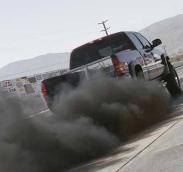
“World Health Organisation (WHO) has published a report titled “Ambient Air Pollution: A global assessment of exposure and burden of disease” which presents summary of methods and results of the latest global assessment of ambient air pollution exposure. According to this report, air pollution has become a growing concern with an increasing number of acute air pollution episodes in many cities worldwide including Delhi.
Ministry of Environment, Forest and Climate Change has not carried out any study on change in genes of foetus vis-a-vis trans-generational impact. However, Department of Science and Technology under climate change programme has supported a National Network on Climate Change and Human Health comprising of eight research projects including impact of air pollution on human health. Indian Council of Medical Research (ICMR) has also extended financial assistance under various extramural and other research schemes on air pollution.
The major steps taken by the Government to control pollution include notification of National Ambient Air Quality Standards; formulation of environmental regulations / statutes; setting up of monitoring network for assessment of ambient air quality; introduction of cleaner / alternate fuels like gaseous fuel (CNG, LPG etc.), ethanol blending; promotion of cleaner production processes; launching of National Air Quality index; universalization of BS-IV by 2017;leapfrogging from BS-IV to BS-VI fuel standards by 1st April, 2020; comprehensive amendments to various Waste Management Rules and notification of Construction and Demolition Waste Management Rules; banning of burning of leaves, biomass, municipal solid waste; promotion of public transport and network of metro, e-rickshaws, promotion of car pooling, Pollution Under Control Certificate, lane discipline, vehicle maintenance; regular co-ordination meetings at official and ministerial level with Delhi and other State Governments within the NCR; issuance of directions under Section 18(1)(b) of Air (Prevention and Control of Pollution) Act, 1981 and under Section 5 of Environment (Protection) Act, 1986; installation of on-line continuous (24×7) monitoring devices by major industries; collection of Environmental Protection Charge on more than 2000 CC diesel vehicles in Delhi; and ban on bursting of sound emitting crackers between 10 PM to 6 AM etc.”