


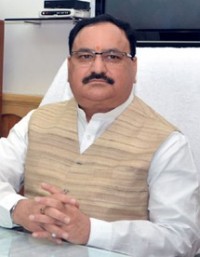
AntiMicrobial Resistance (AMR) is not merely a health challenge or a threat to health security, but is also a development challenge with significant and serious economic consequences. The Union Health and Family Welfare Minister Shri J P Nadda stated this in his address at the Asian Health Ministers meet on Antimicrobial Resistance. The Health Minister reaffirmed India’s commitment in the global collective efforts towards combating AMR and stated that “as we look forward to the UN High Level Meeting on AMR later this year, we should reaffirm existing commitments and focus on mobilizing the necessary resources for the implementation of AMR national action plans in all countries”. Also present were Health Ministers from WHO South East Asia Region and Western Pacific Region countries.
Shri J P Nadda pointed out that since different countries are at different stages of economic development, prescribing uniform achievement objectives for combating AMR must be accompanied by a sustained effort of supporting those in more need with human, technological and financial resources through domestic, bilateral and multilateral channels. “Besides, we must also ensure that both existing and new antimicrobials, vaccines and diagnostics are accessible and affordable for all”, he added.
Noting that the health and development challenges posed by AMR confront all countries, small or big, rich or poor, developed or developing, Shri Nadda stated that increasing resistance of pathogens to currently available antibiotics can lead to a situation where advanced techniques and procedures in the field of surgery and medicine become redundant and ineffective due to our failure to prevent the spread of infection. The Union Health Minister mentioned that the multi-sectoral nature of AMR requires that all countries promote rational use of drugs; appropriately regulate the sale of drugs; promote the concept of “One Health” with control of anti-microbial use in human health, animal and agriculture sectors; promote infection control practices and protocols; improve hygiene, sanitation and ensure availability of clean drinking water; encourage universal immunization for vaccine preventable diseases as appropriate in each country context; encourage research and development and discovery of new drugs and ensure equitable and affordable access; enhance capacity of health workforce and doctors; undertake campaigns for consumer awareness and to discourage self-medication of antibiotics; and above all to evolve and implement a strategy for coordinated action by all stakeholders.
In view of this, the Health Minister pointed out that the appreciable efforts have been made by India in this regard. He stated that that the roadmap identified by the Indian Government after the February Conference in India lists five priority areas for developing and implementing the National Action Plan of AMR. These are: improving awareness and understanding of AMR, strengthening surveillance in human, animal and agricultural sectors, strengthening infection prevention and control practices in health facilities, promoting rational use of antimicrobials and promoting investment in AMR and related research.
During his visit, the Health Minister also met the Japanese Minister of Health, Labour and Welfare Mr. Yasuhisa Shiozaki . The two Health Ministers held a 30-minute long bilateral meeting today morning before the AMR Conference. They stressed the importance of enhancing cooperation in the health sector and recognized pharmaceuticals; medical devices; training and capacity building as potential areas of enhanced cooperation. The Japanese Health Minister acknowledged India’s strength in pharmaceuticals, particularly generic medicines and referred to Japan’s own efforts in enhancing use of generic medicines in its medicines mix. Shri Nadda also stressed cooperation in the area of generic medicines, as well as in area of medical devices with greater opportunities being opened up due to our Make in India programme. He emphasized sharing of rich experience of traditional medicines and naturotherapy, Ayurveda, as well as Yoga in combating non-communicable diseases (NCDs) and lifestyle diseases.
Shri J P Nadda also visited the Tamagawa hospital at Tokyo. Tamagawa hospital has an advanced Nephrology Department with a unique dialysis technology, which can serve up to 20 patients through a central dialysis fluid system with small control units for each patient. Tamagawa hospital has had exchanges with Indian medical hospitals in the past and has organized training programmes for a few batches of Indian doctors and nurses in the area of dialysis training.